Algeria
 Egypt
 Libya
 Morocco
 Sudan
 Tunisia
 Benin
 Burkina Faso
 Cabo Verde
 Côte d'Ivoire
 Ghana
 Guinea
 Guinea-Bissau
 Liberia
 Mali
 Mauritania
 Niger
 Nigeria
 Senegal
 Sierra Leone
 Togo
 Cameroon
 Central African Republic
 Chad
 DR Congo
 Equatorial Guinea
 Gabon
 Republic of the Congo
 São Tomé and Príncipe
 Burundi
 Comoros
 Djibouti
 Eritrea
 Ethiopia
 Kenya
 Madagascar
 Malawi
 Mauritius
 Mozambique
 Rwanda
 Seychelles
 Somalia
 South Sudan
 Tanzania
 Uganda
 Angola
 Botswana
 Eswatini
 Lesotho
 Namibia
 South Africa
 Zambia
 Zimbabwe
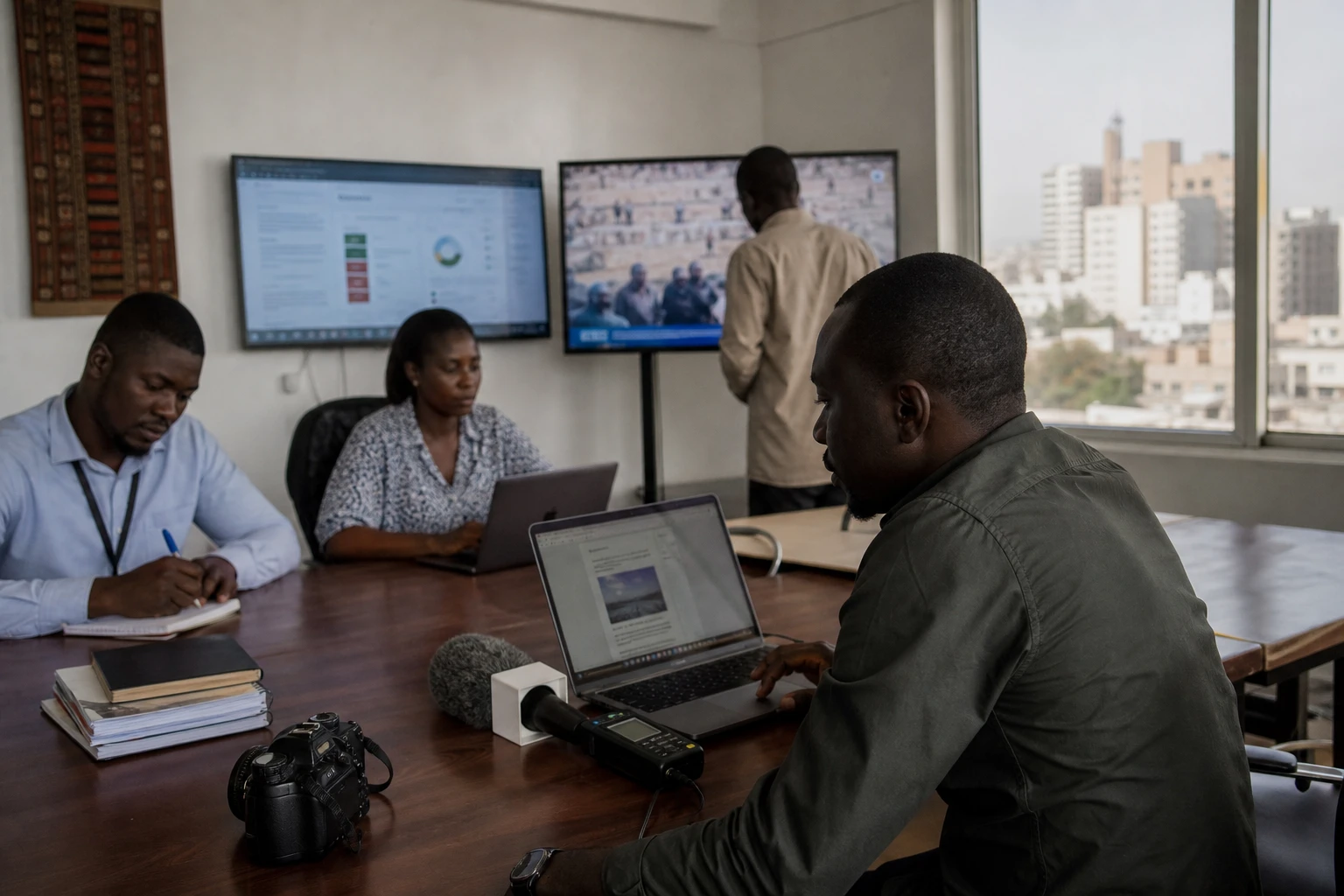
A border that obliges Dakar and Banjul to speak with one voice
Between Senegal and The Gambia, the border is not an abstract line. It runs through villages, markets, roads and military areas where the slightest action can quickly take on political significance. In this close-knit neighbourhood, stability depends as much on official agreements as on restraint on the ground. The two capitals have reiterated this several times in recent months, reaffirming their determination to strengthen cooperation on defence, security, trade and border management.
The incident reported on Thursday 17 July 2026 at the military border post in Bulock, in The Gambia’s West Coast Region, therefore took place in an area that is sensitive but familiar to both states. The Gambia, enclosed within Senegalese territory apart from its Atlantic coastline, shares with Dakar a border where sovereignty, mobility and security issues are constantly intertwined. ECOWAS, which has for years promoted free movement and cross-border cooperation, again highlighted the issue in June 2026 with the modernisation of the Wellingara-Ba market, between The Gambia, Guinea-Bissau and Senegal.
What happened in Bulock
According to a statement circulated by the Gambian authorities, members of the Senegalese Armed Forces demolished part of the fence around a military installation at the Bulock post without prior consultation. Banjul described the act as “deeply provocative” and “totally unacceptable”, while assuring that the situation remained calm and under control. The Gambian authorities say they have initiated a formal diplomatic process and intend to handle the matter through the Joint Military Committee and other existing bilateral mechanisms.
The same source says that, at the time the information was published, Dakar had not yet issued an official response. The APA news agency confirmed the same details, specifying that the incident took place on Thursday 17 July and involved a fence around a Gambian Armed Forces installation, which was destroyed without prior consultation, according to Banjul. The Gambian authorities stressed that their own forces had exercised restraint to avoid any escalation.
At this stage, no casualties have been reported in the sources cross-checked. Nor have any exchanges of fire or clashes been reported. For now, the dispute is therefore at a diplomatic and symbolic level. But in a border area where goods, workers, traders and travellers also move, the slightest military tension can quickly spill over into everyday activities.
A longstanding dispute in a highly strategic neighbourhood
Senegal and The Gambia have maintained close relations for decades. Both presidencies said so again recently. On 30 May 2026, Bassirou Diomaye Faye was received in Banjul by Adama Barrow for a working visit focused on strengthening cooperative relations. The Senegalese statement stressed the historical, human and cultural depth of the ties between Dakar and Banjul, as well as the need for better coordination in addressing peace and security challenges in West Africa.
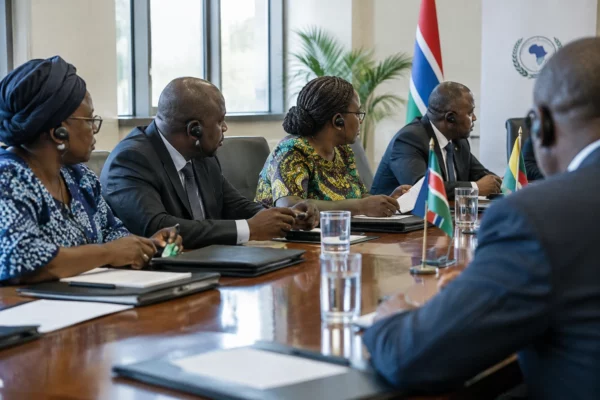
On 13 May 2026, APA had already reported a meeting between Adama Barrow and the new admiral Oumar Wade, Chief of the General Staff of the Senegalese Armed Forces, focused on strengthening defence cooperation. This sequence shows that, at the time of the Bulock incident, the two countries were engaged in active security dialogue. The contrast is striking: on the one hand, bilateral mechanisms seeking to prevent friction; on the other, a local incident that serves as a reminder of how the situation on the ground can outpace diplomacy.
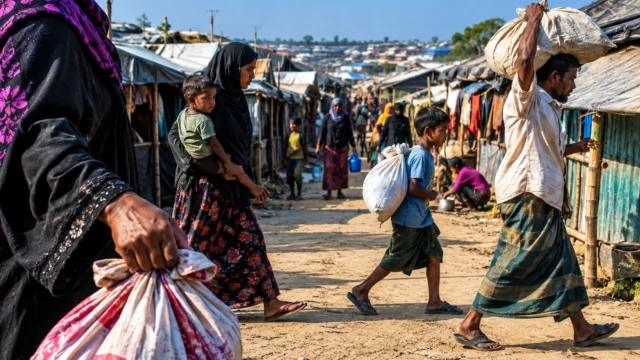
The Senegal-Gambia context is also one of a border that serves the real economy. Cross-border markets, transport, fishing and small-scale commercial activities depend on smooth passage. In its recent projects, ECOWAS presents border areas as spaces for cooperation and livelihoods, not merely checkpoints. This is an important perspective for the communities living along the border, particularly in Casamance and The Gambia’s West Coast Region, where borders are experienced in everyday life, not just in official statements.
What is at stake for Senegal, The Gambia and West Africa
For Senegal, the matter concerns sovereignty, the discipline of deployed forces and the credibility of border management. For The Gambia, it concerns the protection of a military installation and the need to ensure that its consultation procedures are respected. In both cases, the main priority is the same: preventing a local incident from being interpreted as a challenge to the framework of cooperation patiently built between Dakar and Banjul.
This caution is all the more important because the region needs signs of stability. ECOWAS continues to champion cross-border movement, trade and security cooperation, while West African states must simultaneously manage multiple pressures: trafficking, border tensions, population movements and wider security challenges. In this landscape, an incident involving regular forces is never insignificant. It tests de-escalation mechanisms, the quality of military dialogue and governments’ ability to maintain control over their security apparatus.
For people living in border areas, their expectations are even more concrete. They want a clear border, functioning posts and exchanges without humiliation or obstruction. Traders need continuity. Transport operators need predictability. Families need to be able to travel without every check becoming an ordeal. This is how the quality of a bilateral relationship is measured: not only in statements from the presidencies, but in the smooth flow of everyday life.
What to watch in the coming days
What happens next will depend on two things. First, Senegal’s official response, which had not yet been issued at the time of the reports that were cross-checked. Second, how the Joint Military Committee and bilateral diplomatic channels handle the matter. If the two capitals confirm their determination to defuse the crisis, the incident will remain a warning. If it worsens, it could revive old suspicions along a border that is nonetheless essential to regional stability.
At continental level, the episode is a reminder of a familiar but still relevant lesson: in West Africa, the most sensitive borders are often those that underpin the greatest cooperation. Both the African Union and ECOWAS champion the idea that a border is not merely a dividing line, but also a point of connection. Bulock is a reminder that, day to day, this ambition depends on the restraint of forces, clear rules and trust between neighbours.