Algeria
 Egypt
 Libya
 Morocco
 Sudan
 Tunisia
 Benin
 Burkina Faso
 Cabo Verde
 Côte d'Ivoire
 Ghana
 Guinea
 Guinea-Bissau
 Liberia
 Mali
 Mauritania
 Niger
 Nigeria
 Senegal
 Sierra Leone
 The Gambia
 Togo
 Cameroon
 Central African Republic
 Chad
 DR Congo
 Equatorial Guinea
 Gabon
 São Tomé and Príncipe
 Burundi
 Comoros
 Djibouti
 Eritrea
 Ethiopia
 Kenya
 Madagascar
 Malawi
 Mauritius
 Mozambique
 Rwanda
 Seychelles
 Somalia
 South Sudan
 Tanzania
 Uganda
 Angola
 Botswana
 Eswatini
 Lesotho
 Namibia
 South Africa
 Zambia
 Zimbabwe
A misjudged video, and real unease
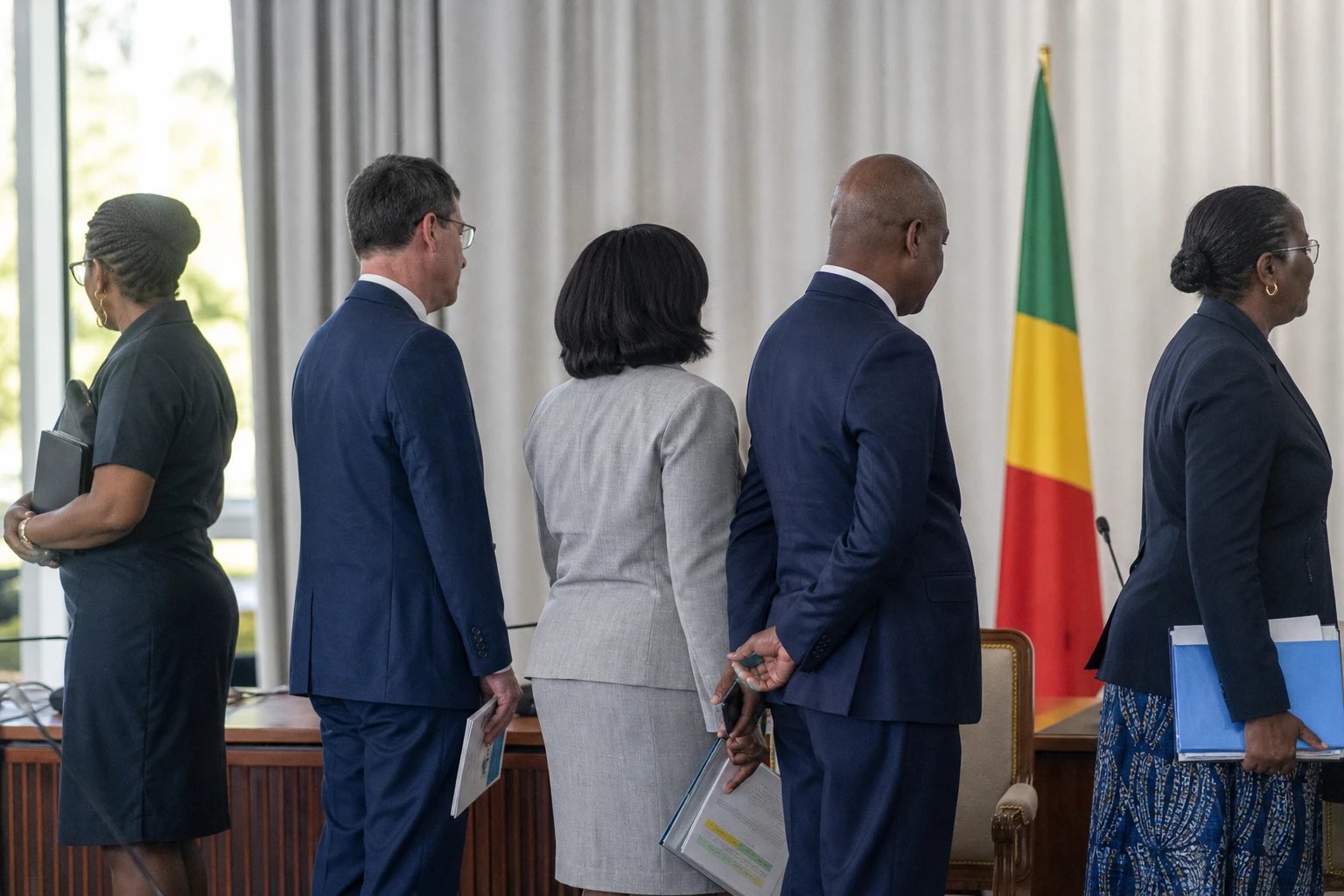
In Brazzaville, a short clip intended to amuse had the opposite effect. In trying to address the issue of visas light-heartedly, the French mission broadcast a message many Congolese internet users saw as condescending. The unease goes beyond a simple communications misstep: it touches on a sensitive issue for families, students and entrepreneurs who depend on travel between the Congo and France.
The issue resonates particularly in a country where Brazzaville remains a major diplomatic hub for visa applications to France. The visa service is managed by the French embassy in Brazzaville, with public services provided by TLScontact in Brazzaville and Pointe-Noire since 2 October 2023. In other words, consular relations are not abstract: they shape practical, costly and often anxiety-inducing procedures.
What happened, exactly
The video was posted on 26 June 2026 on the Instagram account of the French embassy in Brazzaville, then withdrawn a few hours later at the request of France’s Ministry for Europe and Foreign Affairs. It resurfaced after being reposted by a French satirical media outlet, reigniting the controversy at the beginning of August. The ministry deemed the clip “inappropriate” and approved its withdrawal.
In the roughly two-minute skit, a young man persistently demands his visa, while a character presented as a consul responds in a paternalistic tone. The clip refers to fake bank statements, applications put together in an internet café and other stereotypes often associated with visa applications in Central Africa. A second character, a Congolese woman presented as having studied in France, ends the sketch with a simple moral: submit an “honest” application. It was precisely this mixture of caricature, implied hierarchy and moralising that fuelled the criticism.
The message itself was clear enough. The French authorities intended to remind viewers that document fraud penalises genuine applicants and complicates the processing of applications. But the presentation overshadowed the message. On a subject as symbolically charged as visas, institutional humour leaves little room for ambiguity. In Brazzaville, where travel to Europe matters for both education and business, the message’s reception depends as much on its content as on the way Congolese people are viewed.
Why the reaction was so strong
The incident touches on a long-standing tension: states seek to control migration flows and combat fraudulent applications, while visa applicants often complain of procedures that are opaque, costly and sometimes experienced as arbitrary. The Congo is no exception to this power imbalance. Consular relations with France remain marked by an unequal distribution of power, since a visa decision can put a study plan, family visit or business trip on hold.
The controversy also highlights the issue of representation. The young man wearing a Congolese football shirt, the influencer in a wig in the colours of France, the allusions to falsified applications: some members of the public saw all this as an accumulation of stereotypes about Congolese people. Although the clip was produced locally, with Congolese actors, its effect was the opposite of the stated intention. In public communication, context matters as much as the original idea.
For the French authorities, the episode is embarrassing because it runs counter to their own rhetoric about modernising digital diplomacy. For the Congolese, it revives a broader impression: that relations are still too often framed from Paris, even when they unfold in Brazzaville. In this kind of clip, humour does not erase the imbalance. It can make it more visible.
Brazzaville, CEMAC and the question of mobility
The Congo is a member of CEMAC, the Economic and Monetary Community of Central Africa, which comprises six countries: Cameroon, the Congo, Gabon, Equatorial Guinea, the Central African Republic and Chad. Brazzaville also regularly hosts meetings of the regional organisation, underscoring the Congolese capital’s political role in Central Africa’s balance of power. The question of visas therefore has regional significance, beyond the Franco-Congolese relationship alone.
In this region, the movement of people remains a strategic issue. Economic elites travel quickly, sometimes with consular privileges, while students, small businesses and families are more directly confronted with administrative delays. The debate on visas is therefore not only about migration control. It is also about access to education, trade, healthcare and diaspora networks.
For France, the stakes are diplomatic as well as administrative. In Brazzaville, it cannot rely on top-down communication alone. It must engage with African public opinion that is more connected, quicker to react and less willing to accept messages perceived as patronising. In a sub-region where integration is an avowed objective, every consular misstep also becomes a political signal.
What to watch now
What happens next will depend above all on two things. First, whether French diplomacy can correct its communication without taking refuge in a purely technical justification. Second, how the Congolese authorities and local public opinion continue to address an incident that says a great deal about expectations of mutual respect. At a time when relations between Central Africa and its external partners are under close scrutiny, an incident of this kind is never entirely insignificant.
Ultimately, the Brazzaville episode is a reminder of a simple rule: in Central Africa, as elsewhere, mobility is a right negotiated every day, but so too is the way people seeking to travel are regarded. When an institution speaks on behalf of a state, it is not only talking about procedures. It is also saying, deliberately or otherwise, what place it accords to those who come to its door.