Algeria
 Egypt
 Libya
 Morocco
 Sudan
 Tunisia
 Benin
 Burkina Faso
 Cabo Verde
 Côte d'Ivoire
 Ghana
 Guinea
 Guinea-Bissau
 Liberia
 Mali
 Mauritania
 Niger
 Nigeria
 Senegal
 Sierra Leone
 The Gambia
 Togo
 Cameroon
 Central African Republic
 Chad
 DR Congo
 Equatorial Guinea
 Gabon
 São Tomé and Príncipe
 Burundi
 Comoros
 Djibouti
 Eritrea
 Ethiopia
 Kenya
 Madagascar
 Malawi
 Mauritius
 Mozambique
 Rwanda
 Seychelles
 Somalia
 South Sudan
 Tanzania
 Uganda
 Angola
 Botswana
 Eswatini
 Lesotho
 Namibia
 South Africa
 Zambia
 Zimbabwe
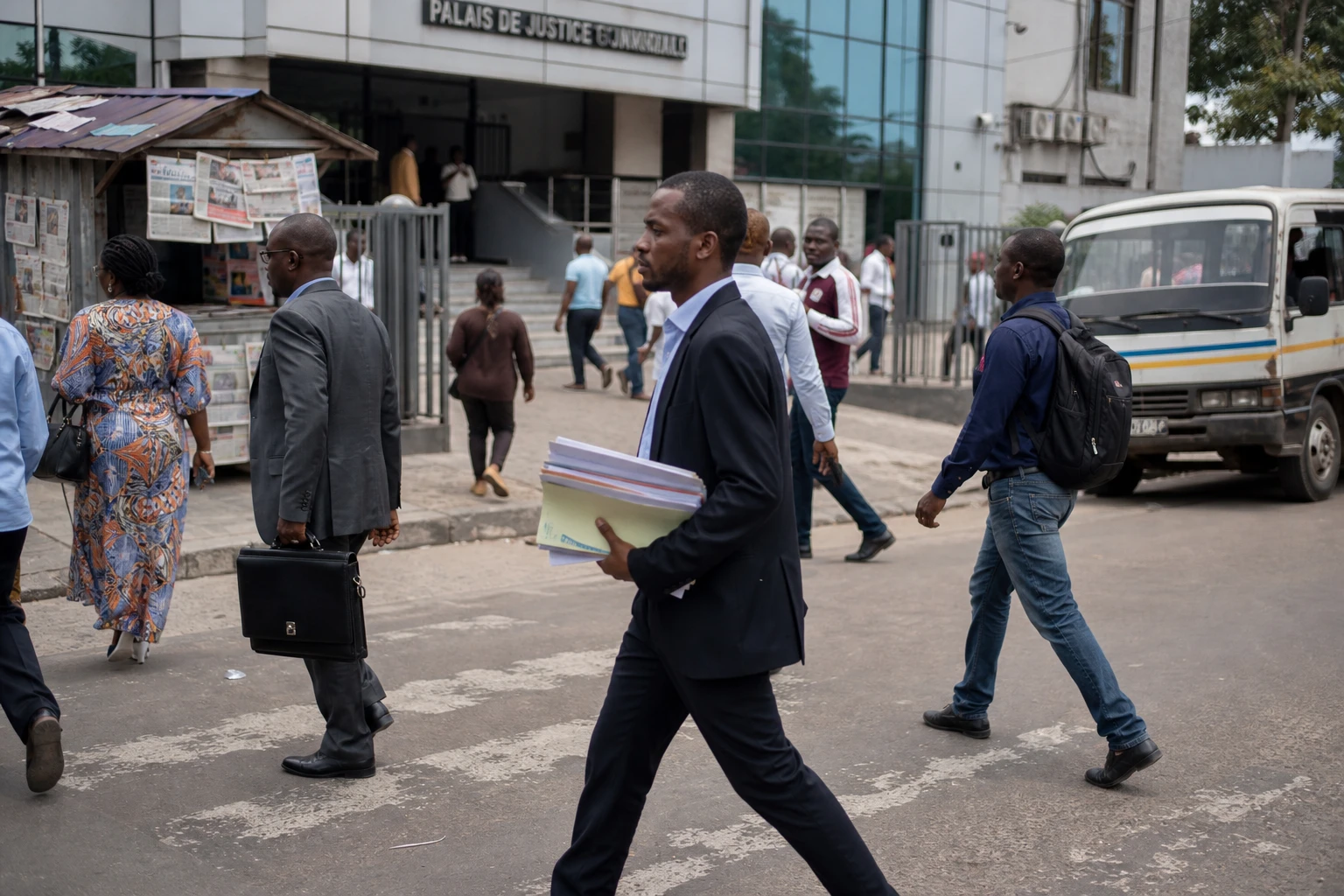
A case that goes beyond a simple crime story
In Kinshasa, a criminal case rarely remains confined for long to the walls of a building. When it involves a well-known entrepreneur in the sports world, it also lays bare a simple expectation: that justice will be pursued swiftly and properly, between the Congolese capital and neighbouring capitals where some suspects sometimes seek refuge.
That is exactly what the Vally Amisi case shows. In the Democratic Republic of the Congo, the investigation has taken on a regional dimension following the arrest of a suspect in Brazzaville, across the Congo River. The act matters as much as the location: in an urban area shared by Kinshasa and Brazzaville, judicial cooperation is a practical test for the authorities on both banks.
What is known about the murder and investigation
Vally Amisi, a Congolese entrepreneur active in sport and in Kinshasa on a business trip, was found dead following an incident in the commune of Gombe, the capital’s business and political district. Initial evidence led the authorities to favour a targeted criminal motive rather than a simple accident or a kidnapping with no defined motive.
Surveillance footage then played a central role. It showed Vally Amisi entering an apartment with another man, before the latter came out alone and tried to obscure the corridor camera. Another clip, released later, strengthened suspicions by showing a man in a lift near an inert body. This evidence directed the investigation towards a suspect identified by Congolese authorities.
The DRC Ministry of Justice confirmed that a man who had been wanted for several months was arrested in Brazzaville by the authorities of the Republic of the Congo. Formalities for his transfer to Kinshasa are under way, and the presumption of innocence remains in force until a court ruling has been issued. Arrests have already been made in the DRC in the same case, suggesting a wider investigation than the case of the suspect arrested in the Republic of the Congo alone.
Kinshasa, Brazzaville and the question of judicial cooperation
Gombe is not only a district where executives, diplomats and businesses are based. It is also a place where crimes are immediately visible. When a case erupts there, it raises questions about the safety of travel, the protection of temporary residents and the reliability of private surveillance systems, which have become essential in a city where cameras often replace public crime-prevention measures.
The fact that the suspect was found in Brazzaville gives this case particular significance. Kinshasa and Brazzaville are separated only by the Congo River, but the border remains very real for criminal proceedings. On one side, the suspect must be identified, arrested and the evidence documented. On the other, the suspect must be transferred, brought before a judge and afforded the rights of the defence. In other words, effective policing is not enough: without judicial coordination, the chain can break.
For the DRC, the case also measures the credibility of the judicial system at a time when demand for results remains strong, particularly in sensitive cases and crimes that attract widespread public attention. For the Republic of the Congo, the arrest in Brazzaville puts the authorities under pressure to cooperate unambiguously with Kinshasa, in a context where movement between the two capitals is daily and disputes must be handled methodically.
A signal for Congolese justice and the region
Beyond the individual case, this affair is a reminder of a point rarely highlighted: cross-border urban crime is not limited to trafficking or armed networks. It can also involve ordinary criminal cases whenever a suspect crosses the river and the authorities have to work together urgently.
For the families, what matters most is that proceedings are conducted transparently. For those in sport and business, the case revives a wider concern: an environment where prominence offers no protection and vulnerability can arise in places assumed to be secure. For Kinshasa residents, the case is also a reminder that security in central districts is not just a question of police presence, but also of tracking movements, rapid investigations and visible justice.
At regional level, the episode is also of interest to the Economic Community of Central African States, simply because it involves two neighbouring capitals and two judicial systems that must work together. In Central Africa, where borders are often administrative lines rather than real divisions, states’ ability to extradite, share case files and bring suspects before the courts has become a marker of effective sovereignty. This is where the Vally Amisi case takes on significance well beyond Kinshasa.
The next point of focus will be the suspect’s legal fate after his transfer, followed by how the Congolese authorities establish the precise responsibilities. It is this stage, more than the arrest itself, that will test the strength of the case.