Algeria
 Egypt
 Libya
 Morocco
 Sudan
 Tunisia
 Benin
 Burkina Faso
 Cabo Verde
 Côte d'Ivoire
 Ghana
 Guinea
 Guinea-Bissau
 Liberia
 Mali
 Mauritania
 Niger
 Nigeria
 Senegal
 Sierra Leone
 The Gambia
 Togo
 Cameroon
 Central African Republic
 Chad
 DR Congo
 Equatorial Guinea
 Gabon
 Republic of the Congo
 São Tomé and Príncipe
 Burundi
 Comoros
 Djibouti
 Eritrea
 Ethiopia
 Kenya
 Madagascar
 Malawi
 Mauritius
 Mozambique
 Rwanda
 Seychelles
 Somalia
 South Sudan
 Tanzania
 Uganda
 Angola
 Eswatini
 Lesotho
 Namibia
 South Africa
 Zambia
 Zimbabwe
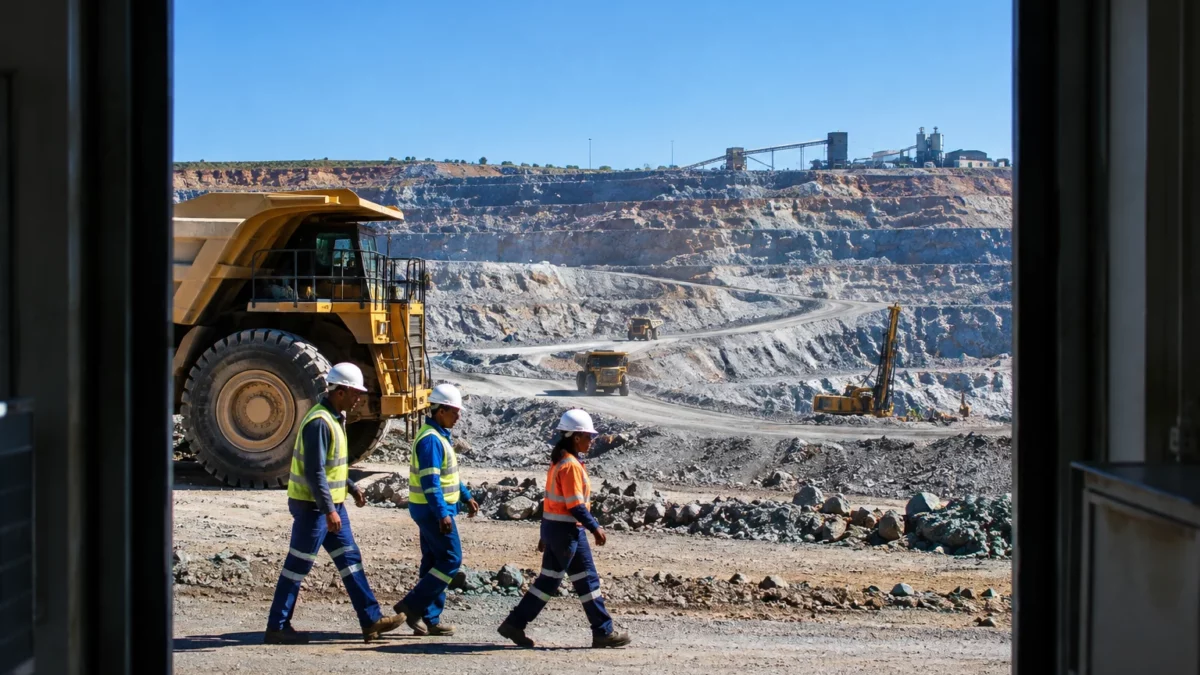
As diamond revenues fall, one question is becoming urgent for Botswana: how can it fund diversification without adding to public finances already under pressure? The government wants to respond by giving the state a stake in certain new mining projects, without having to buy it.
An ownership lever to explore beyond diamonds
The scheme concerns deposits discovered on permits held by Exploration Investment Company Botswana (EICB), the state-owned company tasked with supporting exploration. According to the Minister of Minerals and Energy, Bogolo Kenewendo, the state would receive at least 5% of projects that proceed to production, at no cost. She outlined the measure in an interview in Gaborone, reported on 25 November 2026.
This stake, described as “free” or “carried”, would be in addition to the state’s existing right to buy up to 24% of a project when a mining licence is granted. The difference is tangible: to exercise this purchase right, the government must provide the funds. The free stake requires no initial payment, but gives the state a shareholding in the operating company.
The minister described 5% as a minimum, with the possibility of negotiating more. The precise arrangements have yet to be established, however: the implementation timetable, governance rules, treatment of future costs and conditions under which the stake could be diluted are not detailed in the information available.
Diversification under budgetary constraints
The reform comes as Botswana’s economic model is being hit by falling global demand for natural diamonds. Competition from synthetic stones and a slowdown in purchases have weighed on sales and production. The International Monetary Fund estimates that the economy contracted by 3% in 2024; mining output fell by 24% that year.
Dependence is not measured by exports alone. Mining revenues also feed into the state budget and support the activities of companies that supply mines or process stones. In Gaborone, the decline in these revenues is reducing the room for manoeuvre in the budget. In mining regions, it can affect jobs, subcontractors and local businesses.
EICB aims to promote exploration for copper, gold, platinum, chromium, iron ore and nickel, alongside diamonds. The state-owned company is expected to work with private companies in particular. But mining diversification does not mean an immediate diversification of revenues: exploration can take years, and a permit guarantees neither the discovery of a profitable deposit nor the opening of a mine.
Dividends are possible, but never automatic
An equity stake can confer a right to dividends, meaning a share of distributed profits. It does not, however, guarantee a payment. A company may reinvest its profits, repay its debts or make a loss. Public revenues will therefore depend on projects’ profitability and decisions on distributions, in addition to taxes and royalties already due.
The mechanism also shifts some of the balance of power between the state and investors. Botswana is seeking to retain a share of the value created by public permits while attracting the private capital needed for exploration work and mine construction. State participation can strengthen the public presence in projects. In return, investors will want to know the governance rules and financial obligations associated with the stake.
This matters for taxpayers. A free stake reduces the state’s entry cost, but does not in itself resolve the question of whether it might have to contribute to future expenditure. Without clarification on this point, it is too early to estimate the net budgetary gains or the risks borne by public finances.
A Botswana choice in a regional debate
Botswana is not alone in seeking to increase states’ share of mining revenues. Several African countries have included free state stakes in their mining frameworks. Rates and rules vary, however; comparing them without taking account of funding obligations, voting rights or tax regimes would give an incomplete picture.
A founding member of the Southern African Development Community (SADC), Botswana is taking this debate forward in a region where copper, nickel and other minerals are playing an increasingly prominent role in industrial strategies. A clear rule could help the country negotiate future projects. Conversely, vague terms could complicate partnerships even before deposits are confirmed.
The measure’s impact will therefore depend less on the 5% figure than on how it is applied: which projects will be covered, who will fund studies, and how will profits be shared? For Botswana’s people, the challenge is to turn exploration into jobs and sustainable revenues, without the new stake becoming a merely theoretical right. The next step will be to publish operational rules and advance the permits held by EICB.