Algeria
 Egypt
 Libya
 Morocco
 Sudan
 Tunisia
 Benin
 Burkina Faso
 Cabo Verde
 Côte d'Ivoire
 Ghana
 Guinea
 Guinea-Bissau
 Liberia
 Mali
 Mauritania
 Niger
 Senegal
 Sierra Leone
 The Gambia
 Togo
 Cameroon
 Central African Republic
 Chad
 DR Congo
 Equatorial Guinea
 Gabon
 Republic of the Congo
 São Tomé and Príncipe
 Burundi
 Comoros
 Djibouti
 Eritrea
 Ethiopia
 Kenya
 Madagascar
 Malawi
 Mauritius
 Mozambique
 Rwanda
 Seychelles
 Somalia
 South Sudan
 Tanzania
 Uganda
 Angola
 Botswana
 Eswatini
 Lesotho
 Namibia
 South Africa
 Zambia
 Zimbabwe
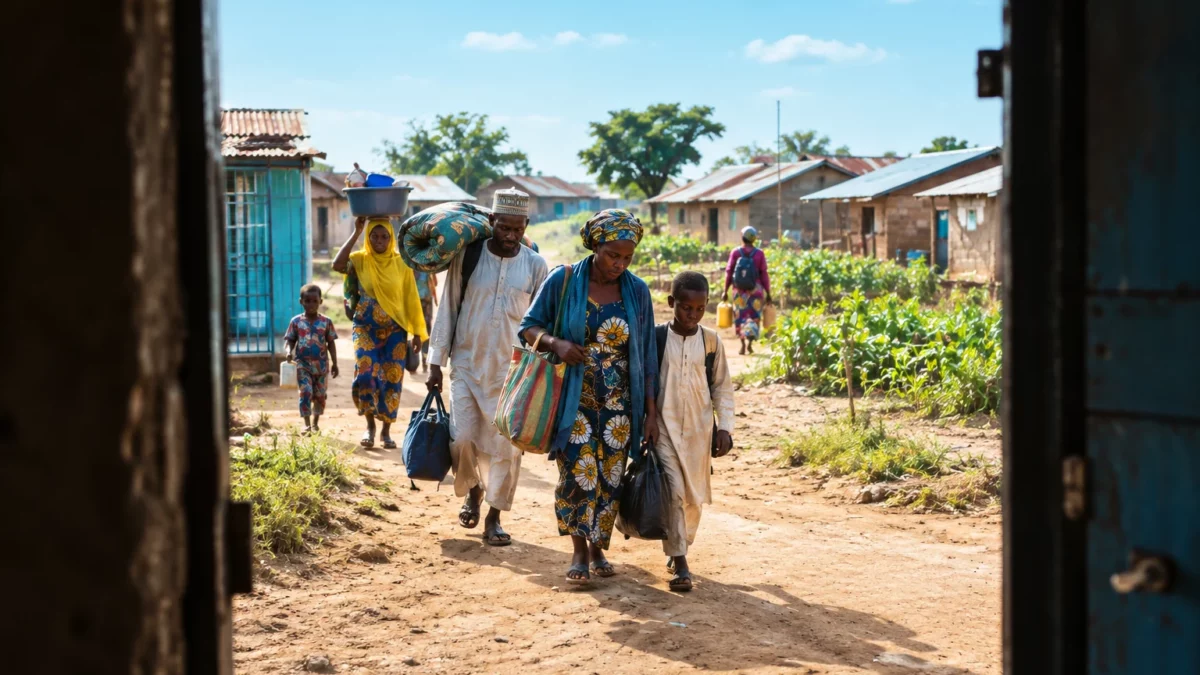
In Borgu, in western Niger State, residents were caught in a spiral of violence within hours. After a deadly attack on Luman Ba’are, nearby Fulani camps were targeted. The death tolls remain disputed, but accounts converge on one point: civilians paid the price for accusations that have yet to be established by an independent investigation.
Tensions amid insecurity in the north-west
Borgu is in western Nigeria, near the border with Benin. This rural area regularly faces incursions by armed groups, kidnappings and cattle theft. These acts of violence add to tensions over access to land, grazing and water, although these factors alone are not enough to explain every attack.
Nigeria, whose capital is Abuja, faces distinct threats in different regions: criminal groups locally described as “bandits”, jihadist organisations and communal violence. Conflating them risks obscuring responsibility and leading to inappropriate responses. In the north-west and north-central regions, rural residents often depend on farming, livestock rearing and local markets. An attack can therefore jeopardise their safety, crops and income at the same time.
The region is also part of a cross-border area. The Benin border makes cooperation between states relevant, particularly in response to the movement of armed groups. ECOWAS, an organisation for cooperation among West African countries, provides a regional framework for these issues. However, the immediate protection of residents and investigations are primarily the responsibility of the Nigerian authorities.
An attack, followed by reprisals
On Saturday 21 November, armed men attacked Luman Ba’are, a village with a Kambari majority, in the early hours of the morning. Niger State authorities reported five deaths and five injuries. Residents quoted by Nigerian media gave a higher toll, of up to 11 dead, including the village chief and members of his family. Houses were reportedly set on fire and residents abducted. These discrepancies had not been resolved in the information available as of 25 November.
Residents blamed Fulani men for the attack. This accusation confirms neither the attackers’ identities nor collective responsibility. In its wake, local self-defence groups attacked Fulani camps in Wawa, Gadi Oli and other nearby communities. Accounts report people killed and families forced to flee.
The Miyetti Allah Cattle Breeders Association of Nigeria (MACBAN), an association representing mainly Fulani herders, says 64 people were killed in the reprisals. The figure has not been confirmed by the authorities. A Nigerian media outlet reported that residents had counted 38 bodies buried in Wawa, but could not establish the toll in Gadi Oli. The state government, for its part, confirmed the deaths in Luman Ba’are but had not endorsed the toll cited by MACBAN. Information corroborated by the Associated Press and the Nigerian outlet Premium Times confirms that authorities and witnesses do not all give the same figures.
Civilians caught in the logic of collective blame
The reprisals put residents at risk of being targeted because of their community affiliation rather than evidence establishing their involvement. This distinction is essential: suspected attackers do not represent an entire community. Until those responsible and the circumstances are established, every accusation must remain attributed.
The consequences go beyond the death toll. Displaced families lose access to their homes, livestock or fields. For herders, the theft or death of cattle can wipe out a major source of income. For farmers and traders in affected villages, insecurity can prevent movement and disrupt commerce. Women, children and older people fleeing are particularly exposed, while communities far from administrative centres may face greater difficulty accessing healthcare and aid.
The events reported in Borgu cannot be reduced to a conflict between farmers and herders. Land tensions and access to resources matter in several Nigerian regions, but the initial attack, suspicions of links to armed groups and the reprisals must be examined separately. Nigerian media report that the violence and displacement have fuelled mistrust between communities in the area. This makes an investigation that distinguishes suspected perpetrators from civilian populations all the more necessary.
Investigation and protection: next steps
State authorities announced the deployment of security teams after the attack on Luman Ba’are. Police confirmed the initial assault and said steps were under way to find the suspected perpetrators. The reprisals’ death toll, the fate of people reported missing and the circumstances in which the camps were attacked remain to be clarified.
For residents, the immediate concern is the safety of villages and the possibility of returning home, as well as resuming farming and pastoral activities. For the Nigerian authorities, the task is to establish the facts without allowing rumours to replace investigations, and to protect communities without distinction. Previous incidents reported in Niger State show that rural insecurity is not limited to a single episode; each cycle of reprisals risks widening displacement and accusations.
Across West Africa, Borgu is a reminder that local violence can take on a cross-border dimension, particularly in areas near Benin. But the response begins on the ground: verifying death tolls, finding missing people and identifying those responsible. The authorities’ next statements and the results of independent investigations will show whether the figures cited are confirmed and whether residents can return to their communities without fearing another attack.