
 Algeria
 Egypt
 Libya
 Morocco
 Sudan
 Tunisia
 Benin
 Burkina Faso
 Cabo Verde
 Côte d'Ivoire
 Ghana
 Guinea
 Guinea-Bissau
 Liberia
 Mali
 Mauritania
 Niger
 Senegal
 Sierra Leone
 The Gambia
 Togo
 Cameroon
 Central African Republic
 Chad
 DR Congo
 Equatorial Guinea
 Gabon
 Republic of the Congo
 São Tomé and Príncipe
 Burundi
 Comoros
 Djibouti
 Eritrea
 Ethiopia
 Kenya
 Madagascar
 Malawi
 Mauritius
 Mozambique
 Rwanda
 Seychelles
 Somalia
 South Sudan
 Tanzania
 Uganda
 Angola
 Botswana
 Eswatini
 Lesotho
 Namibia
 South Africa
 Zambia
 Zimbabwe
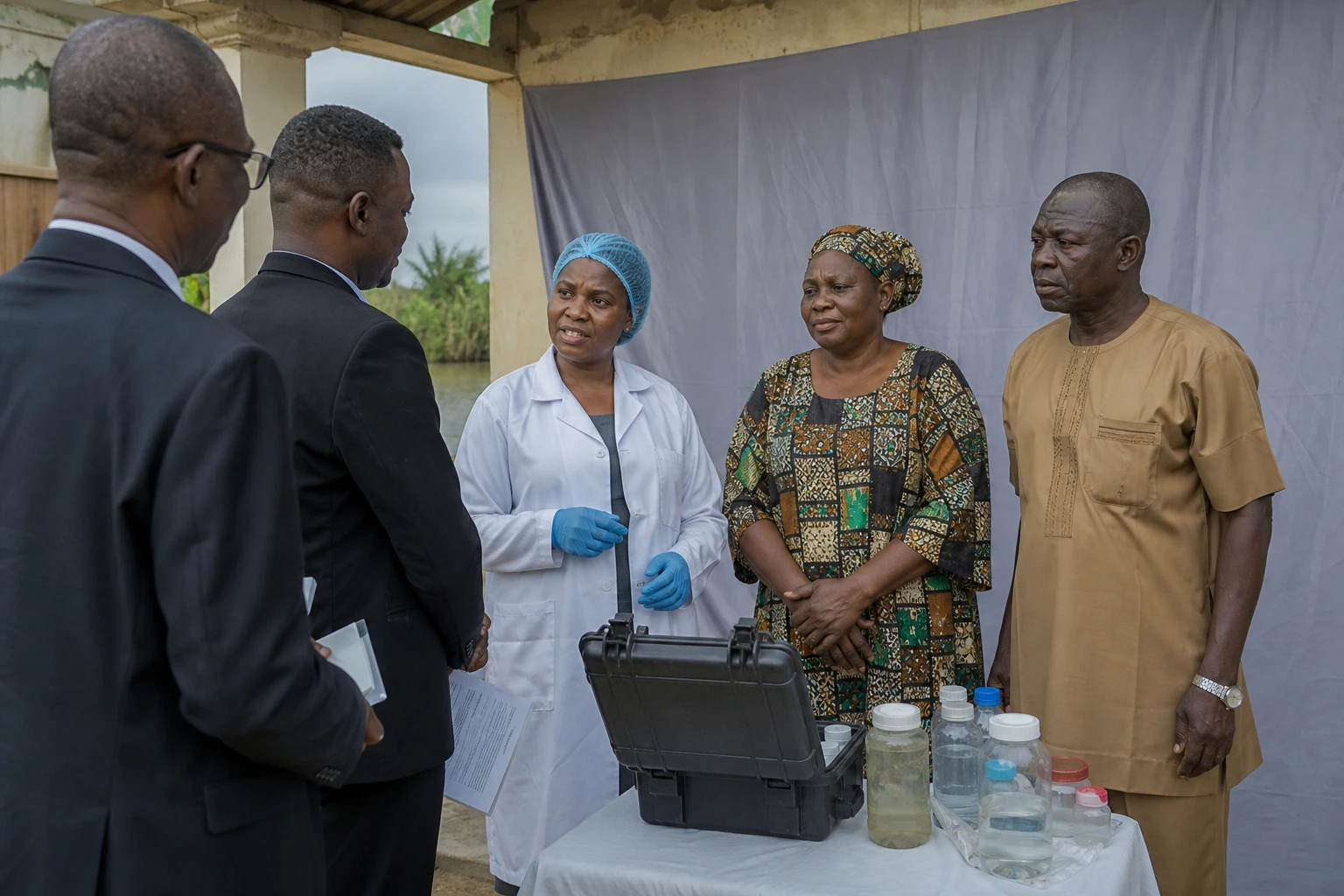
In Bille, in Rivers State, the ground no longer seems stable. Since October 2025, bubbles have risen in waterways, swamps, wells and sometimes beneath homes. In this fishing community in the Niger Delta, concern is no longer just about pollution. It is now about the immediate safety of families.
The risk is twofold. Escaping gas can degrade air and water quality. It can also ignite in an enclosed space. Joy Amos’s death after her room exploded has turned an environmental alert into a public health emergency.
An island community facing persistent emissions
Bille is in Degema Local Government Area, south of Port Harcourt, the capital of Rivers State. The town is part of the Niger Delta’s vast network of mangroves and waterways. Fishing, small-scale trade and activities linked to natural resources shape local life.
In October 2025, residents reported gas bubbling up in wetlands several kilometres from the centre of Bille. They also described a sulphurous smell and unusual agitation in the water. Within weeks, the phenomenon had reportedly reached other parts of the community, including wells used for domestic water.
Nigerian authorities launched checks. The National Oil Spill Detection and Response Agency, the federal agency responsible for monitoring hydrocarbon-related pollution, took samples in December 2025. According to information made public by Amnesty International, tests reportedly found high concentrations of methane at some sites. The full results have not, however, been published.
The Nigerian Upstream Petroleum Regulatory Commission, which oversees upstream oil operations, has also opened an investigation. It says the source of the phenomenon has not yet been established. Initial observations point to an underground phenomenon that could have several causes. No definitive link to a specific pipeline, an abandoned well or an oil installation has therefore been demonstrated at this stage.
This scientific caution does not lessen the danger experienced by residents. Organisations on the ground report emissions around wells, inside homes and schools, and in areas where people move about. They also describe deteriorating aquatic resources and growing concerns for fish, shellfish and mangrove plants.
Reported symptoms, limited healthcare
In Bille, residents associate the crisis with itching, headaches, nausea, vomiting and breathing difficulties. These accounts are no substitute for a comprehensive medical study. They nevertheless point to the absence of a healthcare system capable of monitoring exposed people over time.
The local health centre reportedly operates with community health workers and no permanent doctor, according to accounts gathered in the community. Specialist examinations are difficult to carry out locally. In serious cases, residents must travel to Port Harcourt by river or arrange evacuation to another facility.
This distance weighs particularly heavily on children, pregnant women, older people and families with irregular incomes. It also makes it harder to monitor symptoms. In a largely informal economy, a consultation or journey to the city can mean losing a day’s work, or even longer.
Schools have also been affected. Children were reportedly moved to another community after cases of illness and vomiting were reported at a school. In neighbourhoods where the smell is strongest, opening a window or using a water source becomes a risky decision.
Joy Amos’s death renews questions about protection
On 3 September 2026, an explosion in her room in Bille left Joy Amos seriously injured. According to Amnesty International and the Nigerian organisation Corporate Accountability and Public Participation Africa, the room had previously made a bubbling sound beneath the floor and emitted an odour likened to gas.
Public accounts differ on some details of the care she received and on the exact date of her death. Human rights organisations say that Joy Amos, aged 28 or 29 according to the sources, died on 22 September 2026 after being transferred to Port Harcourt. She had suffered severe burns.
A link between the explosion and methane emissions is strongly suspected, but must still be established through an independent technical and medical investigation. The authorities cannot limit themselves to determining the composition of the gas. They must also identify the emission points, make homes safe and clearly inform the public.
In April 2026, the Rivers State government announced emergency assistance of 100 million naira. The funds were intended to help provide drinking water and healthcare. They do not, however, resolve the central question: how can the emissions be stopped and the risk of explosion reduced?
The response requires coordination between the federal government, the Rivers State government, local authorities, environmental agencies and oil operators currently or formerly active in the area. Changes in ownership of assets must not make it harder to establish responsibility. Residents need a clearly designated point of contact and a public timetable.
A local issue extending beyond Bille
The Bille crisis is part of the Niger Delta’s wider history. For decades, oil-producing communities have denounced leaks, gas flaring, soil contamination and inadequate compensation mechanisms. But the current phenomenon has one particular feature: the emissions appear to be directly affecting living spaces, wells and homes.
For Nigeria, West Africa’s largest economy and a key member of the Economic Community of West African States, the situation is testing the credibility of energy-sector regulation. ECOWAS does not directly manage the facilities in Bille. It is nevertheless concerned by issues of human security, mobility and resource governance in a region where people move between rural areas, port cities and economic hubs.
The case also raises a continental question. Several African countries are seeking to increase gas production while pledging to reduce emissions and better protect communities living nearby. In Bille, the priority is less about industrial promises than the ability to prevent an accident, publish expert findings and ensure rapid access to water and healthcare.
The next step will be decisive: publish the results of the analyses begun in December 2025, confirm or rule out the involvement of former oil infrastructure and determine whether some areas should be temporarily evacuated. Until those answers are available, residents remain exposed to a danger whose source is uncertain, but whose effects are drawing closer to where people live every day.



