Algeria
 Egypt
 Libya
 Morocco
 Sudan
 Tunisia
 Burkina Faso
 Cabo Verde
 Côte d'Ivoire
 Ghana
 Guinea
 Guinea-Bissau
 Liberia
 Mali
 Mauritania
 Niger
 Nigeria
 Senegal
 Sierra Leone
 The Gambia
 Togo
 Cameroon
 Central African Republic
 Chad
 DR Congo
 Equatorial Guinea
 Gabon
 Republic of the Congo
 São Tomé and Príncipe
 Burundi
 Comoros
 Djibouti
 Eritrea
 Ethiopia
 Kenya
 Madagascar
 Malawi
 Mauritius
 Mozambique
 Rwanda
 Seychelles
 Somalia
 South Sudan
 Tanzania
 Uganda
 Angola
 Botswana
 Eswatini
 Lesotho
 Namibia
 South Africa
 Zambia
 Zimbabwe
A road that is more than just a carriageway
Between Cotonou and northern Benin, the road is more than a ribbon of tarmac. It carries goods, drivers and customs formalities, and often underpins the economic balance of several towns along the way. When a corridor becomes congested, delays, prices and road safety can all be affected in turn.
It is against this backdrop that the reconstruction project for the Setto-Dassa-Zoumè section has returned to the fore. The stretch forms part of the Cotonou-Bohicon-Dassa-Savè-Parakou-Kandi-Malanville route, one of Benin’s main inter-state arteries, and of the Cotonou-Niamey corridor, which is vital for trade with the Sahel. Regionally, this is a matter of West African connectivity and economic integration, not simply a local road project.
What Benin is actually preparing
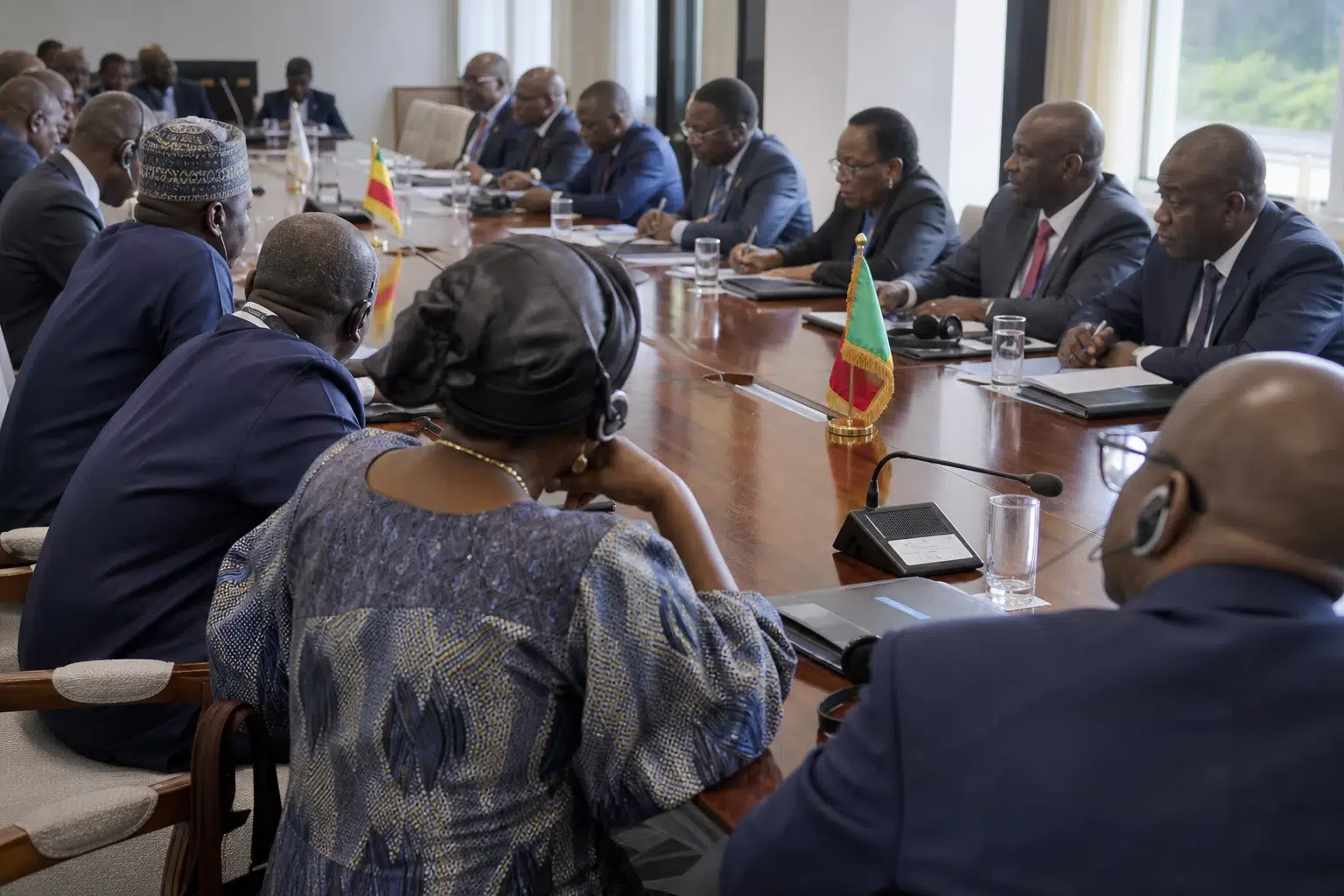
Meeting in Cotonou on Thursday 16 July 2026, the board of MCA-Bénin régional said that the conditions for starting work had now been met. The regional transport programme under the Benin-Niger Compact was signed in December 2022 and launched on the Beninese side in August 2023, with a budget of $202 million announced for the Benin component.
Project documents initially envisaged work on about 83 kilometres between Bohicon and Dassa-Zoumè. Updates published by the Millennium Challenge Corporation later reported a change in scope to 77 kilometres between Bohicon and Dassa, while retaining the central aim: to upgrade a strategic stretch, improve safety and ease heavy-goods traffic. The shift from 83 to 77 kilometres shows that the project has evolved technically without changing its underlying purpose.
The initial regional project was also due to cover Niger, with the rehabilitation of 127 kilometres between Dosso and Niamey. But after the July 2023 coup, Washington first suspended preparations for the Niger component, then suspended aid to Niger in September 2023 before announcing the end of the partnership later. The Beninese project, meanwhile, continued to progress.
Why this road matters to Benin’s economy
In Benin, the stakes go beyond domestic traffic. The port of Cotonou serves as a transit hub for a significant share of trade flows to Niger. When the Benin-Niger border was closed after the 2023 crisis, supply chains were disrupted on both sides. The International Monetary Fund had already noted that the border closure was affecting transit traffic at the port of Cotonou and revenue from regional re-exports.
For transport operators, upgrading Setto-Dassa-Zoumè could reduce trans-shipment, waiting times and accidents. For traders, it could also make deliveries between the south, centre and north of the country more predictable. For the Beninese state, it supports a broader strategy: making the corridor a competitive advantage against other ports in the Gulf of Guinea.
The areas along the route also have a stake in the project. Bohicon is a commercial crossroads in the Zou department. Dassa-Zoumè, in the Collines department, lies at the intersection of several regional routes. People in these areas do not view a road project as a balance sheet; they judge it by journey times, transport costs, access to markets and the level of risk on the road.
Benin’s project amid broader regional developments
Timing matters. Since June 2026, Cotonou and Niamey have resumed discussions on reopening their shared border and restoring bilateral cooperation. APA has reported progress on security, legal and trade issues, as well as a joint communiqué pointing towards a thaw. At the same time, maritime transport operators have also discussed the resumption of some flows to Niger via Cotonou.
In other words, the infrastructure is regaining value just as diplomacy seeks to repair severed links. In West Africa, roads matter as much as diplomatic communiqués. They embody trust, or its absence. For Benin, a member of ECOWAS, the challenge is clear: to turn an upgraded road into a source of economic resilience, even while the political climate in the neighbourhood remains unstable.
The project’s continental significance is clear. The Setto-Dassa-Zoumè works illustrate a broader trend in West Africa: states are now seeking to secure their trade corridors rather than relying solely on capitals and ports. From this perspective, Benin—with Porto-Novo as its administrative capital and Cotonou as its logistical hub—is showing that a well-targeted infrastructure policy can carry as much weight in regional integration as a summit. It remains to be seen whether the announced start will soon translate into work on the ground, and whether normalisation with Niger will restore the Cotonou-Niamey corridor to full operation.