Algeria
 Egypt
 Libya
 Morocco
 Sudan
 Tunisia
 Burkina Faso
 Cabo Verde
 Côte d'Ivoire
 Ghana
 Guinea
 Guinea-Bissau
 Liberia
 Mali
 Mauritania
 Niger
 Nigeria
 Senegal
 Sierra Leone
 The Gambia
 Togo
 Cameroon
 Central African Republic
 Chad
 DR Congo
 Equatorial Guinea
 Gabon
 Republic of the Congo
 São Tomé and Príncipe
 Burundi
 Comoros
 Djibouti
 Eritrea
 Ethiopia
 Kenya
 Madagascar
 Malawi
 Mauritius
 Mozambique
 Rwanda
 Seychelles
 Somalia
 South Sudan
 Tanzania
 Uganda
 Angola
 Botswana
 Eswatini
 Lesotho
 Namibia
 South Africa
 Zambia
 Zimbabwe
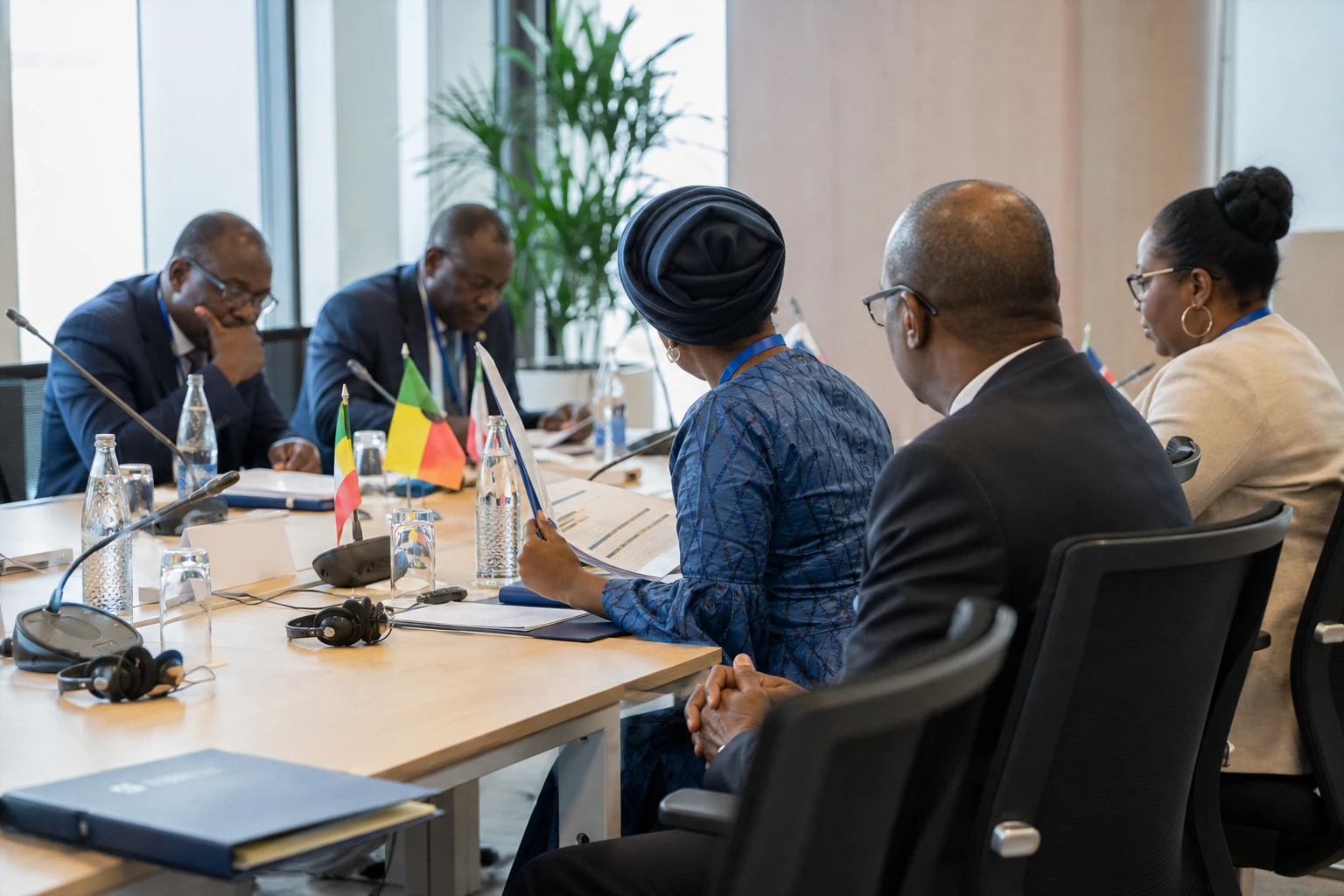
An upper house takes shape at the heart of an institutional transition
In Cotonou, Benin is discovering a new part of its political architecture. The Senate, created by the constitutional revision of November 2025, is due to elect its first president on Thursday 6 August 2026, just days after its official establishment. This step is about more than protocol. It will also show who takes charge of an institution that is still young but already under scrutiny for its real weight in the balance of power.
The context is broader than a simple internal vote. Since 2025, Benin has embarked on a new institutional phase, with a bicameral Parliament replacing the unicameral model in place since 1990. Across West Africa, the change is being closely watched as ECOWAS seeks to preserve democratic benchmarks weakened by political ruptures in the Sahel.
What the rules provide, and why the Senate presidency matters
The rules of procedure of Benin’s Senate have been approved by the Constitutional Court, paving the way for the election of the upper house’s bureau. The bureau comprises three members: a president, a vice-president and a rapporteur. The term is set at five years. The first two posts are reserved for ex officio members, including former heads of state and certain former institutional officials.
Government spokesperson and minister Wilfrid Léandre Houngbédji summed up the situation cautiously: “One of the ten may be elected.” The phrase says a great deal. The choice has not yet been made public, but the field of possibilities remains narrow. The future Senate presidency will not be a ceremonial post. It will shape the chamber’s agenda and pace of work and, above all, how this new institution takes its place in Benin’s political arena.
On 30 July 2026, at its inaugural session, the Senate was established with 25 members. They include three former heads of state: Nicéphore Soglo, Boni Yayi and Patrice Talon. Their presence is inevitably prompting comment, but it is not enough to identify the future president. At this stage, no candidate has publicly declared their intention to run.
Political balances are still taking shape
The central question is not just the name. It concerns the Senate’s political role. In a country where the National Assembly has long concentrated most parliamentary work, the arrival of an upper house can be viewed in two ways. Its supporters say it adds a level of deliberation and institutional stability. Its critics fear it could become another centre for political filtering, particularly if its composition remains closely tied to the executive.
This tension explains the reservations voiced when the reform was announced. Former president Boni Yayi denounced the proposal as a threat to democratic gains. A Washington-based think tank, for its part, said the reform, combined with other constitutional changes, could make opposition representation more difficult. These assessments are not identical, but they converge on one point: the reform profoundly changes how power is exercised in Benin.
Patrice Talon’s role is also the subject of speculation. As a former head of state, he is among the Senate’s ex officio members, alongside the other former presidents concerned. His possible direct influence over the running of the chamber has not been publicly confirmed. His presence among the future senators is, however, already fuelling interpretations of the role the outgoing executive intends to retain in institutional life.
What the vote says about Benin, and what the region is watching
Benin is entering a phase in which institutional form matters as much as political substance. The Senate presidency will show whether the upper house takes shape as a forum for institutional wisdom or as an extension of the power struggle arising from the constitutional revision. Either way, the decision will have tangible effects: on how future reforms are viewed, on internal discipline within institutions and on how power is redistributed between political generations.
For Beninese citizens, the stakes are also very concrete. A new institution means new arbitrations, new procedures and, potentially, another level of decision-making on sensitive legislation. For elected officials, it creates an additional career path. For the opposition, it requires a closer reading of a now more complex system. For former public officials, it opens up an unprecedented arena for influence.
Across West Africa, the signal is twofold. On the one hand, Benin is demonstrating continuity in a constitutional order where institutions remain active and decisions follow formal legal procedures. On the other, the creation of an upper house comes amid a regional environment marked by military transitions, realignments and tensions over representative democracy. It is precisely this contrast that makes Thursday’s vote more important than a simple election of officers.
The immediate next steps will therefore need to be examined closely: the name of the first president, the place given to ex officio members, the Senate’s ability to establish its own direction and, above all, how this new chamber fits into Benin’s institutional balance. In Porto-Novo, the country’s parliamentary history is entering a new phase. It remains to be seen who will set the pace.