Algeria
 Egypt
 Libya
 Morocco
 Sudan
 Tunisia
 Burkina Faso
 Cabo Verde
 Côte d'Ivoire
 Ghana
 Guinea
 Guinea-Bissau
 Liberia
 Mali
 Mauritania
 Niger
 Nigeria
 Senegal
 Sierra Leone
 The Gambia
 Togo
 Cameroon
 Central African Republic
 Chad
 DR Congo
 Equatorial Guinea
 Gabon
 Republic of the Congo
 São Tomé and Príncipe
 Burundi
 Comoros
 Djibouti
 Eritrea
 Ethiopia
 Kenya
 Madagascar
 Malawi
 Mauritius
 Mozambique
 Rwanda
 Seychelles
 Somalia
 South Sudan
 Tanzania
 Uganda
 Angola
 Botswana
 Eswatini
 Lesotho
 Namibia
 South Africa
 Zambia
 Zimbabwe
A rising budget does not, on its own, show whether households will see their living conditions improve. In Benin, the 2027 draft budget highlights social and productive investment while pledging to keep the deficit in check. The challenge will be to turn these stated priorities into accessible services and jobs, in both cities and rural areas.
A draft now before MPs
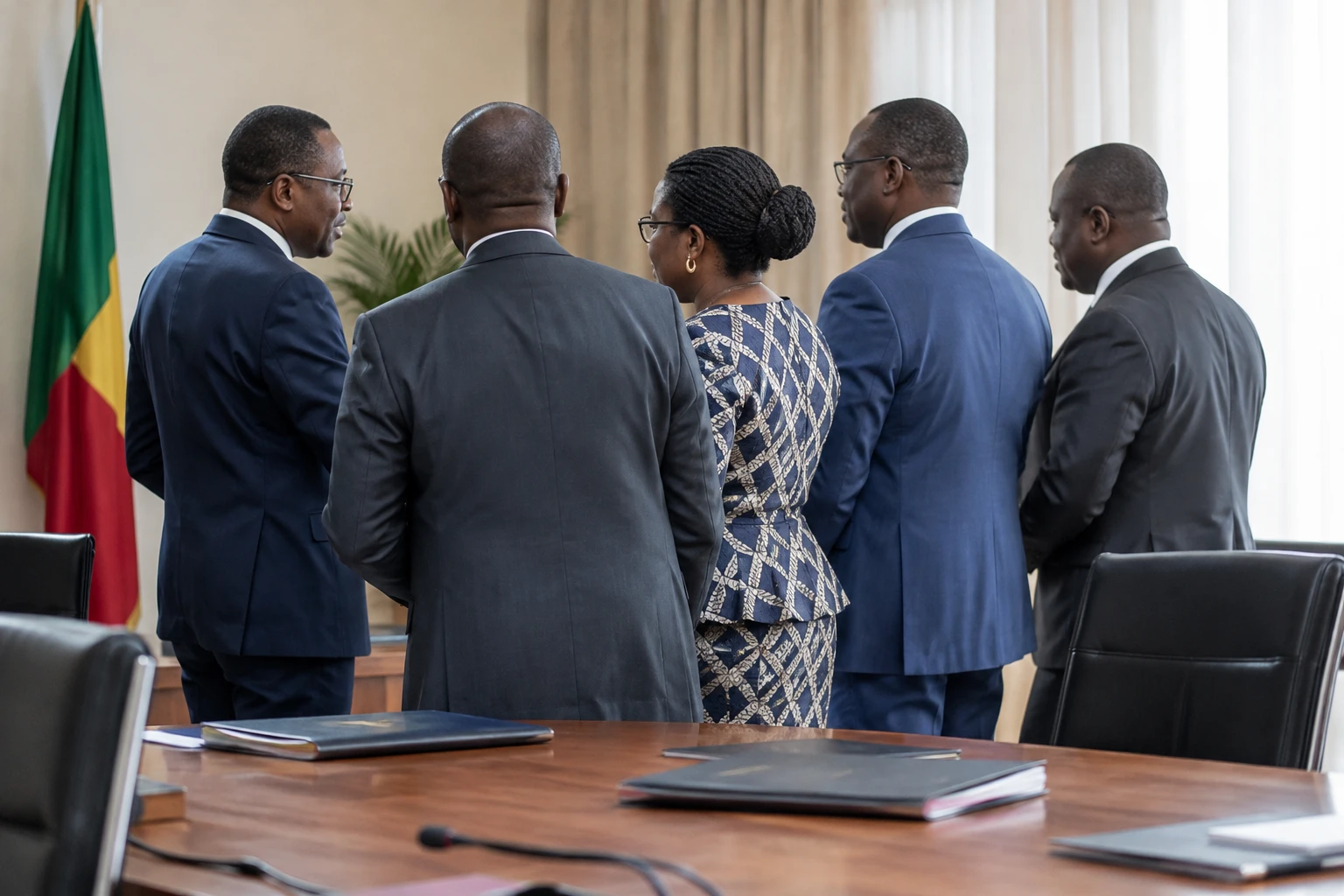
Meeting on Wednesday 7 October 2026, the Council of Ministers adopted the 2027 finance bill and submitted it to the National Assembly. The text provides for a budget balanced in revenue and expenditure at CFAF 4,757.029bn. That is 14.7% more than the 2026 amended finance law, set at CFAF 4,148.357bn.
These figures and the main policy directions are set out in the official report of the Beninese Council of Ministers. Beninese outlet Benin News also reports the announced amount and increase. This is, however, a draft: MPs must still examine and vote on it. Parliamentary decisions may therefore change the allocations before final adoption.
The government is working with three macroeconomic assumptions for 2027: growth of 7.5%, a budget deficit of 2.8% of gross domestic product (GDP) and inflation of 2%. These are forecasts, not established outcomes. Their achievement will depend in particular on public revenue, price movements and economic activity.
Investing in production and essential services
The draft is based on five priorities: modernising agriculture, developing industry, promoting tourism and culture, supporting technological innovation and strengthening human capital. The proposed spending also targets education, health, social protection, water, energy, digital services and living conditions.
The government report cites specific social measures. These include continuing social protection programmes and school canteens, as well as free tuition for girls in general and technical secondary education. The practical impact will depend on the funding actually spent, the proportion of eligible people covered and the ability of public services to reach remote municipalities.
For farmers and small businesses, sectoral pledges alone are no guarantee of access to credit, equipment, markets or electricity. Similarly, investment in training will create opportunities only if it matches available jobs. The government presents the creation of human and physical capital as a way to remove barriers to young people entering the workforce; the adopted budget and its implementation will show how far that goal is achieved.
The total is higher than under the 2026 amended budget. This comparison does not mean that each ministry or programme will receive 14.7% more: it applies to all planned revenue and expenditure. Assessing the choices will require scrutiny of the detailed allocation of funds, sources of financing and results, beyond the headline figure.
Strong growth, but expectations of redistribution
Economic momentum gives the government a basis for defending its projections. According to World Bank data, Benin’s economy grew by 7.5% in 2024; the institution also reports strong activity in 2025, driven in particular by services and industry. These estimates describe economic growth, but do not, on their own, show how its benefits are shared among employees, farmers, traders and informal-sector workers.
Mobilising domestic revenue will therefore be crucial. In its 2025 analysis, the World Bank highlights the need to increase public resources while protecting low-income households. For the state, raising revenue can fund infrastructure and services. For formal businesses and consumers, however, how tax is collected matters as much as the amount: a poorly distributed burden can weigh more heavily on those with the least room to absorb it.
WAEMU rules require shared discipline
Benin belongs to the West African Economic and Monetary Union (WAEMU), which comprises eight countries using the West African CFA franc and co-ordinates certain economic rules. Its convergence criterion sets the benchmark budget deficit at 3% of GDP. With a forecast of 2.8%, the government says it intends to remain below this ceiling. It also forecasts inflation of 2%, below the community threshold cited in the draft.
This discipline reflects a regional reality: WAEMU states must fund their priorities while controlling deficits and debt. But meeting a fiscal indicator does not automatically guarantee the quality of spending. The challenge will be to reconcile budget stability, sustainable investment and effective access to services, without placing a disproportionate share of the adjustment on vulnerable households or the informal economy.
The parliamentary debate is the next step. It will give elected representatives the opportunity to discuss revenue, spending and regional priorities before the vote. The 2027 budget will then need to be assessed through its implementation: funds actually disbursed, schools and health centres equipped, water and energy projects delivered, and social programmes genuinely accessible. These results will show whether the promise of more inclusive growth in Benin, whose official capital is Porto-Novo, is being fulfilled.