Algeria
 Egypt
 Libya
 Morocco
 Sudan
 Tunisia
 Benin
 Burkina Faso
 Cabo Verde
 Côte d'Ivoire
 Ghana
 Guinea
 Guinea-Bissau
 Liberia
 Mali
 Mauritania
 Niger
 Nigeria
 Senegal
 Sierra Leone
 The Gambia
 Togo
 Cameroon
 Central African Republic
 Chad
 DR Congo
 Equatorial Guinea
 Gabon
 Republic of the Congo
 São Tomé and Príncipe
 Burundi
 Comoros
 Djibouti
 Eritrea
 Ethiopia
 Kenya
 Madagascar
 Malawi
 Mauritius
 Mozambique
 Rwanda
 Seychelles
 Somalia
 South Sudan
 Tanzania
 Uganda
 Botswana
 Eswatini
 Lesotho
 Namibia
 South Africa
 Zambia
 Zimbabwe
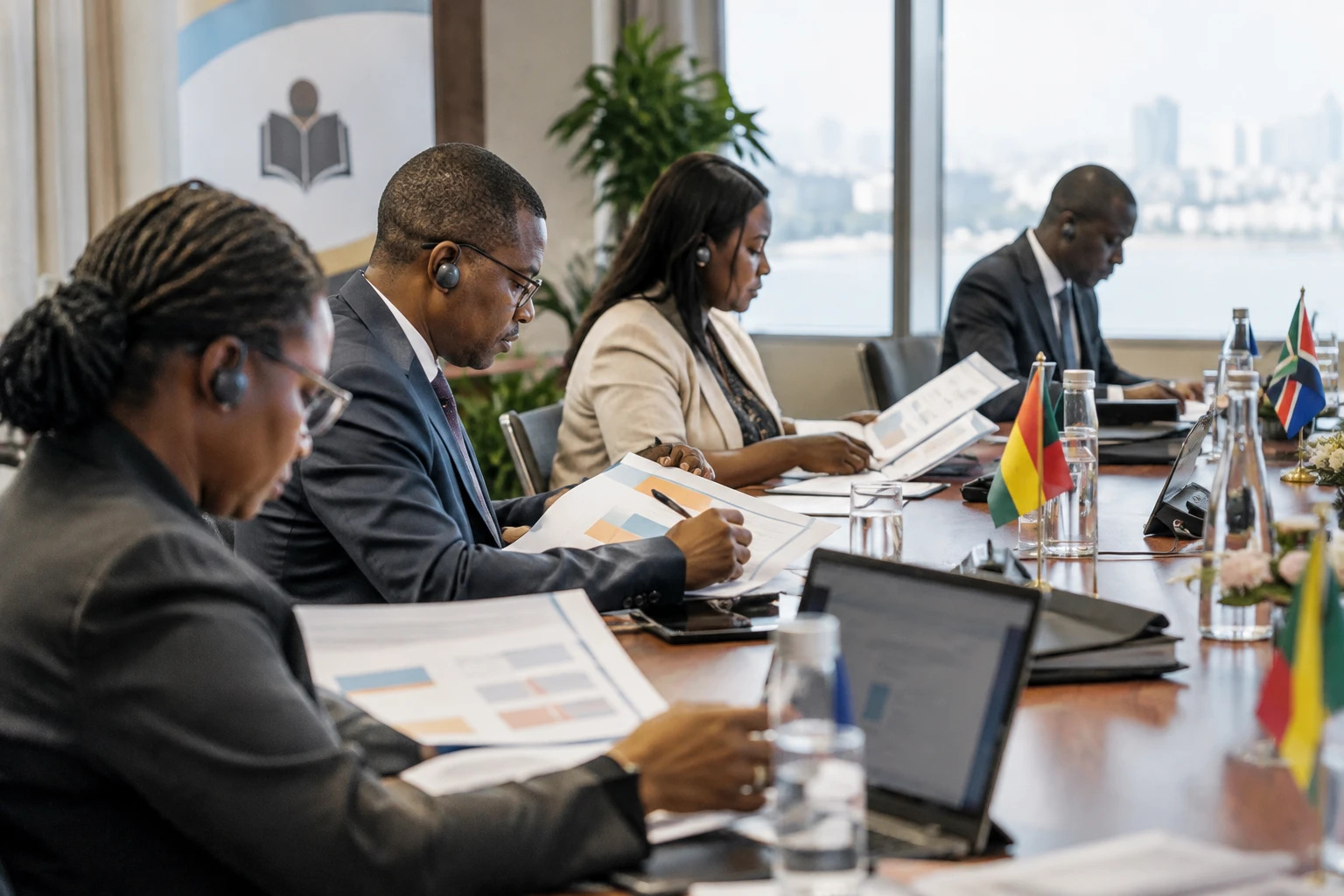
In Luanda, the challenge in education is not measured only by the number of children enrolled. It also lies in the first years of school: are pupils learning to read, write and do arithmetic, and can they continue their education through to the end of primary school? In Angola, indicators show improved access, but persistent gaps remain.
Enrolment gains, but school journeys remain fragile
Recent data paint a mixed picture. The net enrolment rate in primary education stands at 82%, while the completion rate for the cycle is 64%. The latter was below 45% in 2015-2016. Progress is real, but around 17% of children remain out of school and 36% of enrolled pupils do not complete primary education, according to figures from the 2024 census and the 2023-2024 Multiple Indicator and Health Survey, cited by UNICEF in Angola.
Access to pre-primary education remains even more limited. Only 19% of children aged 3 to 5 attend an educational institution. Yet these early years help prepare children for formal learning. Differences between areas also matter: according to UNICEF, net primary school attendance is 84% in urban areas, compared with 68% in rural areas. A national average can therefore conceal very different realities depending on the province and the distance to school.
Against this backdrop, Angola’s Ministry of Education is holding a preparatory workshop in Luanda from 26 to 29 October for an assessment of pre-primary and primary curricula. The initiative is presented as technical work, with support from UNESCO’s International Bureau of Education, UNICEF and other partners. However, the information made public does not specify the evaluation criteria or the timetable for publishing the findings.
Assess learning, not just classroom attendance
The announced assessment is part of a broader effort to analyse the school system. From 5 to 8 October, a national workshop on analysis of the education sector was held in Luanda, led by the ministry with technical support from UNESCO’s International Institute for Educational Planning and UNICEF. The Education for All Network of Angola, which took part, says the discussions covered access, the quality of learning, funding, equity and resource management. The two initiatives address different levels: one examines the sector as a whole, while the other is intended to focus on curricula for the early years.
The authorities already have preliminary data on learning outcomes. President João Lourenço said in his October 2026 State of the Nation address that two rounds of the national learning assessment had been carried out in 2024 and 2025 among pupils in grades 2, 5 and 8. They covered Portuguese, mathematics and reading fluency. However, the official statement does not provide detailed scores or results broken down by province. Without this information, it is difficult to compare outcomes across regions or groups of pupils.
An initiative in primary schools offers another point of reference. The Aprendizagem na Idade Certa programme, or “learning at the right time”, was evaluated among 21,713 pupils. According to UNICEF in Angola’s 2025 annual report, the proportion of pupils able to read a paragraph rose from 46% to 66% in one school year. The share able to do subtraction increased from 22% to 53%. These results relate to one programme and the pupils monitored through it; they do not, on their own, describe Angola’s entire education system.
The challenge: turning findings into useful decisions
An assessment of curricula can help identify unsuitable content, gaps between grades or teachers’ training needs. But its usefulness will depend on its methodology and on how its findings are published. Clear criteria would make it possible to distinguish difficulties linked to curricula from those caused by a lack of materials, teaching conditions or the distance to schools. The implementation timetable will matter just as much: a recommendation that does not lead to changes in the classroom will do little to alter pupils’ daily lives.
Differences between urban and rural areas make this precision particularly important. Schools do not necessarily have the same resources, and pupils do not face the same obstacles everywhere when accessing or remaining in school. Families, particularly in rural areas, may also face long distances and constraints that affect attendance. A uniform curriculum therefore cannot, by itself, guarantee equal educational journeys.
Angola is carrying out this work under its National Development Plan 2023-2027 and its education commitments. At regional level, the country is a member of the Southern African Development Community (SADC), which brings together southern African states for economic and social co-operation. Angola’s assessment remains a national initiative, but the issues it raises — the quality of learning, teacher training and access in rural areas — are also part of education debates across the region.
The next step will be to learn the detailed results of the assessments and the conclusions of the diagnostic: who was consulted, what gaps were measured and what measures will be adopted? For pupils and families, the decisive measure will not be simply a new strategy published in Luanda, but whether schools in urban and rural provinces alike can make lasting improvements in learning and enable more children to complete primary education.