Algeria
 Egypt
 Libya
 Morocco
 Sudan
 Tunisia
 Benin
 Burkina Faso
 Cabo Verde
 Côte d'Ivoire
 Ghana
 Guinea
 Guinea-Bissau
 Liberia
 Mali
 Mauritania
 Niger
 Nigeria
 Senegal
 Sierra Leone
 The Gambia
 Togo
 Cameroon
 Central African Republic
 Chad
 DR Congo
 Equatorial Guinea
 Gabon
 Republic of the Congo
 São Tomé and Príncipe
 Burundi
 Comoros
 Djibouti
 Eritrea
 Ethiopia
 Kenya
 Madagascar
 Malawi
 Mauritius
 Mozambique
 Rwanda
 Seychelles
 Somalia
 South Sudan
 Tanzania
 Uganda
 Botswana
 Eswatini
 Lesotho
 Namibia
 South Africa
 Zambia
 Zimbabwe
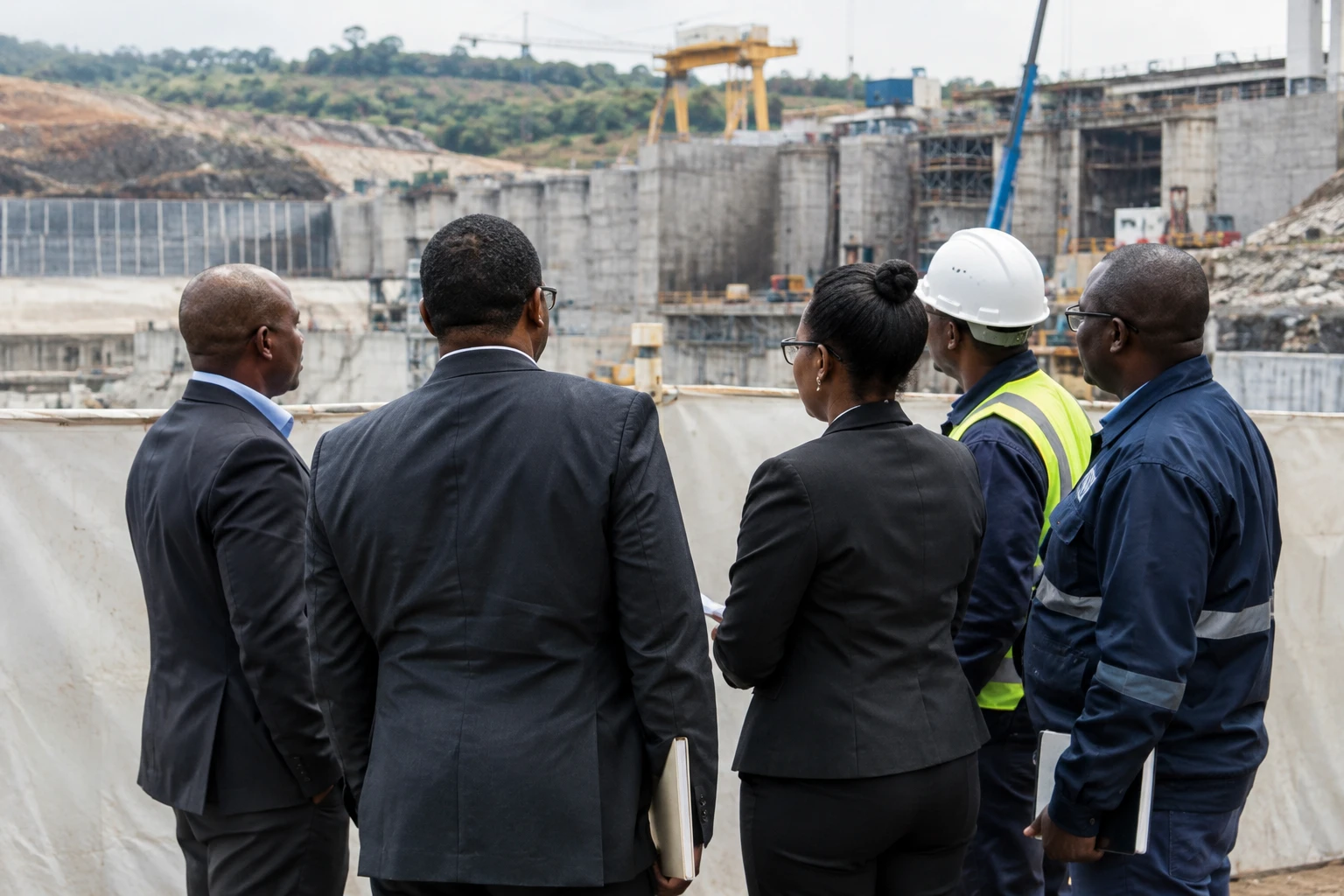
A power station can generate thousands of megawatts without every household benefiting straight away. In Angola, the timetable for Caculo Cabaça and the lines capable of carrying its electricity will matter just as much as its announced capacity.
A timetable that still needs clarification
The construction site is on the Kwanza River, in Cuanza-Norte province. It is part of a hydroelectric cascade that already includes the Capanda, Laúca and Cambambe dams. Launched in 2017, the project is designed to have a nominal capacity of 2,172 megawatts (MW), divided between a main power station and a small unit tasked with maintaining an ecological flow downstream.
However, information on the commissioning date is conflicting. The Angolan government says in its 2026 national report that generation is due to begin in 2027 with the first turbine. The same document estimates that the country’s installed capacity could reach about 8,000 MW by the end of that year.
But at African Energy Week in South Africa in October 2026, the head of Angolan group Copia put construction progress at 60%. According to the event report, the first equipment is expected by December 2027 and completion of the complex is targeted for 2029. These milestones therefore do not precisely confirm that generation will begin as early as June 2027.
In an earlier presentation on the project, Angola’s Ministry of Energy and Water described four main 530 MW turbines and a 52 MW ecological power station. At the time, it put progress at close to 33% and said full commissioning was expected in 2029. Official estimates and timetables have changed; it is important to distinguish the first feed-in to the grid from completion of all the units.
More generation is not enough
Angola’s national report puts installed capacity at 6,322 MW and electricity access at more than 50% of the population. It also notes that the grid is still being extended: the northern and central regions, as well as part of the south, are connected to the national grid. The additional generation will therefore need to be matched by power lines, substations and local connections.
This difference between installed capacity and actual access is central. A power station can increase overall supply, but its impact depends on the grid’s ability to carry electricity to cities, businesses and rural communities. The government has announced plans for lines linking Caculo Cabaça to Laúca and Dondo, among other places. Their completion will determine whether the electricity reaches beyond the site.
The project is also part of a diversification strategy. According to national data, hydropower already accounts for a significant share of the country’s generating capacity, alongside thermal power stations and solar installations. Caculo Cabaça could reduce reliance on costly thermal generation, but this will depend on the effective availability of water, equipment maintenance and management of the river.
The project includes a unit dedicated to ecological flow, intended to preserve a minimum flow in the Kwanza riverbed. This component addresses a practical challenge: balancing electricity generation with the river’s functioning and the needs of downstream communities. It does not remove the need for environmental monitoring during operation.
A regional opportunity, conditional on the grid
Luanda presents Caculo Cabaça as a project that could supply neighbouring countries. This ambition is part of the Southern African Development Community (SADC), which brings together countries in the region, and the Southern African Power Pool, a cooperation mechanism between electricity operators. However, exports require interconnections and sales agreements: generation capacity alone does not guarantee cross-border trade.
Regional needs make this cooperation strategic. In its energy report, SADC notes significant gaps between installed and effectively available capacity, as well as supply shortfalls in several countries. Lines connecting national grids are therefore just as critical as new power stations.
For Angola, the next milestone will be confirmation of a consistent timetable by the government, project managers and the companies responsible for the equipment. Progress on transmission lines will also need to be tracked. Only then will Caculo Cabaça’s capacity be able to meet domestic needs and potentially support electricity trading in Southern Africa.