
 Algeria
 Egypt
 Libya
 Morocco
 Sudan
 Tunisia
 Benin
 Burkina Faso
 Cabo Verde
 Côte d'Ivoire
 Ghana
 Guinea
 Guinea-Bissau
 Liberia
 Mali
 Mauritania
 Niger
 Nigeria
 Senegal
 Sierra Leone
 The Gambia
 Togo
 Cameroon
 Central African Republic
 Chad
 DR Congo
 Equatorial Guinea
 Republic of the Congo
 São Tomé and Príncipe
 Burundi
 Comoros
 Djibouti
 Eritrea
 Ethiopia
 Kenya
 Madagascar
 Malawi
 Mauritius
 Mozambique
 Rwanda
 Seychelles
 Somalia
 South Sudan
 Tanzania
 Uganda
 Angola
 Botswana
 Eswatini
 Lesotho
 Namibia
 South Africa
 Zambia
 Zimbabwe
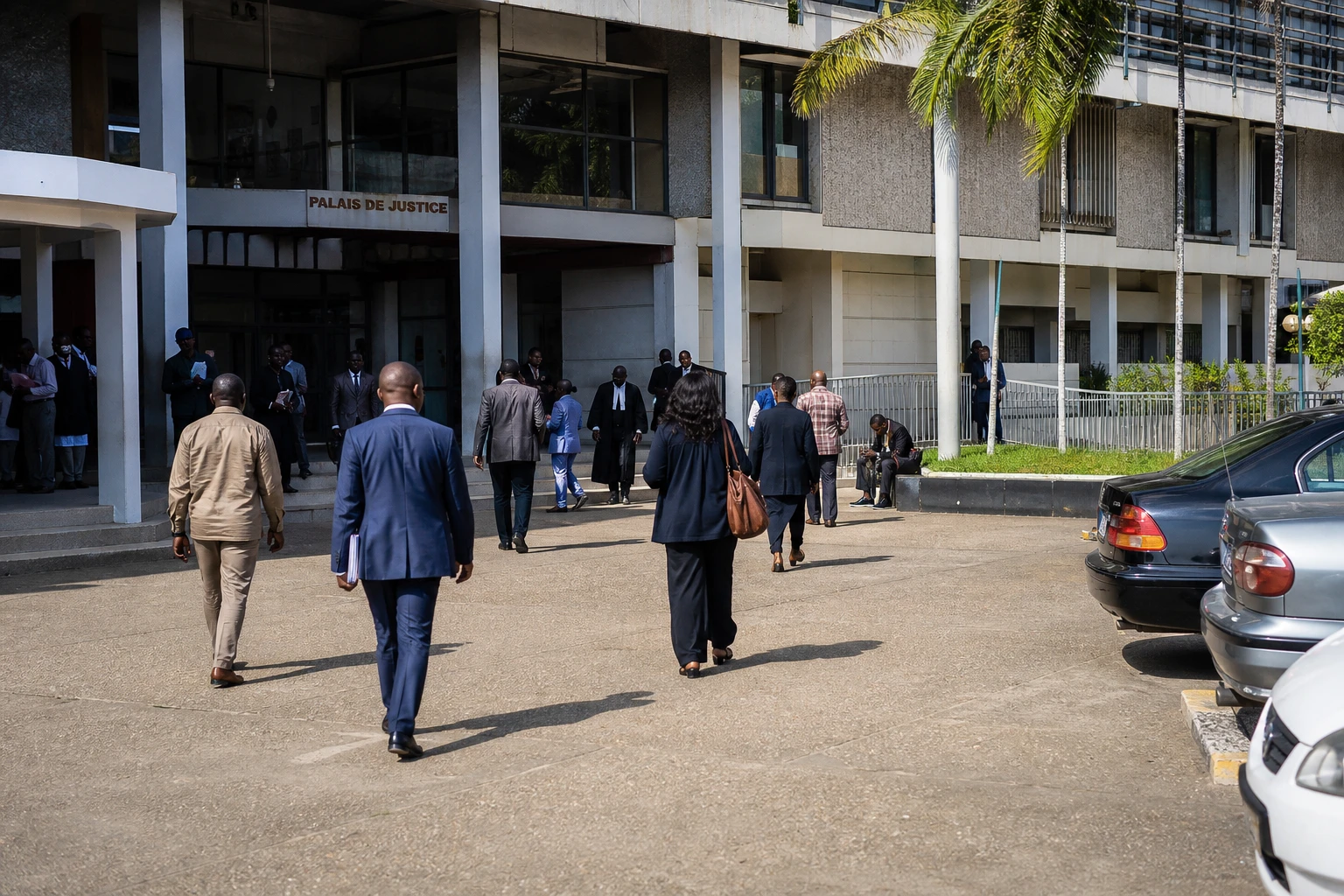
A legal case that goes beyond the Bongo family
In Libreville, the “ill-gotten assets” case is about more than just wealth. It touches on the memory of a political system, public finances and how Gabon wants to turn the page without erasing its history. Ali Bongo’s remarks, broadcast on 19 September 2026, come at just such a turning point. They are a reminder that, in Gabon, cases opened in Paris continue to resonate directly in the national debate.
The regional context matters as much as the legal framework. Gabon is a member of CEMAC, the Economic and Monetary Community of Central Africa, alongside Cameroon, Congo, the Central African Republic, Equatorial Guinea and Chad. Across the region, questions of governance, capital flows and the credibility of states are closely watched because they affect investment and public confidence.
Since Ali Bongo’s fall in August 2023, the political landscape in Libreville has changed. But the dispute over assets has not gone away. In April 2025, the French courts closed their investigation into the Bongo family and left it to the National Financial Prosecutor’s Office to decide whether to bring the case to trial. The step confirmed that the case had entered its final phase.
What French prosecutors are seeking, and why it matters in Gabon
The heart of the case has long been clear: French justice is seeking to determine whether assets acquired in France by members of the Bongo circle were financed with embezzled public money. In the latest phase of the proceedings, the National Financial Prosecutor’s Office called for 18 people and five companies to stand trial before a criminal court. The assets targeted are valued at about €85 million. Media outlets that have followed the case have also noted that nine of Omar Bongo’s children are among those concerned.
Ali Bongo’s remarks came amid this sequence of events. According to several Gabonese media outlets, the former president challenged the Gabonese state’s position in the case, arguing that the terms used were an affront to the memory of his father, Omar Bongo. His intervention also revived an awkward question for his supporters: the Gabonese state had already joined the case as a civil party during his presidency. Archives cited repeatedly by the local press make this clear.
In short, the debate is not just about real estate or shell companies. It concerns the relationship between the former regime and the concept of the public interest. For the current authorities, the case could help demonstrate a break with past practices. For those close to the former regime, it could instead appear to be an attack on the history of a family that dominated Gabonese political life for decades.
For its part, the French justice system has strengthened its tools in this area. The French Ministry of Justice says that assets definitively confiscated can be redirected to initiatives in the public interest, through a restitution mechanism made operational in 2023 and updated in July 2026. This gives such cases concrete political significance: the aim is no longer only to punish, but also to recover assets and, ultimately, return them.
A sensitive case for Gabon’s transition
In Gabon, the stakes are also domestic. The population is looking for signs of transparency, economic justice and asset recovery. In a country where public revenues remain exposed to dependence on hydrocarbons, every alleged corruption case feeds the same question: who has really benefited from the country’s wealth? This concern extends beyond political circles. It speaks to the concerns of households, civil servants, traders and young people seeking more stable prospects.
The current authorities, meanwhile, must navigate a delicate equation. On the one hand, they have to show that they are not protecting the old networks. On the other, they must avoid turning a foreign judicial proceeding into a political settling of scores. Caution is all the more necessary because the case crosses several Central African countries and points to long-standing practices of appropriating public resources. Gabon is not alone in this case: for years, the French justice system has pursued similar cases involving other ruling families in the region.
The case also says something about the relationship between sovereignty and transnational justice. When an African state defends its property interests in proceedings opened abroad, it is not defending only a family memory. It is also seeking to reaffirm its ability to speak on behalf of its assets, finances and institutions. For post-Bongo Gabon, that is the challenge: to face up to its legacy without being trapped by it.
What happens next will depend on the French courts’ final decision on whether to hold a trial. But whatever the outcome, the case will remain a marker of Gabon’s transition. It will weigh on the country’s image in Central Africa, expectations of justice in Libreville, and how CEMAC states now handle questions of governance, public assets and political accountability.



