Algeria
 Egypt
 Libya
 Morocco
 Sudan
 Tunisia
 Benin
 Burkina Faso
 Cabo Verde
 Côte d'Ivoire
 Ghana
 Guinea
 Guinea-Bissau
 Liberia
 Mali
 Mauritania
 Niger
 Nigeria
 Senegal
 Sierra Leone
 The Gambia
 Togo
 Cameroon
 Central African Republic
 Chad
 DR Congo
 Equatorial Guinea
 Gabon
 São Tomé and Príncipe
 Burundi
 Comoros
 Djibouti
 Eritrea
 Ethiopia
 Kenya
 Madagascar
 Malawi
 Mauritius
 Mozambique
 Rwanda
 Seychelles
 Somalia
 South Sudan
 Tanzania
 Uganda
 Angola
 Botswana
 Eswatini
 Lesotho
 Namibia
 South Africa
 Zambia
 Zimbabwe
A quarter that reveals the telecoms sector’s digital shift
In several African markets, the telecoms battle is no longer fought solely over voice services. It is now about data, mobile payments and network quality. That is where growth is being built, along with customer loyalty.
Airtel Africa’s latest quarterly results illustrate this shift. For the three months ended 30 June 2026, the group reported marked growth in its French-speaking African operations. Revenue in the region reached $492 million, up from $411 million a year earlier, an increase of 19.7% on a reported basis and 18.0% at constant currency.
The region comprises Chad, the Democratic Republic of the Congo, Gabon, Madagascar, Niger, the Republic of the Congo and Seychelles. The group treats these markets as a distinct operating unit, with patterns and rates of consumption that differ from those in Nigeria or East Africa.
Data, mobile money and coverage drive growth
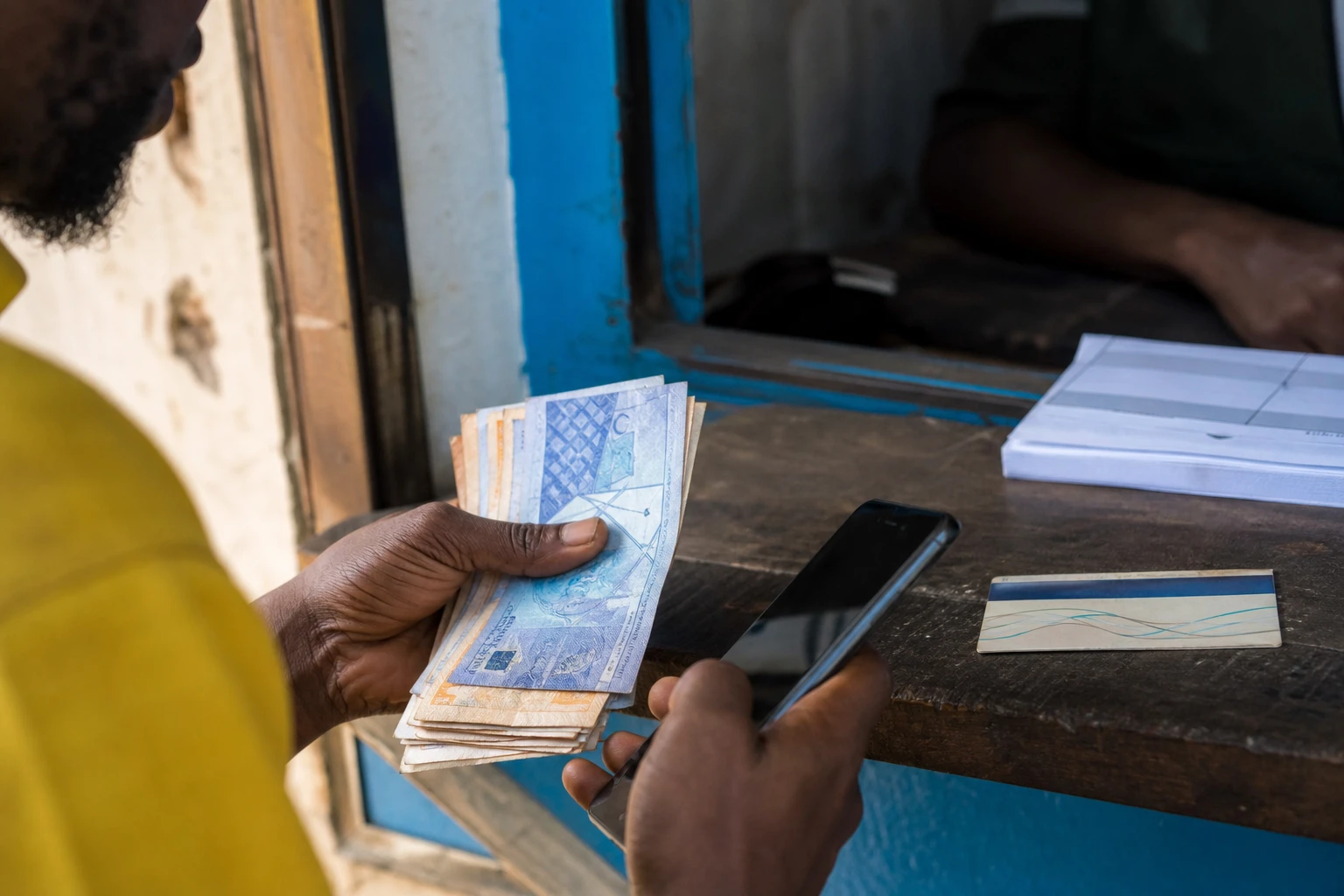
Growth is being driven first and foremost by data. In the region, revenue from internet access rose by 21.4% at constant currency to $218 million. Voice revenue grew more modestly, by 4.8% at constant currency, to $164 million. Mobile money made the strongest contribution, generating $102 million in revenue, up from $72 million a year earlier — a 39.0% increase at constant currency.
The number of mobile money users in French-speaking Africa rose from 8.1 million to 11.4 million in a year. The group also highlighted the expansion of its network: 4G now covers 94.2% of its sites, according to its quarterly statement. The strategy is straightforward: more coverage, more usage and therefore more revenue per customer.
The same pattern is evident across the group. Airtel Africa reported consolidated revenue of $1.853 billion, up 31.0% year on year, with growth of 21.1% at constant currency. Profit after tax stood at $198 million, compared with $156 million a year earlier. The group also stepped up network investment, spending $389 million on capital expenditure during the quarter.
The company attributes this growth to three drivers: an increase in customer numbers, higher data consumption and the growing adoption of digital payments. As at 30 June 2026, Airtel Africa had 189 million customers in total, including 87.3 million data users and 56.5 million mobile money customers.
What this means for states, households and local economies
For governments, these results are a reminder of a central fact: digital infrastructure has become an economic asset. In countries such as the Democratic Republic of the Congo, Chad and Madagascar, where coverage gaps between capitals and inland areas remain significant, expanding 4G can affect education, financial services and informal trade. But it also depends on very practical factors: the cost of devices, data prices, access to electricity and network quality.
Industry bodies confirm the structural nature of this challenge. The GSMA estimates that barriers to access remain high in sub-Saharan Africa, particularly because of the cost of internet-enabled phones and data plans. The ITU, meanwhile, says Africa remains the region with the lowest internet use, with 38% of people online and 66% owning a mobile phone, according to its latest estimates.
For households, the stakes are twofold. Data provides access to government services, online courses and small digital marketplaces. Mobile money, meanwhile, reduces reliance on cash and makes everyday payments easier. But these benefits remain unevenly distributed. In many secondary cities and rural areas, usage still depends on actual coverage, income levels and the ability to buy a smartphone.
Against this backdrop, Airtel Africa has signalled another strategic development: the group confirmed London as its preferred listing venue for the planned 2026 initial public offering of Airtel Money, its mobile financial services business. The move shows that mobile money is no longer just an add-on service. It is becoming a central value stream, with its own investors and governance and, in time, its own profitability expectations.
A regional trend to watch closely
Airtel Africa’s performance goes beyond its French-speaking markets. It reflects the current phase of Africa’s telecoms market: growth now comes not only from phone subscriptions but from intensive digital usage. That is also why Orange, MTN, Moov Africa and other operators are stepping up investment in data, payments and network optimisation.
What happens next will depend on three variables. First, how investment costs evolve amid energy inflation. Second, whether operators can make digital services genuinely accessible. Finally, the timing of reforms and approvals related to mobile money, a sector now closely monitored by central banks and regulators. In several French-speaking African markets, the next phase of telecoms competition will be shaped here.