Algeria
 Egypt
 Libya
 Morocco
 Sudan
 Tunisia
 Benin
 Burkina Faso
 Cabo Verde
 Côte d'Ivoire
 Ghana
 Guinea
 Guinea-Bissau
 Liberia
 Mali
 Mauritania
 Niger
 Nigeria
 Senegal
 Sierra Leone
 The Gambia
 Togo
 Cameroon
 Central African Republic
 Chad
 DR Congo
 Equatorial Guinea
 Gabon
 Republic of the Congo
 São Tomé and Príncipe
 Burundi
 Comoros
 Djibouti
 Eritrea
 Ethiopia
 Kenya
 Madagascar
 Malawi
 Mauritius
 Mozambique
 Rwanda
 Seychelles
 Somalia
 South Sudan
 Tanzania
 Uganda
 Angola
 Botswana
 Eswatini
 Lesotho
 Namibia
 South Africa
 Zambia
 Zimbabwe
A bigger AFCON means more places, but also greater pressure
African football is changing scale. When the Africa Cup of Nations finals expand, it is about more than the calendar or the numbers. It is also a contest for greater exposure, more revenue and more opportunities for national teams that often compete with unequal resources. In this case, the next edition, scheduled for East Africa, will be a major test of organisation, stadiums, transport and sporting quality.
AFCON 2027 will be co-hosted by Kenya, Tanzania and Uganda under the PAMOJA banner, a Swahili word meaning “together”. The CAF has already established a joint supervisory committee with the authorities and federations of the three countries. It has also confirmed that the tournament will run from 19 June to 17 July 2027. In other words, preparations are no longer limited to a single host country, but involve a regional framework spanning three administrations, three schedules and three infrastructure networks.
What the CAF announced in Johannesburg
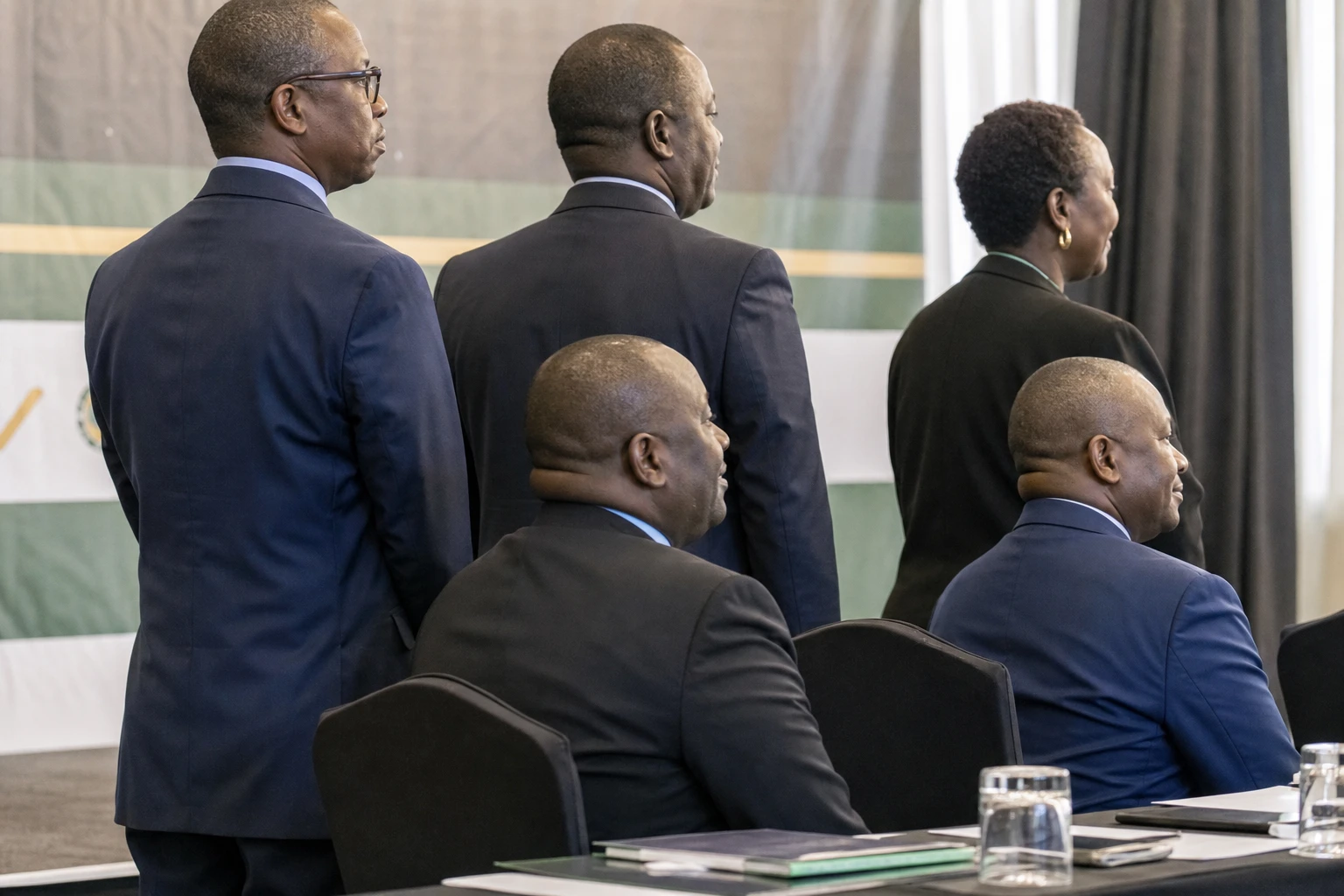
On Wednesday 22 July 2026, in Johannesburg, Patrice Motsepe confirmed that AFCON 2027 would expand from 24 to 28 teams. The new format is due to take effect from the edition hosted by Kenya, Tanzania and Uganda. The CAF has yet to set out the precise format or qualification rules, leaving a sensitive question open: how will places be allocated, what play-offs will there be, and how will competitiveness be balanced with openness?
This is not a minor point. The co-hosts are expected to qualify automatically, in line with the usual practice for a co-hosted tournament, reducing the number of places available to other nations accordingly. The CAF has already launched the qualifiers and set the draw for 19 May 2026, showing that preparations were under way before the final announcement on expansion. The remaining decisions will have to be made quickly, because a 28-team tournament carries a different logistical burden from a 24-team AFCON.
The CAF president also announced a significant increase in prize money for the 2026 Women’s Africa Cup of Nations in Morocco. The winners will receive $2m, up from $1m, a doubling of the prize. The women’s tournament will run from 25 July to 16 August 2026, with Morocco as host. This increase puts women’s football more firmly at the centre of the CAF’s investment priorities, as pressure to professionalise leagues remains strong in many countries.
The political message behind the sporting choice
The CAF’s announced schedule is part of a broader sequence of events. FIFA has confirmed that nine of the ten African teams at the 2026 World Cup reached the knockout stage, a record for the continent, while the ten African teams together marked the largest-ever presence at that level. This performance gives Motsepe a straightforward argument: Africa is producing greater international competitiveness and can therefore demand more space in its own competitions.
At the same time, FIFA has confirmed that its president, Gianni Infantino, will stand for re-election in 2027. Motsepe has reiterated his support for this course, showing that the internal balance of power in world football also influences African decisions. Continental football does not evolve in isolation. It pursues its own ambitions, but within an institutional environment where alliances matter as much as performances on the pitch.
For East Africa, the stakes are tangible. A 28-team tournament could attract more spectators, boost commercial rights and give host cities greater visibility. But it could also expose shortcomings in preparations if roads, airports, hotels or stadiums do not progress at the same pace. Kenya, Tanzania and Uganda will have to prove that regional co-hosting can work effectively, beyond the political symbolism and the promise of pooling resources.
What this means for African national teams
In sporting terms, expansion opens another door to countries that often remain on the margins of the continental elite. Nations in the interior of the continent, with solid federations but inconsistent results, see it as a chance to join the continent’s showpiece event. This could broaden the base of African football. But the CAF must also preserve the tournament’s sporting value. More participants should not mean more matches with nothing at stake.
This question matters all the more because the CAF has changed several aspects of its competitions in recent years to support revenue and visibility. It has increased prize money in club competitions, and its budget documents show growing investment in women’s football. The logic is clear: broaden the base, sell more content and make competitions more attractive to broadcasters and partners.
For national teams, the real issue remains preparation. The major nations often have a deeper pool of players. Others have to contend with uneven domestic leagues, costly travel and short training camps. A 28-team AFCON could therefore redistribute opportunities, but it will not by itself correct structural inequalities. It offers one more opportunity. It does not replace youth development or investment in domestic leagues.
A signal for the continent, and a date to watch
Ultimately, this announcement says something about the direction of African football. The CAF is seeking to expand its competitions at a time when the continent is achieving greater visibility on the world stage. The move could strengthen Africa’s place in international football, provided the formats are right and organisers meet their deadlines. The next milestone is already clear: AFCON 2027 in East Africa, followed by decisions on the qualifiers and the final allocation of the 28 places.
The coming period will also show whether the CAF can turn a political announcement into a coherent sporting framework. That is where credibility is at stake: not just in the size of the tournament, but in its delivery, clarity and ability to serve both the continent’s major powers and the teams still seeking their first major breakthrough.