
 Algeria
 Egypt
 Libya
 Morocco
 Sudan
 Tunisia
 Benin
 Burkina Faso
 Cabo Verde
 Côte d'Ivoire
 Ghana
 Guinea
 Guinea-Bissau
 Liberia
 Mali
 Mauritania
 Niger
 Nigeria
 Senegal
 Sierra Leone
 The Gambia
 Togo
 Cameroon
 Central African Republic
 Chad
 DR Congo
 Equatorial Guinea
 Gabon
 Republic of the Congo
 São Tomé and Príncipe
 Burundi
 Comoros
 Djibouti
 Eritrea
 Kenya
 Madagascar
 Malawi
 Mauritius
 Mozambique
 Rwanda
 Seychelles
 Somalia
 South Sudan
 Tanzania
 Uganda
 Angola
 Botswana
 Eswatini
 Lesotho
 Namibia
 South Africa
 Zambia
 Zimbabwe
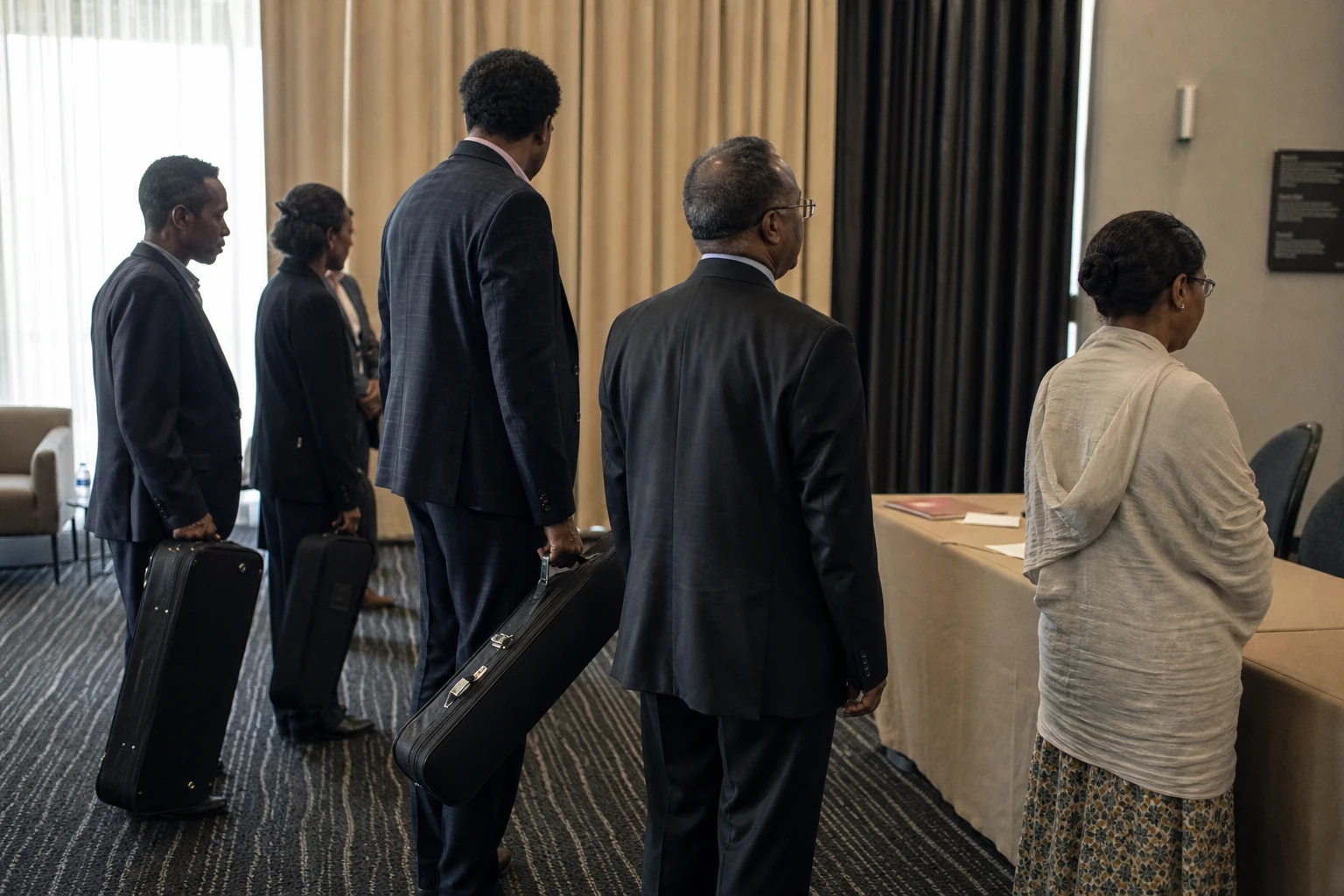
When a night-time venue tells the story of a capital
In Addis Ababa, a concert venue can say more than an official speech. In the dim basement of the Ghion Hotel, the music tells the story of a city that has never stopped reinventing itself, between national memory, continental diplomacy and a new generation of Ethiopians eager to take to the stage. The African Jazz Village is part of this urban history, at the crossroads of leisure, culture and the prestige of a capital that is also home to the African Union headquarters.
This is more than a club. It extends a musical tradition that emerged in Ethiopia in the 1950s, shaped by local pentatonic scales and North American jazz, and later brought to prominence by Mulatu Astatke, often described as the father of ethio-jazz. Several biographical and music-history references also associate him with the creation or institutionalisation of the African Jazz Village in Addis Ababa.
In Addis Ababa, cultural memory also lives on through concert nights
The Ghion Hotel is in an area of the city that has taken on particular symbolic value. Addis Ababa has hosted major pan-African institutions for decades, and the current African Union Commission complex was inaugurated there in 2012. The African Jazz Village is therefore part of a setting in which Ethiopia showcases not only its diplomacy but also its artistic creativity. Music there is a marker of African presence, not merely a tourist backdrop.
The Ghion Hotel’s website describes the venue as a place associated with Ethiopian jazz evenings led by Mulatu Astatke. In the same vein, the hotel has announced a jazz festival for February 2026 in partnership with the Addis Ababa city administration and Selam Ethiopia, confirming that events of this kind continue to support the local cultural economy. Music attracts audiences, but also hoteliers, restaurateurs, technicians and producers.
A scene where heritage and transmission coexist
The African Jazz Village also matters because it serves as a link between generations. On one hand, historic figures in ethio-jazz meet audiences who know their songs by heart. On the other, younger musicians come there to gain recognition and engage with a repertoire that has become a living heritage. This coexistence is vital in a country where the music scene was long weakened by censorship and political upheaval.
The upheaval under the Derg regime, which overthrew Emperor Haile Selassie in 1974, marked a turning point. Leading music references recall that this period brought experimentation and artists’ mobility to an abrupt halt, before a gradual revival after the regime fell in 1991. It is in this context that the revival of ethio-jazz takes on its full significance: it is not an imported trend, but a resurgence after years of suppression.
Mulatu Astatke remains at the heart of this story. A Library of Congress entry, based on an African biographical dictionary, says he was born in December 1943 in Jimma, studied in Boston and founded the African Jazz Village in 2000. Harvard also describes him as the founder of a hybrid musical form combining traditional Ethiopian music and Latin jazz. In other words, his career connects Ethiopia with the world without diluting its distinctive local character.
What the club says about the urban economy and young people
The audience in the venue is not made up solely of nostalgists. Young Addis Ababans come for the jazz, the atmosphere and the chance to hear a repertoire that belongs to them without having been frozen in a museum. This continuity between generations is a major issue for the Ethiopian capital, where urban growth and the rise of an urban middle class are creating new demand for high-quality cultural outings.
The African Jazz Village also shows how a cultural venue can contribute to the local value chain. It provides work for musicians, as well as security guards, waiters, technical crews and hospitality-related suppliers. In a city such as Addis Ababa, where institutional life, business tourism and pan-African events overlap, a well-known venue can have an impact far beyond its capacity.
The message is clear: culture is not an optional extra. It contributes to Ethiopia’s image, the appeal of its capital and the circulation of African symbolic capital. In this area, the African Union itself has highlighted music as a tool for dialogue, the promotion of Agenda 2063 and the celebration of the continent’s cultural heritage. The African Jazz Village fits squarely into this vision, as a local scene speaking to the continent.
An impact that reaches beyond Addis Ababa
Its continental reach is clear. Ethio-jazz now travels through festivals, record reissues and international collaborations. But its roots in Addis Ababa remain decisive, because this is where the genre continues to be performed, passed on and reinterpreted in its original setting. The Ghion Hotel club thus offers a valuable counterpoint to the globalised consumption of African music: here, the repertoire is not merely heard; it is lived.
What matters now is not only the concert schedule, but whether these spaces can endure. In a capital where questions of power, tourism, mobility and regional diplomacy converge, the survival of a venue such as the African Jazz Village will say much about the place genuinely accorded to Ethiopia’s cultural industries. More broadly, it will show how East Africa protects its heritage while keeping it relevant.



