Algeria
 Egypt
 Libya
 Morocco
 Tunisia
 Benin
 Burkina Faso
 Cabo Verde
 Côte d'Ivoire
 Ghana
 Guinea
 Guinea-Bissau
 Liberia
 Mali
 Mauritania
 Niger
 Nigeria
 Senegal
 Sierra Leone
 The Gambia
 Togo
 Cameroon
 Central African Republic
 Chad
 DR Congo
 Equatorial Guinea
 Gabon
 Republic of the Congo
 São Tomé and Príncipe
 Burundi
 Comoros
 Djibouti
 Eritrea
 Ethiopia
 Kenya
 Madagascar
 Malawi
 Mauritius
 Mozambique
 Rwanda
 Seychelles
 Somalia
 South Sudan
 Tanzania
 Uganda
 Angola
 Botswana
 Eswatini
 Lesotho
 Namibia
 South Africa
 Zambia
 Zimbabwe
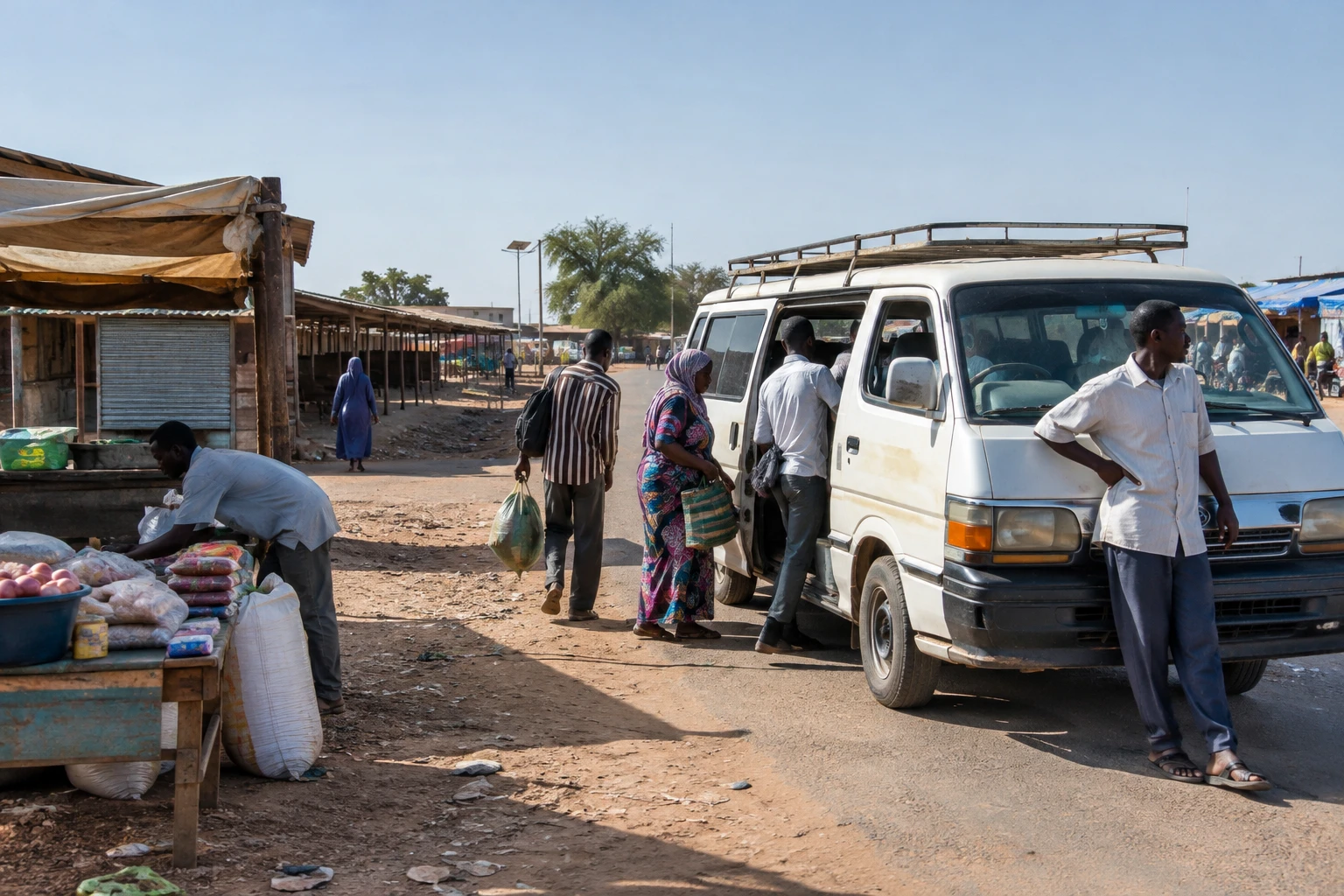
In Abyei, Amiet market connects communities and trading routes that the war in Sudan now threatens far beyond its front lines. A drone strike sparked a deadly fire there on 19 October. But the death toll remains uncertain, and accounts of the targets differ.
A toll that varies by source
Local authorities initially reported at least 73 dead and 19 injured. The following day, Yohanna Akol Ngor, information official for the Abyei administration, told the Associated Press that the toll had risen to 153, as the fire continued to burn near a fuel depot. South Sudanese outlet Sudans Post later reported a figure of more than 220, attributed to local authorities.
These estimates have not been confirmed by an independent count. On 20 October, the United Nations reported at least 28 civilians killed in Amiet and Todach, a preliminary toll substantially lower than the others. The figures are therefore not directly comparable: recovery operations, the locations counted and the definition of victims may differ. In the absence of a joint verification, the highest toll should be treated as a local claim, not an established total.
Abyei’s authorities blame the strikes on the Sudanese army. South Sudan’s government condemned the attack and summoned the Sudanese ambassador to Juba. A Sudanese officer, quoted anonymously by the Associated Press, confirmed an army strike against fuel tankers, which he said were destined for the Rapid Support Forces (RSF), but denied that civilians had been targeted. His account of the targets and the identities of the victims could not be independently verified.
This divergence in accounts is crucial. Amiet is both a civilian market and a transit point for fuel, a strategic resource for residents and armed forces alike. The alleged presence of a military target is not, by itself, enough to establish what was hit or determine responsibility.
Abyei, disputed territory at the heart of trade
Abyei lies between Sudan and South Sudan, both of which claim the oil-rich region. Its status was not settled after South Sudan’s independence in 2011. A referendum intended to determine its future was never held, largely because of disagreement over who would be allowed to vote. A special administration and the UN Interim Security Force for Abyei (UNISFA) have maintained a presence there since 2011.
Amiet market serves the Ngok Dinka and Misseriya communities, among others, as well as people displaced by the war in Sudan. Its role therefore extends beyond supplying a single side or community. When a trading hub becomes an alleged target, the immediate effects are felt by traders and workers, but also by families who depend on its commerce for fuel, food and other goods.
The security situation is already tense. In September, communal violence hit the same market. On 20 October, residents of Abyei demonstrated to denounce the strikes and call for action by the UN force. The local protest also highlights the limits of the protection felt by the population, as the territory remains caught between a border dispute and the consequences of a neighbouring war.
Sudan’s war spills beyond its front lines
Since April 2023, the Sudanese army and the RSF have been fighting a war that has upended the balance of power across the country. Drones extend the reach of the conflict and put civilian areas at risk, even far from the most visible front lines. On 19 October, the UN also reported civilian deaths after a strike on a market in Al-Dibab, in West Kordofan, as well as the reported deaths of children and their father in a residential area of Khartoum.
In Abyei, the stakes are also cross-border. Juba accuses the Sudanese army and has opted for a diplomatic protest, while Sudanese authorities have not publicly confirmed all the local allegations. The crisis is testing dialogue mechanisms between the two neighbours, which must manage both their territorial dispute and the risks the war in Sudan poses to trade and border security.
The region is also in the purview of the Intergovernmental Authority on Development (IGAD), an East African regional organisation, as well as the African Union and the United Nations. Their role does not replace the responsibilities of states, but their diplomatic channels and presence on the ground can help prevent escalation. At this stage, no independent information establishes that the strike was specifically intended to cut an RSF supply line.
Protecting civilians and establishing the facts
The next developments to watch are verification of the death toll, access for medical and humanitarian teams, and the findings of any investigation. The UN has called on the parties to protect civilians and civilian infrastructure. At Ameth Bek Hospital, teams from Médecins Sans Frontières treated more than 20 injured people, several of them seriously, according to the organisation.
Amiet market is a reminder that front lines alone do not define the consequences of war. In this territory whose status remains unresolved, a strike can simultaneously threaten residents’ lives, livelihoods and the fragile balance between two states. As long as casualty figures remain conflicting and responsibility is disputed, caution with figures and the independent establishment of facts are essential.
For regional context, see Radio Tamazuj’s report on South Sudan’s diplomatic protest, the United Nations’ remarks on the strikes in Abyei and Sudan, and the Associated Press account of the toll and conflicting versions.