
 Algeria
 Egypt
 Libya
 Morocco
 Sudan
 Tunisia
 Benin
 Burkina Faso
 Cabo Verde
 Côte d'Ivoire
 Ghana
 Guinea
 Guinea-Bissau
 Liberia
 Mali
 Mauritania
 Niger
 Senegal
 Sierra Leone
 The Gambia
 Togo
 Cameroon
 Central African Republic
 Chad
 DR Congo
 Equatorial Guinea
 Gabon
 Republic of the Congo
 São Tomé and Príncipe
 Burundi
 Comoros
 Djibouti
 Eritrea
 Ethiopia
 Kenya
 Madagascar
 Malawi
 Mauritius
 Mozambique
 Rwanda
 Seychelles
 Somalia
 South Sudan
 Tanzania
 Uganda
 Angola
 Botswana
 Eswatini
 Lesotho
 Namibia
 South Africa
 Zambia
 Zimbabwe
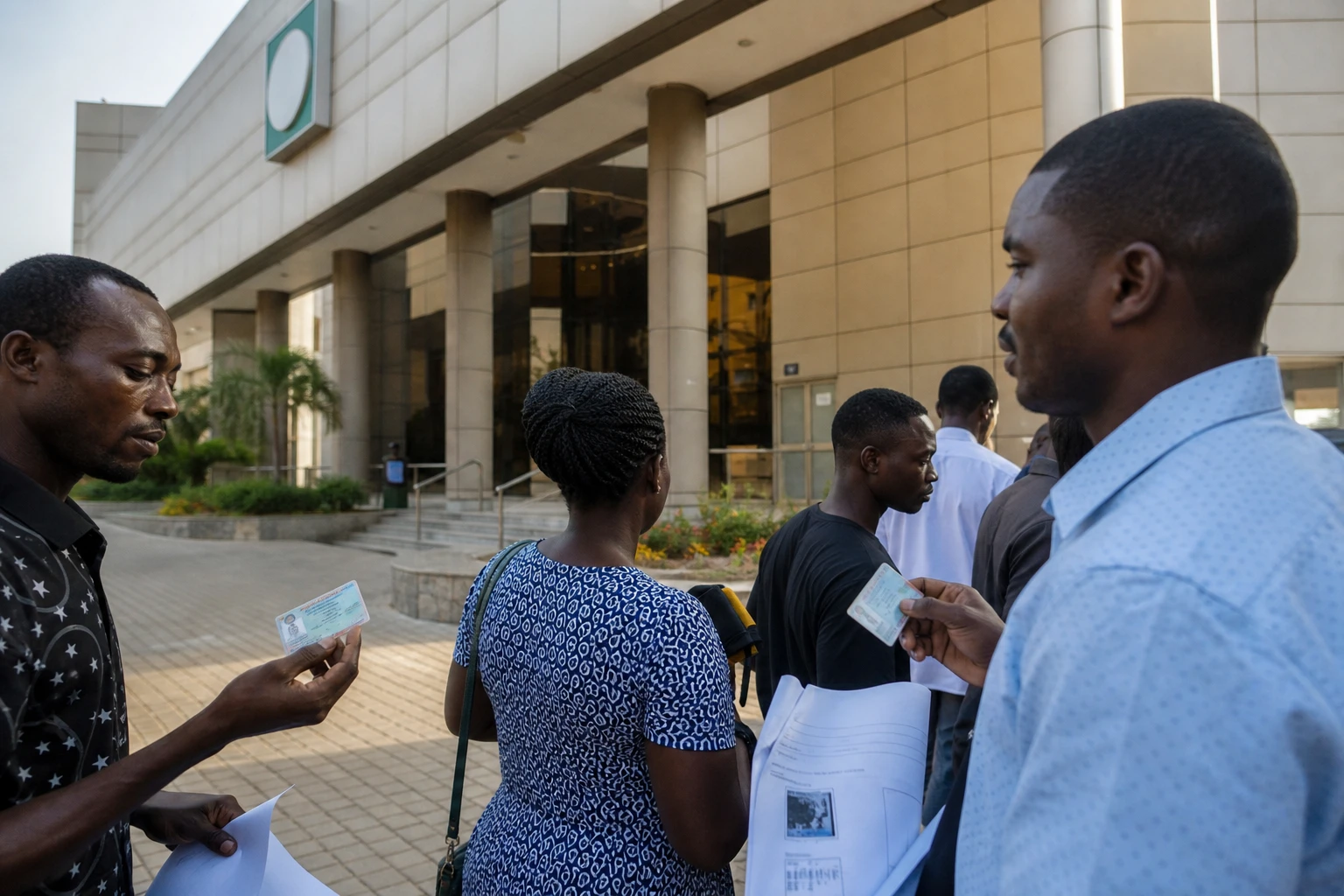
Between daily survival and the ballot box
In several camps for displaced people around Abuja, the political calculation has changed. It is no longer just a question of asking for aid, but of whether a voter’s card can still help defend their place in the republic. As the 16 January 2027 presidential election approaches, this question carries particular weight for families uprooted for years.
Nigeria is entering this electoral period with a heavy security and social legacy. Several million people remain displaced within the country, mainly because of violence in the north-east, but also because of local conflicts and climate-related events. UNHCR estimates that 3.7 million people have been forcibly displaced in Nigeria, while its country fact sheet refers to more than 3.7 million internally displaced people, at the heart of a crisis that has become humanitarian, social and political all at once.
A civic right already framed, but still fragile
On paper, the place of displaced people in elections is not a new idea. The Independent National Electoral Commission has adopted a specific framework for voting by internally displaced people, and its report on the 2023 general election says preparations were made to enable them to vote. The same report notes, however, that changes in affected areas had reduced the number of constituencies involved, proof that a formal system is not enough to address changing realities.
At the continental level, the issue touches on a broader principle: displaced people must be able to take part in public life. The Kampala Convention, adopted by the African Union in 2009, provides a framework for the protection and assistance of internally displaced people. The African Charter on Democracy, Elections and Governance also calls on states to take measures to guarantee the rights of displaced people and vulnerable groups. In other words, the Nigerian debate is not only about organising an election; it concerns a political and legal obligation recognised across Africa.
In Abuja, this reality is visible on a small scale, but has national significance. Camps for displaced people continue to exist in the Federal Capital Territory and its outskirts, where the state displays its institutional presence while pockets of hardship persist. In 2026, humanitarian organisations and local actors were still carrying out targeted interventions in camps in Abuja, a sign that the situation is far from returning to normal.
Social anger, security and the cost of living
The vote of displaced people matters first because it brings together several grievances. Many families say they have lived for more than a decade away from their places of origin, with no certainty about security, return or reconstruction. Their demand is simple: to turn an experience of abandonment into a political demand. In a country where insecurity persists and armed group attacks continue in several regions, this promise of protection remains central to the electoral contract.
The economy fuels the same tension. Since the removal of the fuel subsidy in 2023, prices have risen sharply, according to the World Bank, which links the reform to a major cost-of-living shock. The same institution notes that poverty remains widespread in Nigeria and that inflation weighs first on poor households, both in cities and on their outskirts. For displaced people, this means more expensive journeys, less accessible markets and greater dependence on informal aid.
In this context, the capital embodies a distinctly Nigerian paradox: institutions are close, but real access to rights remains distant. Camps for displaced people around Abuja are a reminder that the federal administration can coexist with lasting forms of social marginalisation. Displaced families are not asking for exceptional treatment; they are asking that their circumstances not erase their citizenship.
What the 2027 election will say about Nigeria and the region
For the Nigerian authorities, the challenge is twofold. They must ensure a credible election, but also show that displaced citizens are not invisible in electoral calculations. The electoral commission has already set the timetable for the presidential and legislative elections in January 2027, opening a tight technical period. If voter registration, the location of polling stations and assistance mechanisms do not keep pace, the participation of displaced people will remain theoretical.
The issue also extends beyond Nigeria’s borders. In West Africa, the rise in internal displacement raises questions about states’ ability to protect populations without cutting them off from public debate. For ECOWAS, already facing security crises and politically fraught transitions, the question of displaced people’s right to vote is linked to institutional stability and civic inclusion. Nigeria, given its demographic and political weight, often serves as a reference point; what it manages, or fails, to put in place therefore matters far beyond its borders.
The continental significance is clear. The African Union regularly stresses that protecting displaced people goes beyond humanitarian assistance. It includes civic rights, participation and political dignity. As the 2027 campaign draws closer, Nigeria will be watched on one simple question: can displaced people vote where they live, rather than only where they lost their homes? The answer will say much about the true state of Nigerian democracy.



