Algeria
 Egypt
 Libya
 Morocco
 Sudan
 Tunisia
 Benin
 Cabo Verde
 Côte d'Ivoire
 Ghana
 Guinea
 Guinea-Bissau
 Liberia
 Mali
 Mauritania
 Niger
 Nigeria
 Senegal
 Sierra Leone
 The Gambia
 Togo
 Cameroon
 Central African Republic
 Chad
 DR Congo
 Equatorial Guinea
 Gabon
 Republic of the Congo
 São Tomé and Príncipe
 Burundi
 Comoros
 Djibouti
 Eritrea
 Ethiopia
 Kenya
 Madagascar
 Malawi
 Mauritius
 Mozambique
 Rwanda
 Seychelles
 Somalia
 South Sudan
 Tanzania
 Uganda
 Angola
 Botswana
 Eswatini
 Lesotho
 Namibia
 South Africa
 Zambia
 Zimbabwe
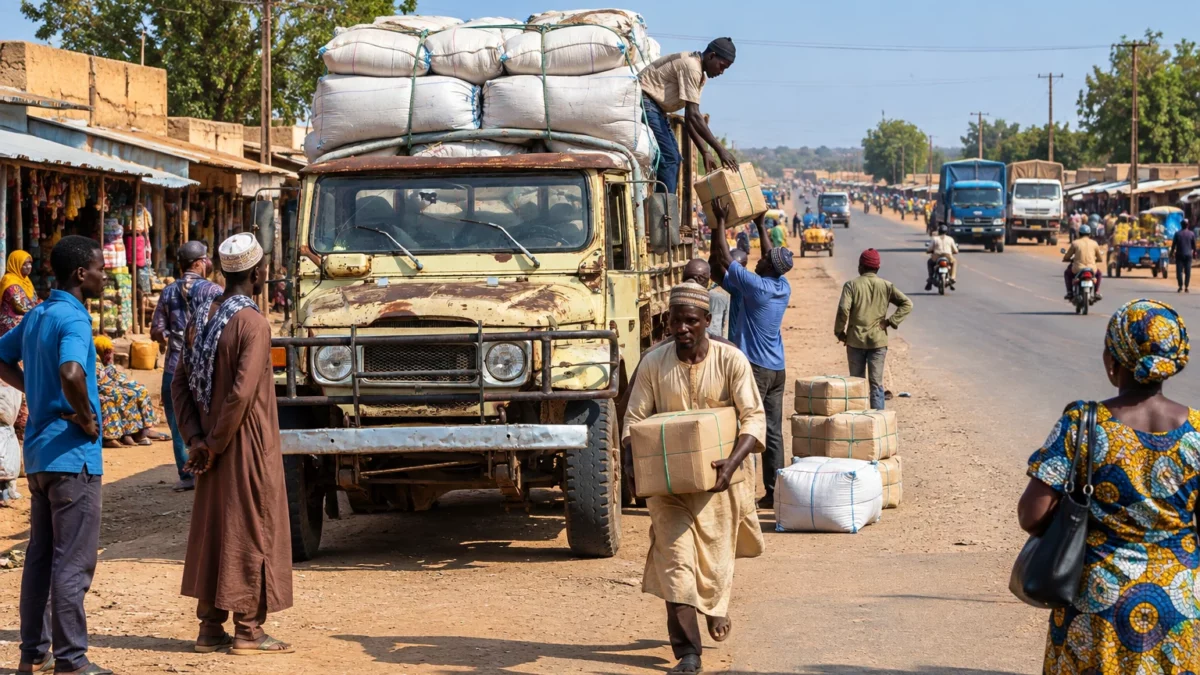
In the central Sahel, the question is no longer only who controls a military position. It is also whether states can keep roads open, markets active and services accessible beyond the capitals. The debate over possible contacts with JNIM, an armed group linked to al-Qaeda, is taking place against this backdrop.
Pressure extending beyond the military front
Mali, Burkina Faso and Niger have faced armed insurgencies for more than a decade. Since 2023, the three countries have been united in the Alliance of Sahel States (AES), a confederation that has made security cooperation a priority. But shared borders and peripheral areas make it difficult to limit the response to each national territory.
The Group for the Support of Islam and Muslims, better known by its Arabic acronym JNIM, brings together several armed factions and is affiliated with al-Qaeda. The organisation operates in all three countries, with capabilities and dynamics that vary by region. The UN has also noted an intensification of its activities in the central Sahel and in some neighbouring countries. This expansion does not mean that armed groups exercise uniform control over the territories concerned.
On 20 November 2026, the International Crisis Group (ICG), an independent organisation specialising in conflict analysis, published a report on the pressure JNIM is exerting on Sahelian urban centres. It recommends that the authorities in Mali, Burkina Faso and Niger consider political dialogue while maintaining military pressure. According to reports published the same day by AFP and RFI, the report says a military victory over the group appears out of reach.
Power dynamics not reducible to a battle
This assessment does not mean that national armies are incapable of winning battles, or that JNIM has stable control over all rural areas. Rather, it highlights the difficulty of turning occasional successes into lasting security. A group organised into local units can regroup after losses and shift its operations. Pressure on roads and secondary towns can then undermine trade without requiring the capture of a capital.
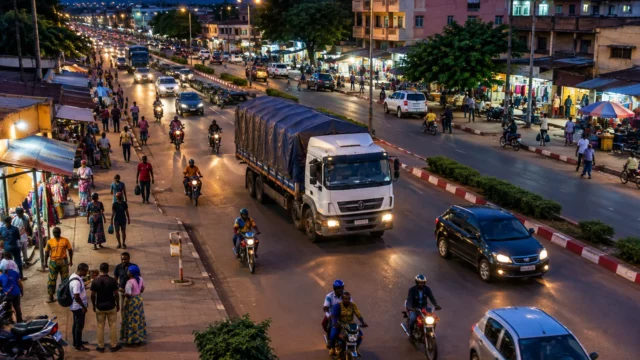
For residents, the effects are tangible. A threatened road makes it harder to obtain fuel and food, as well as to access healthcare, schools and markets. Traders and transporters bear a direct share of the cost. In rural areas, the closure of a route can isolate several villages. In the capitals, shortages and disruption to services can increase pressure on the authorities.
The relationship between the state and the population also matters for intelligence and everyday security. When residents cannot report a threat without exposing themselves to reprisals or suspicion, public forces lose vital information. But this observation does not capture every local situation: relations between communities, authorities, armed forces and armed groups differ from region to region.
Nor should JNIM be portrayed as an ordinary political actor. Its affiliation with al-Qaeda and its armed methods weigh heavily on any prospect of negotiations. Speaking to a group to secure a local truce or reopen a route is not the same as recognising its claims or reaching a national agreement. These distinctions are crucial to avoid turning an analytical recommendation into a promise of peace.
Dialogue between local pragmatism and political risk
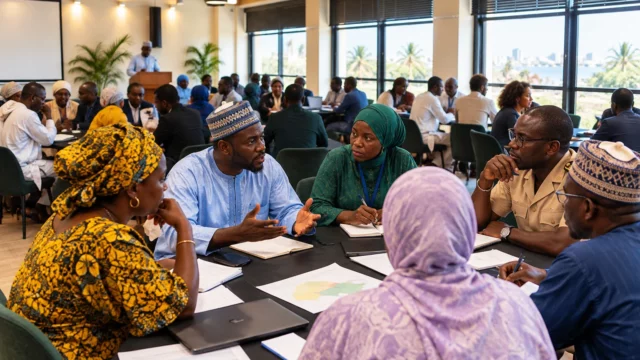
Local arrangements may pursue limited objectives: temporarily reducing violence, allowing a market to operate or facilitating passage along a road. They can address civilians’ immediate needs. They also carry risks: a ceasefire may be fragile, the terms of an agreement opaque and residents excluded from decisions that affect them.
At government level, entering into formal dialogue would be a politically costly choice. The military authorities in Bamako, Ouagadougou and Niamey have put sovereignty and the restoration of security at the heart of their discourse. Acknowledging the limits of an exclusively military strategy could be seen by their supporters as a retreat. Conversely, refusing all contact could narrow the available options when civilians and local economies are suffering the consequences of a blockade or persistent insecurity.
The timetable cited in some commentary, which refers to a possible official opening of negotiations between 2027 and 2029, should be presented as a scenario, not as an established ICG forecast. The information available on the 20 November report supports its call to consider dialogue and respond to the threat facing cities. It does not justify claiming that any of the three authorities will “crack” according to a set timetable.
A regional issue, not just a national one
Security pressure crosses the borders of Mali, Burkina Faso and Niger. It also affects neighbouring states, whose trade routes and borders may be affected by the movement of fighters, people and goods. Regional cooperation is therefore crucial, even as relations between the AES and the Economic Community of West African States (ECOWAS) remain marked by their political rupture.
Algeria, which played a role in the process that led to the 2015 Malian peace agreement, remains a potential diplomatic actor, but tensions with Bamako complicate any mediation. The precedent of that agreement also serves as a reminder that a negotiated text alone does not guarantee implementation or trust between the parties.
What happens next will therefore depend less on a word — “dialogue” or “negotiation” — than on the safeguards, interlocutors and objectives defined. A credible process should distinguish local arrangements from a broader political agreement, protect civilians and specify verifiable commitments by each party. For the population, the first measure will remain tangible: do roads reopen, do markets resume and can services operate without residents paying the price through further reprisals?
The ICG report thus puts a controversial option back into the Sahel’s public debate. It does not offer a ready-made solution. Instead, it poses a strategic question to the three governments: how can they protect cities and their residents if force alone is not enough to restore a lasting public presence across the territories?