Algeria
 Egypt
 Libya
 Morocco
 Sudan
 Benin
 Burkina Faso
 Cabo Verde
 Côte d'Ivoire
 Ghana
 Guinea
 Guinea-Bissau
 Liberia
 Mali
 Mauritania
 Niger
 Nigeria
 Senegal
 Sierra Leone
 The Gambia
 Togo
 Cameroon
 Central African Republic
 Chad
 DR Congo
 Equatorial Guinea
 Gabon
 Republic of the Congo
 São Tomé and Príncipe
 Burundi
 Comoros
 Djibouti
 Eritrea
 Ethiopia
 Kenya
 Madagascar
 Malawi
 Mauritius
 Mozambique
 Rwanda
 Seychelles
 Somalia
 South Sudan
 Tanzania
 Uganda
 Angola
 Botswana
 Eswatini
 Lesotho
 Namibia
 South Africa
 Zambia
 Zimbabwe
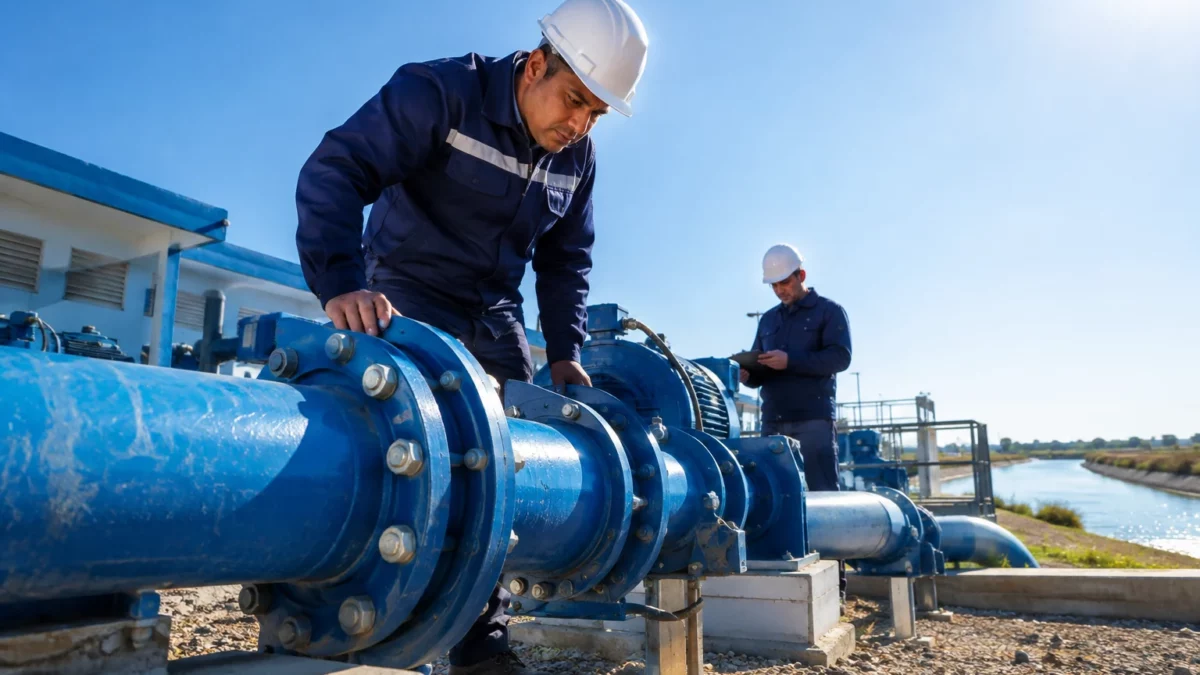
Every cubic metre transferred in northern Tunisia also draws on a costly resource: electricity. A new application aims to help teams make better decisions about when to pump and which equipment to operate. Its value, however, will depend on a concrete result: verifiable savings without undermining continuity of service.
A management tool for energy-intensive infrastructure
The Société d’exploitation du canal et des adductions des eaux du Nord (SECADENORD), a public body responsible for major water-transfer infrastructure, has developed Aqua Min 360. The application was presented on Monday 23 November 2026 at a meeting at Tunisia’s Ministry of Agriculture, Water Resources and Fisheries. The Tunisian public news agency TAP and Radio Monastir reported on the presentation on 24 and 25 November.
According to information provided by the authorities and reported by these Tunisian media outlets, the tool analyses the volumes of water pumped and the electricity consumed. It then recommends pumping times, the number of pumps to operate and the equipment that appears to offer the best energy efficiency. It can also monitor water quality, the condition of the pumps and their availability.
These recommendations are intended to support operational teams’ decisions, not replace them. Night-time pumping is among the options mentioned, as electricity tariffs are lower then. But the application cannot set priorities on its own: users’ needs, water levels in infrastructure and technical constraints must also be taken into account.
The official presentation describes Aqua Min 360 as a tool developed using a national artificial intelligence model. It does not yet specify the calculation method, the data used to train or test the model, or the rules for validating its recommendations. Nor does it publish an account of savings, in dinars or kilowatt-hours.
An electricity bill that weighs on water transfers
The financial stakes are documented. Tunisia’s fourth national communication to the United Nations Framework Convention on Climate Change states that SECADENORD consumed 128 gigawatt-hours of electricity in 2021. Its bill stood at 31.17 million Tunisian dinars, or 64% of the company’s costs that year. The national report on the water sector, published by the National Observatory of Agriculture, gives comparable figures: 128 GWh and around 31.2 million dinars.
These figures describe a specific year, not the current cost of operations. They nevertheless show why optimisation is of interest to the operator: shifting pumping to a cheaper time slot or using a more efficient pump could reduce some costs. The actual effect will depend on applicable tariffs, the condition of the facilities and the ability to follow recommendations without compromising supply.
SECADENORD transports water through canals, pipelines and pumping stations. Its network contributes in particular to supplying the Medjerda-Cap Bon canal. SONEDE, the national water distribution company, says the canal supplies the Ghédir El Golla treatment complex on the outskirts of Tunis. Operational decisions can therefore have consequences beyond the operator’s accounts: they are part of a chain linking infrastructure, treatment and distribution.
Water conditions matter as much as the bill. Tunisia’s climate communication notes that transfers between dams can increase when rainfall declines, potentially raising energy needs. The application does not create new water resources. It aims to manage more effectively the operations needed to transport them, in a system where energy and water availability are closely linked.
Operational proof remains to be established
Assessing the tool will require knowing the scope of its use and comparing its recommendations with the decisions actually taken. A useful review should distinguish electricity savings from changes due to the volumes pumped or hydrological conditions. It should also specify the effects on equipment availability, water quality and the regularity of service.
This assessment concerns several stakeholders. For SECADENORD, a measurable reduction in spending could free up funds for maintenance and operations. For government bodies and technical organisations, the wider rollout envisaged by officials will require reliable data and teams able to check the system’s recommendations. For users, the decisive criterion remains continuity of access to water: accounting optimisation would not be progress if it shifted costs or constraints onto the areas served.
The regional dimension is also relevant, without conflating national networks with shared infrastructure. Tunisia belongs to the Arab Maghreb Union (UMA), which also brings together Algeria, Libya, Morocco and Mauritania. The Sahara and Sahel Observatory documents Maghreb cooperation initiatives on water-resource management. Aqua Min 360, however, remains a Tunisian project. Its experience could inform technical exchanges, but there is no indication that regional sharing of the application has been decided.
The next step, then, is less about announcing a technology than publishing results: recorded savings, validation procedures and the scope of deployment. Until those details are available, Aqua Min 360 remains a management option, not a saving already secured. Its value will be measured in Tunis and in the regions it serves: by the spending actually avoided and the service delivered each day to subscribers and water-dependent activities.
Radio Monastir’s report on the presentation of Aqua Min 360, the report by Tunisian news agency TAP, Tunisia’s fourth national climate communication, Tunisia’s national report on the water sector, SONEDE’s information on water production and the Medjerda-Cap Bon canal, the Arab Maghreb Union’s overview and the Sahara and Sahel Observatory’s work on regional cooperation in the water sector.