Algeria
 Egypt
 Libya
 Morocco
 Sudan
 Tunisia
 Benin
 Cabo Verde
 Côte d'Ivoire
 Ghana
 Guinea
 Guinea-Bissau
 Liberia
 Mali
 Mauritania
 Niger
 Nigeria
 Senegal
 Sierra Leone
 The Gambia
 Togo
 Cameroon
 Central African Republic
 Chad
 DR Congo
 Equatorial Guinea
 Gabon
 Republic of the Congo
 São Tomé and Príncipe
 Burundi
 Comoros
 Djibouti
 Eritrea
 Ethiopia
 Kenya
 Madagascar
 Malawi
 Mauritius
 Mozambique
 Rwanda
 Seychelles
 Somalia
 South Sudan
 Tanzania
 Uganda
 Angola
 Botswana
 Eswatini
 Lesotho
 Namibia
 South Africa
 Zambia
 Zimbabwe
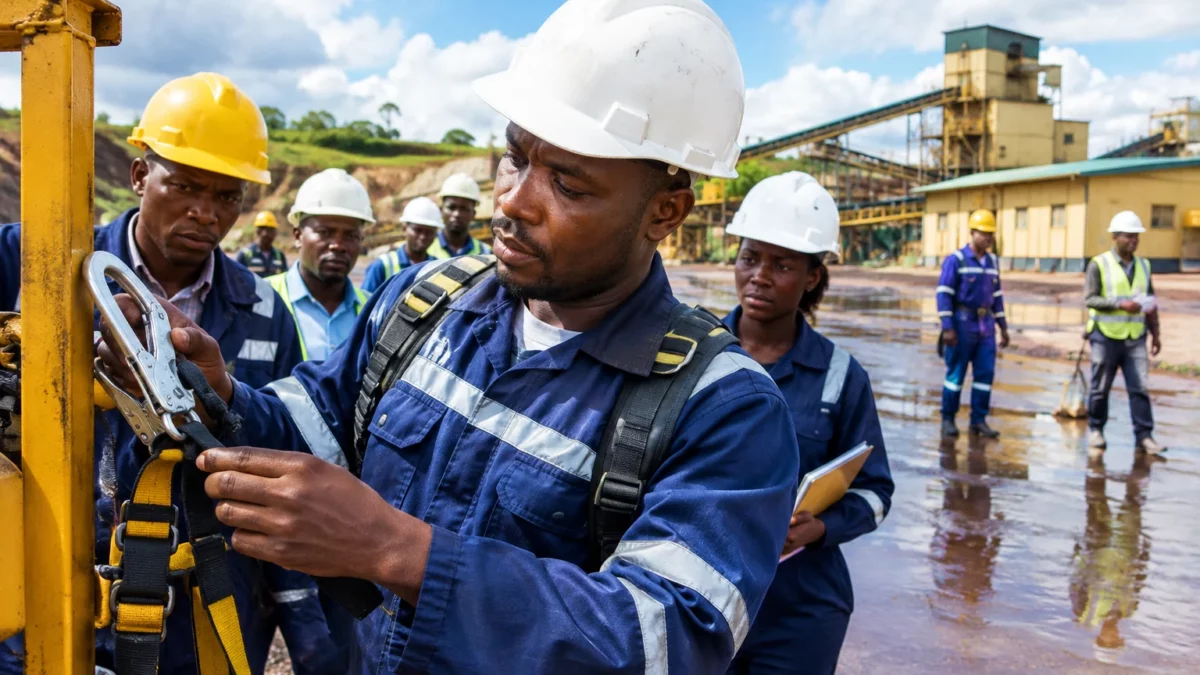
At Perkoa, the resumption of extraction cannot be measured solely in tonnes of zinc. Four years after a deadly accident, it will test the Burkinabe state’s ability to combine control of its resources, local benefits and workplace safety.
Public licence to bring the mine back into operation
On 19 November 2026, the Council of Ministers adopted a decree granting Sopamib Perkoa SA an industrial zinc mining licence. The company, a subsidiary of the Burkina Faso Mining Participation Company (Sopamib), is to resume operations at the Perkoa site, in the commune of Réo, west of Ouagadougou. The government announced an official relaunch for Friday 27 November, in the presence of Captain Ibrahim Traoré. Available sources confirm the granting of the licence and the announced timetable, but do not yet independently establish that the ceremony actually took place or that production has restarted.
The project marks a change in management. The mine was operated by Nantou Mining Burkina Faso, 90% owned by Canadian group Trevali Mining Corporation. After the site was shut down in 2022, the state took control of the asset through Sopamib. The government presents the decision as a way to protect the national mining estate and capture more of the revenue associated with its exploitation.
The announced financial targets must, however, be distinguished. The Council of Ministers’ report refers to about 96 billion CFA francs in revenue for the state budget and 1,250 direct and indirect jobs created or maintained. Other announcements linked to the restart cite projected turnover of 270 billion CFA francs over an estimated four-year operating period. Turnover represents the company’s sales, not public revenue, so the two figures are not directly comparable.
The memory of the disaster remains central to the case
Perkoa’s closure followed a flood on 16 April 2022. Eight workers were trapped underground after water entered the tunnels. The last body was found in June, after several weeks of searches. The death toll was announced by the Burkinabe authorities and reported by the Burkina Faso Information Agency and Anadolu news agency.
The restart is therefore taking place at a site marked by safety questions that cannot be reduced to a simple technical prerequisite. In 2022, the authorities announced investigations into the circumstances of the accident. The new operator will have to convince workers, their families and local residents that prevention, warning and rescue systems are adequate to the risks of an underground mine.
The government says the new operation will have to comply with environmental and safety requirements. This commitment should be assessed against verifiable measures: evacuation plans, water monitoring, inspections, publication of incidents and access to the site for oversight bodies. These safeguards matter as much as the production timetable, because the consequences of an accident would fall first on miners and neighbouring communities.
Expected benefits, but local results must be checked
For Réo and the Nando region, the restart could bring activity back after several years of interruption. The announced jobs could involve mine employees, subcontractors and businesses dependent on the operation. But the figure of 1,250 combines direct and indirect jobs. On its own, it does not specify how many positions will be permanent, open to local residents or held by Burkinabe workers.
The distribution of revenue is another issue. The announced revenue for the national budget does not indicate what share will go to communities near the site, or how social and environmental commitments will be monitored. Locally, the mine’s impact will also depend on procurement from domestic businesses, vocational training and job stability. These factors will help determine whether the restart goes beyond production indicators alone.
Public finance projections are also subject to the actual conditions of operation: volumes extracted, zinc prices, restart costs and the mine’s effective operating life. The announced four-year period makes transparency around the necessary investment and obligations to rehabilitate the site once operations end all the more important.
A restart to watch amid a new regional balance
The choice of a public operator is part of a broader drive to regain control of Burkina Faso’s mineral resources. The task is to turn this policy into operational capacity: expertise, financing, risk management and financial oversight. Public ownership alone guarantees neither better returns nor better protection for workers. Results will depend on the rules applied and how they are enforced.
The regional context has also changed. Since 29 January 2025, Burkina Faso, Mali and Niger have no longer been members of the Economic Community of West African States (ECOWAS), which they left to deepen cooperation within the Alliance of Sahel States. This realignment does not directly determine how Perkoa operates, but it highlights the importance of market access, transport corridors and regional economic partnerships for a landlocked country.
The next steps to watch are therefore concrete: confirmation that operations have actually started, publication of production results, details of jobs and revenue, and independent safety guarantees. At Perkoa, the credibility of the relaunch will depend as much on this data as on the ability to learn the lessons of the 2022 disaster.
The official report of the Council of Ministers | The Burkina Faso Information Agency’s estimates of jobs and revenue | The flood death toll at Perkoa, reported by the AIB | The last body found, reported by Anadolu | The effective date of withdrawal from ECOWAS