Algeria
 Egypt
 Libya
 Morocco
 Sudan
 Tunisia
 Benin
 Burkina Faso
 Cabo Verde
 Côte d'Ivoire
 Ghana
 Guinea
 Guinea-Bissau
 Liberia
 Mali
 Mauritania
 Niger
 Nigeria
 Senegal
 Sierra Leone
 The Gambia
 Togo
 Cameroon
 Central African Republic
 Chad
 DR Congo
 Equatorial Guinea
 Republic of the Congo
 São Tomé and Príncipe
 Burundi
 Comoros
 Djibouti
 Eritrea
 Ethiopia
 Kenya
 Madagascar
 Malawi
 Mauritius
 Mozambique
 Rwanda
 Seychelles
 Somalia
 South Sudan
 Tanzania
 Uganda
 Angola
 Botswana
 Eswatini
 Lesotho
 Namibia
 South Africa
 Zambia
 Zimbabwe
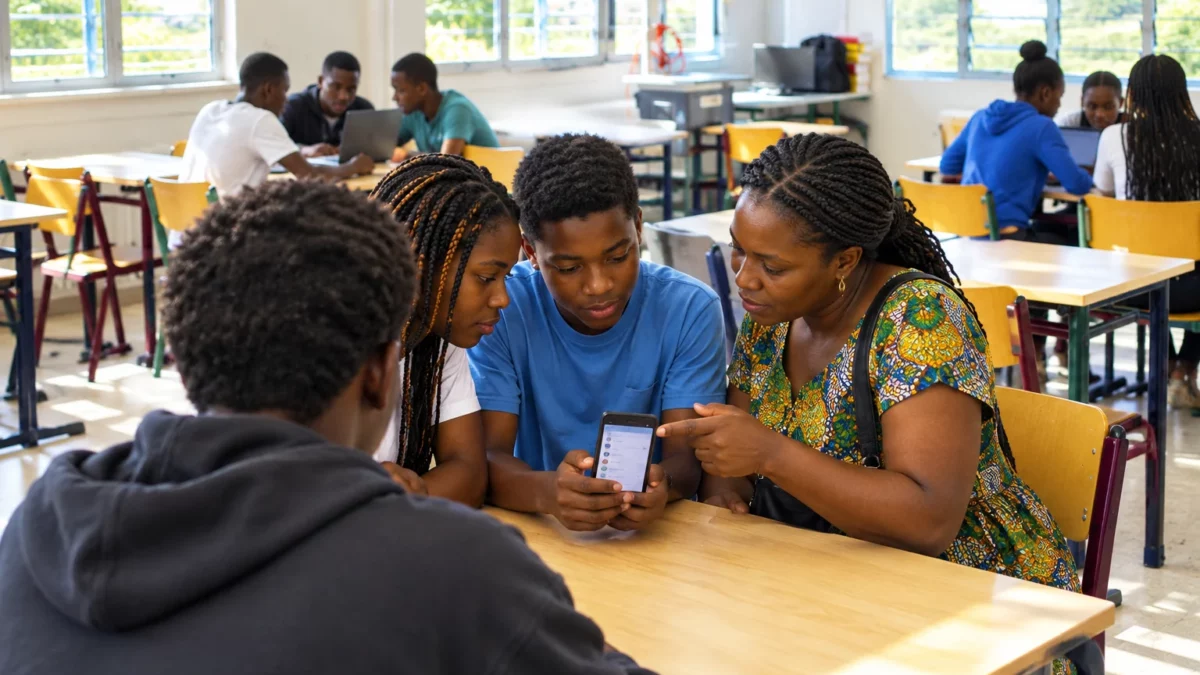
In Gabon, social media has been accessible again since October, after an eight-month suspension. The next challenge is less visible than a shutdown: making people aware of online rules and safety practices, without conflating the protection of internet users with control over their exchanges.
After the suspension, the challenge of prevention
The High Authority for Communication (HAC), which is responsible in particular for regulating the media, suspended access to social media on 17 February 2026. It cited content deemed defamatory, hate speech and posts likely to harm social cohesion. The measure was lifted on 24 October, after discussions with several platforms, including TikTok, Meta and YouTube.
This period has left a deep mark on Gabon’s digital debate. A suspension can halt the circulation of harmful content, but it also limits citizens’ access to spaces for information, discussion and economic activity. For businesses using social media, creators and media outlets, access to platforms also has a professional dimension.
At the same time, the country has established a specific legal framework. Ordinance No. 0011/PR/2026, signed on 26 February, sets the age of digital majority at 16 and provides for rules governing users and platforms. The text was subsequently ratified and amended by Law No. 003/2026 of 5 October, according to the government. Here, digital majority refers to the age at which a minor may create an account on the services concerned, subject to the provisions of the law.
Campaign announced for 2027
Against this backdrop, the government is preparing a national campaign on the responsible use of digital platforms in 2027. The project was discussed on Tuesday 24 November at a meeting between Digital Economy Minister Mark Alexandre Doumba and a TikTok delegation led by Nshingu Kazadi Fabrice, the platform’s public policy and institutional relations manager for French-speaking Africa.
The groups identified as target audiences are students, young people and parents. The campaign is to cover online safety, the protection of minors, digital responsibility and practices to adopt on social media. At this stage, the available information specifies neither a detailed timetable nor a budget or venues. Arrangements for the participation of schools, associations and families also remain to be defined.
This distinction matters: an awareness campaign can explain how to report cyberbullying, protect personal data or verify information. However, it does not replace platforms’ legal obligations or the remedies available to people targeted by unlawful content. Its effectiveness will therefore depend on the clarity of its messages and genuine access to reporting mechanisms.
Protecting young people without narrowing debate
The protection of minors is a practical concern for families and schools. But setting a legal age is not, on its own, enough to prevent risks. Young people need to understand privacy settings, recognise scams and know whom to turn to in cases of harassment. Parents, for their part, need accessible information rather than general instructions.
The Gabonese context makes trust particularly important. Following the suspension, the shift towards prevention comes as the authorities strengthen the rules and their cooperation with platforms. For users, one question remains: how can a measure targeting illegal content be distinguished from a broader restriction on online speech? The campaign would benefit from explaining reporting procedures, the protections provided by law and avenues for appeal.
Platforms also have a role to play. The announced cooperation with the HAC could make it easier to report harmful content. However, it must be accompanied by understandable rules and fair handling of requests. A one-off campaign cannot compensate for mechanisms that are difficult to use, especially for internet users who access services mainly via a mobile phone.
A shared challenge across the region
The need to better protect internet users extends beyond Gabon. An Afrobarometer survey published in February 2026, conducted among adult internet users in seven African countries, found that 82% of respondents use social media to get information every day or several times a week. Yet only 32% said they were somewhat or very familiar with tools for protecting their privacy and digital information. These findings do not specifically describe people in Gabon, but they shed light on a regional challenge.
Gabon is a member of the Economic and Monetary Community of Central Africa (CEMAC), which brings six countries together in economic and monetary cooperation. Digital rules remain largely national, but platforms, usage and the flow of information cross borders. Gabon’s experience could therefore inform regional debates on protecting minors, the responsibility of digital companies and the limits of public regulation.
What happens next will depend on implementation: publication of a timetable, resources allocated to the campaign, activities outside Libreville, and the involvement of schools and families. It will also be important to see how the authorities report on their discussions with platforms. The initiative’s impact will be measured by these factors as much as by the messages delivered in 2027.
Announcement of Gabon’s digital awareness campaign planned for 2027 · Gabonese ordinance on platforms and digital majority · Changes to Gabon’s digital legal framework · Lifting of the social media suspension in Gabon · Afrobarometer survey on digital use and safety in Africa