Algeria
 Egypt
 Libya
 Morocco
 Sudan
 Tunisia
 Benin
 Burkina Faso
 Cabo Verde
 Côte d'Ivoire
 Guinea
 Guinea-Bissau
 Liberia
 Mali
 Mauritania
 Niger
 Nigeria
 Senegal
 Sierra Leone
 The Gambia
 Togo
 Cameroon
 Central African Republic
 Chad
 DR Congo
 Equatorial Guinea
 Gabon
 Republic of the Congo
 São Tomé and Príncipe
 Burundi
 Comoros
 Djibouti
 Eritrea
 Ethiopia
 Kenya
 Madagascar
 Malawi
 Mauritius
 Mozambique
 Rwanda
 Seychelles
 Somalia
 South Sudan
 Tanzania
 Uganda
 Angola
 Botswana
 Eswatini
 Lesotho
 Namibia
 South Africa
 Zambia
 Zimbabwe
For a rail investor, a long line is not enough to make a project profitable. It needs regular freight, customers willing to pay and clear rules on who builds what. In Ghana, these conditions remain to be demonstrated as the government opens three major corridors to private financing.
Three routes linking ports, cities and production areas
The project forms part of a broader ambition: to shift some of Ghana’s freight from road to rail and connect ports with mining, agricultural and commercial regions. The government also wants to strengthen trade with neighbouring Sahelian countries, particularly landlocked Burkina Faso, which relies on regional corridors to access ports.
On 25 November 2026, the Ministry of Transport launched a call for expressions of interest for three concessions totalling 3,205 kilometres. The western corridor would link Hamile to the port of Takoradi over 1,228 kilometres. The central corridor would connect Accra, Boankra, Kumasi and the north of the country over 1,262 kilometres. The eastern corridor would link Tema and Keta to Paga over 715 kilometres. Applications are due by 24 January 2027.
Bids may be submitted separately for each lot. The selected partner would be expected to finance, design, build, equip and operate the line before transferring it to the state. The proposed arrangement is project financing without recourse to the state: in the event of financial difficulties, the investor could not claim a sovereign guarantee. Nor is the government promising mineral resources in return, although it will facilitate access to land for the railway, the cost of which will fall on the project.
This stage is intended to shortlist candidates, not yet to set operating conditions. At this point, the authorities are not asking for a final design, a tariff schedule or firm financing. The concessions’ profitability has therefore not been established.
Potential freight, but no guaranteed revenue yet
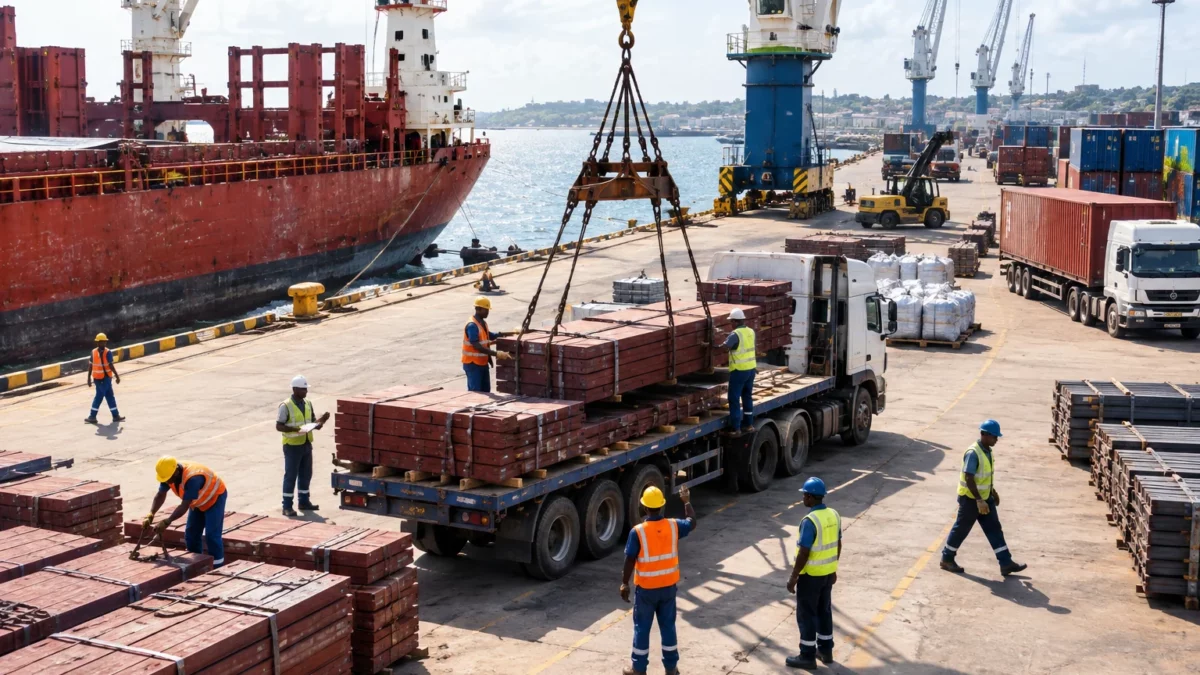
The western corridor’s potential rests partly on minerals. The Takoradi-Nsuta-Awaso-Nyinahin line could carry manganese and bauxite to the port or to future processing sites. The 2027 budget provides for oil revenues allocated to the budget and mining royalties to fund this section in 2027 and 2028, without borrowing. The Ministry of Finance says, however, that feasibility, engineering, cost and environmental and social impact studies are still under way.
Official documents do not yet set out a fully aligned financing schedule. The budget speech relies on domestic resources for the line as far as Nyinahin. The 2027-2030 government programme, by contrast, refers to concessional financing from development partners to complete the same section by the end of 2030, followed by an extension to Hamile from 2030. The tender, meanwhile, presents the entire Hamile-Takoradi route as a private concession. These scopes and funding sources will need to be clarified before bidders can cost their commitments.
The Ghana News Agency, the national news agency, confirms that the budget provides for public funding of the Takoradi-Nyinahin section through oil revenues and mining royalties. It also notes that technical studies are still under way. The question is therefore not only whether the project is attractive to private investors, but also the timing of public spending and how it will be monitored.
For the central corridor, Boankra could become a transfer point between rail, road and transit trade. The aim is in particular to facilitate trade towards the north and ease pressure on the port of Tema. But the existence of a logistics terminal does not yet show what share of goods will travel by train, or at what price. Transportable volumes, tariffs and service frequency will be decisive in establishing expected revenues.
The question of demand and risk
The model without a public guarantee may limit the budget’s direct exposure if a concessionaire fails. In return, it requires investors to believe that revenues will be sufficient to finance construction and operations. Mineral prospects will translate into rail freight only if mines produce, transport contracts are signed, and port and industrial infrastructure is in place.
The timing of public funds also matters. The African Centre for Energy Policy (ACEP), an independent Ghanaian organisation, says that assigning extractive revenues to the line comes while project preparation is still under way. It calls for transfers to be aligned with verified progress on the works and for regular information to be published on funds set aside. The analysis highlights a practical issue: early funding can secure a project, but revenues allocated before construction is ready may remain unused.
The effects will not be the same for everyone. Mining companies and port operators could benefit from lower logistics costs if freight services are reliable. Communities along the routes could gain jobs and better access to markets, but land acquisition and construction will also have local consequences. Traders, farmers and road hauliers, meanwhile, will depend on access to terminals, tariffs and how the network connects with existing roads.
A project with implications for Ghana and its neighbours
The prospect of an extension to Hamile gives the project a regional dimension. A corridor connected to Burkina Faso could facilitate transit between Ghanaian ports and the Sahel. But this will depend on cross-border agreements, compatible customs procedures and an effective rail link across the border. Building a line within Ghana alone does not guarantee a rail service to neighbouring markets.
The next step will be to shortlist candidates, followed by the publication of detailed requests for proposals for each lot. That is when the decisive details must emerge: final routes, costs, risk allocation, timetable, tariffs and evidence of demand. Ghana’s test will be to turn its ambitions for transport and local processing into credible contracts, without exposing public finances to risks that the tender promises to exclude.