Algeria
 Egypt
 Libya
 Morocco
 Sudan
 Tunisia
 Benin
 Burkina Faso
 Cabo Verde
 Ghana
 Guinea
 Guinea-Bissau
 Liberia
 Mali
 Mauritania
 Niger
 Nigeria
 Senegal
 Sierra Leone
 The Gambia
 Togo
 Cameroon
 Central African Republic
 Chad
 DR Congo
 Equatorial Guinea
 Gabon
 Republic of the Congo
 São Tomé and Príncipe
 Burundi
 Comoros
 Djibouti
 Eritrea
 Ethiopia
 Kenya
 Madagascar
 Malawi
 Mauritius
 Mozambique
 Rwanda
 Seychelles
 Somalia
 South Sudan
 Tanzania
 Uganda
 Angola
 Botswana
 Eswatini
 Lesotho
 Namibia
 South Africa
 Zambia
 Zimbabwe
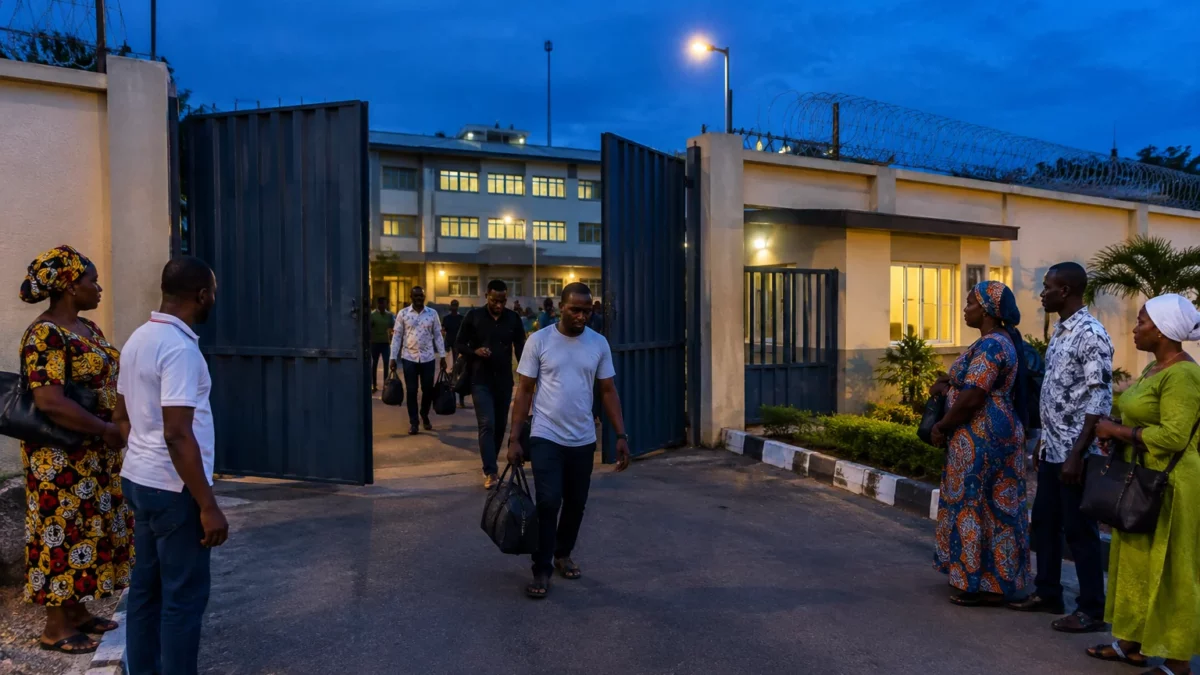
The release of 234 people detained after the 2025 election violence does not close the case. Instead, it puts a central question to the Ivorian justice system: how can public safety be protected without leaving people waiting for months, or even more than a year, before their situation is clarified?
A tense election, with proceedings still under way
The presidential election on 25 October 2025 took place amid disagreements over the electoral process and the exclusion of several opposition figures. The joint mission of ECOWAS and the African Union noted that these tensions, along with limited political dialogue, had fuelled concerns about the election. ECOWAS is the regional organisation for co-operation among West African states.
Banned demonstrations and clashes led to numerous arrests. Côte d’Ivoire’s National Security Council reported 1,658 arrests and 11 deaths, including one gendarme. Amnesty International cited these figures in its 2025 review. These figures are attributed to the authorities and, on their own, do not establish individual responsibility for each death or incident.
The ECOWAS and African Union mission, for its part, referred to nearly 700 people apprehended in the weeks before the election. The figures therefore do not necessarily cover the same period or scope as the national tally of 1,658 arrests. This distinction matters to avoid conflating people arrested before the vote with all those detained during the electoral period.
234 cases reviewed by an investigating judge
On 25 November 2026, government spokesman Amadou Coulibaly announced that 234 people had been released for lack of sufficient evidence to prosecute them. He said investigations were continuing into the other people concerned. His statement was reported by several Ivorian media outlets, including L’Avenir Côte d’Ivoire and KOACI.
The minister defended the use of pre-trial detention when, in his view, evidence suggests a threat to security or national cohesion. He also acknowledged that the justice system must avoid mistakes and said reforms were intended to reduce the length of pre-trial detention. This government justification does not, however, resolve the question of how long those eventually released had been detained.
Release does not necessarily mean that the people concerned have been definitively acquitted. The information published about the decision does not detail the legal status of each of the 234 cases. It is therefore important to distinguish the end of detention announced by the government from the definitive closure of proceedings.
Judicial delays and the human cost of waiting
For detainees, their relatives and their employers, lengthy detention without trial can have tangible consequences: loss of income, interrupted studies or difficulty returning to work. The effects are particularly severe for households that depend on daily earnings and have little financial leeway. Release ends imprisonment, but does not automatically remedy these harms.
The debate also concerns the balance between maintaining order and upholding judicial safeguards. During an election period, the authorities must prevent violence. But every arrest must be supported by evidence, and detention before trial must remain subject to effective oversight. The government says the arrests were not arbitrary; human rights organisations, meanwhile, have criticised restrictions on demonstrations and detentions linked to the electoral period.
The release of 234 people does not, by itself, resolve these differences. It nevertheless highlights the role of the investigating judge: to examine the evidence in each case rather than mechanically prolong detention because of the political context. The authorities have not provided, in the reports consulted, a detailed public timetable for the cases still under way.
An institutional test watched across the region
Côte d’Ivoire experienced episodes of election-related violence during the 2010 and 2020 polls. The joint ECOWAS and African Union mission placed the 2025 vote within this history, while also highlighting tensions surrounding the electoral register, political dialogue and candidacies. This context helps explain what is at stake, without justifying violence or prejudging the guilt of those arrested.
Across West Africa, how Abidjan handles cases linked to demonstrations matters as much as the conduct of the vote. For regional organisations, stability is measured not only by the absence of unrest on election day: it also depends on trust in institutions and access to fair proceedings. Yamoussoukro, Côte d’Ivoire’s political capital, and Abidjan, its main economic centre, are therefore bound by the same institutional imperative.
What happens next will depend on how the remaining cases are handled and whether the announced reforms to pre-trial detention are implemented. Their impact will be measured in part by the speed of decisions, the transparency of proceedings and whether those accused can effectively exercise their rights. It is on these points that the judicial response can help ease tensions left by the electoral period.