Algeria
 Egypt
 Libya
 Morocco
 Sudan
 Tunisia
 Benin
 Burkina Faso
 Cabo Verde
 Côte d'Ivoire
 Ghana
 Guinea
 Guinea-Bissau
 Liberia
 Mali
 Mauritania
 Niger
 Nigeria
 Senegal
 Sierra Leone
 The Gambia
 Togo
 Cameroon
 Central African Republic
 Chad
 DR Congo
 Equatorial Guinea
 Republic of the Congo
 São Tomé and Príncipe
 Burundi
 Comoros
 Djibouti
 Eritrea
 Ethiopia
 Kenya
 Madagascar
 Malawi
 Mauritius
 Mozambique
 Rwanda
 Seychelles
 Somalia
 South Sudan
 Tanzania
 Uganda
 Angola
 Botswana
 Eswatini
 Lesotho
 Namibia
 South Africa
 Zambia
 Zimbabwe
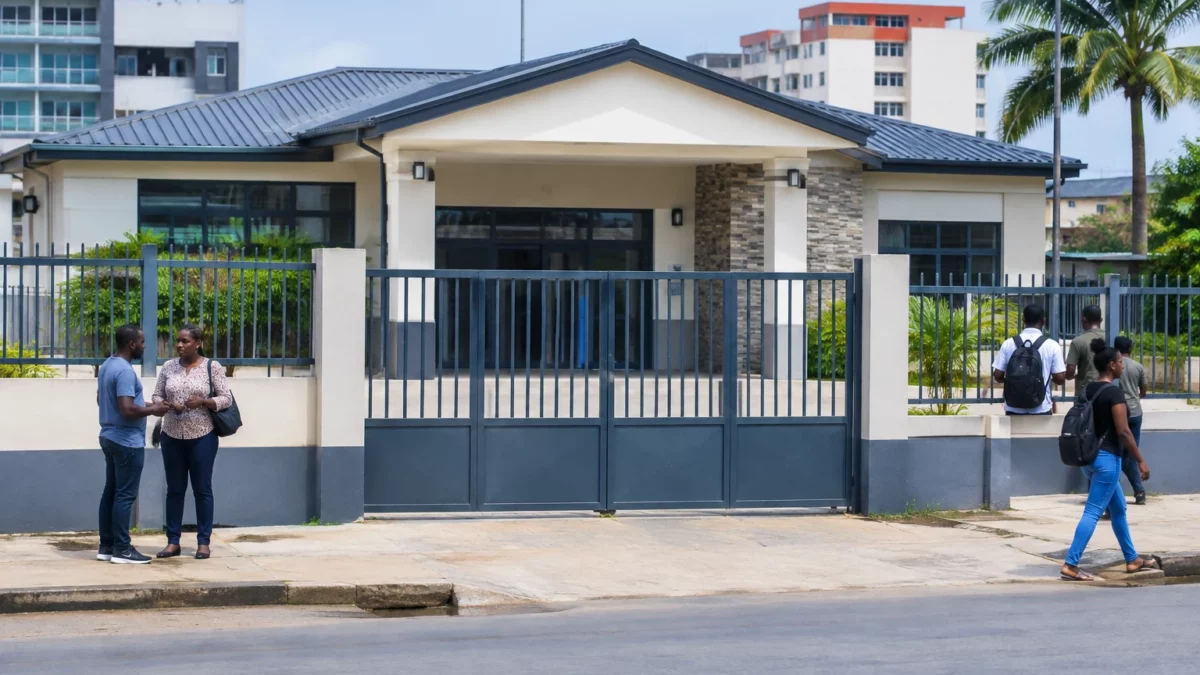
For a woman leaving a violent household, protection does not end with filing a complaint. She also needs a safe place, access to healthcare and a legal process that can run its course. In Gabon, the path between these steps remains fraught with obstacles, as data from NGO Aurore and the shelter project in Port-Gentil show.
Complaints that never reach court
In a report presented in Libreville on 19 February 2025, NGO Aurore said it had recorded nearly 900 cases of violence in 2024. More than 500 were reportedly dealt with by the courts; the other cases are said to have stalled after victims withdrew their complaints. These figures come from the organisation’s monitoring, not from a comprehensive official count. Gabonese media have reported the same data, but no independent national series that would allow them to be verified was available among the sources consulted.
Aurore’s president, Ida Flore Maroundou, has experienced domestic and intimate partner violence herself. She founded the NGO in 2020 and now supports women, including with the help of law firms. The organisation says family or social pressure leads some complainants to abandon proceedings. Such a withdrawal does not necessarily mean the allegations are unfounded: it may reflect the difficulty of pursuing a case while remaining exposed to pressure from those around them.
The issue extends beyond the cases monitored by the association. Gabon’s 2019–2021 Demographic and Health Survey, published with support from UNFPA, documents domestic violence and notes that it is often treated as a family matter. It is based on interviews with women in a sample of households. However, the survey and Aurore’s case files measure different things, so their figures cannot be added together or directly compared.
Rights enshrined in law, services still to be delivered
Gabon’s Law No. 006/2021 of 6 September 2021 provides for the protection of victims, access to healthcare and state coverage of medical costs related to sexual violence and the issuing of certificates. It also sets obligations for the relevant services and provides for dedicated judicial procedures. The free care measure highlighted by Aurore is therefore part of an existing legal framework, although the NGO credits its advocacy with progress in putting it into practice.
The distinction matters: recognition of a right does not in itself guarantee that a victim can exercise it promptly, close to home and free from pressure. A medical certificate can document injuries and contribute to legal proceedings. Legal support helps victims navigate the steps involved. But the withdrawals reported by Aurore also point to the need for safety, social support and protection from reprisals.
The shelter project in Port-Gentil illustrates the gap between the law and practical support. Built with backing from the French embassy and equipped by oil company Maurel & Prom, the centre was still not operational in June 2026, according to the Gabonese Press Agency. Ida Flore Maroundou said at the time that resources still had to be secured for its opening and running costs. The authorities said they would provide support towards official recognition.
In Port-Gentil, the need is also material
A shelter is more than a building. It needs the resources to provide a welcome, security and sustained support in a city far from the capital, Libreville. Without operating funds and coordination with public services, victims risk being left without accommodation even when legal proceedings are under way. The reported 2025 impasse over opening authorisation thus appears to have evolved into a broader question of resources and institutional recognition.
Needs vary. A woman with an income or support network may sometimes be able to leave home more easily than someone financially dependent on her partner or living far from services. Women in Port-Gentil and other provincial cities do not necessarily have the same access as those in Libreville. Published data on court cases do not provide enough detail on these disparities.
CEMAC, the economic and monetary community of six Central African countries, is the regional framework to which Gabon belongs. But the 2021 law and the delivery of services are primarily the responsibility of Gabonese institutions. The regional dimension lies mainly in the issues shared by member states: access to healthcare, emergency accommodation, continuity of legal proceedings and the production of comparable statistics.
The next test: making protection accessible
Gabon’s challenge is therefore not only to raise awareness of violence. It is to connect the law, healthcare, justice and accommodation without leaving victims to bear the material and social cost of seeking help alone. Monitoring the Port-Gentil shelter and publishing regular public data will make it possible to assess whether announced services are genuinely accessible beyond Libreville.
To understand the issues, Gabon’s law on eliminating violence against women sets out provisions on healthcare and medical certificates, among other matters. The Gabon Demographic and Health Survey documents domestic violence. The association’s 2024 figures were reported by Gabonactu and Gabon Media Time. In June 2026, the Gabonese Press Agency reported on the Port-Gentil centre.