Algeria
 Egypt
 Libya
 Morocco
 Sudan
 Tunisia
 Benin
 Burkina Faso
 Cabo Verde
 Côte d'Ivoire
 Ghana
 Guinea
 Guinea-Bissau
 Liberia
 Mali
 Mauritania
 Niger
 Senegal
 Sierra Leone
 The Gambia
 Togo
 Cameroon
 Central African Republic
 Chad
 DR Congo
 Equatorial Guinea
 Gabon
 Republic of the Congo
 São Tomé and Príncipe
 Burundi
 Comoros
 Djibouti
 Eritrea
 Ethiopia
 Kenya
 Madagascar
 Malawi
 Mauritius
 Mozambique
 Rwanda
 Seychelles
 Somalia
 South Sudan
 Tanzania
 Uganda
 Angola
 Botswana
 Eswatini
 Lesotho
 Namibia
 South Africa
 Zambia
 Zimbabwe
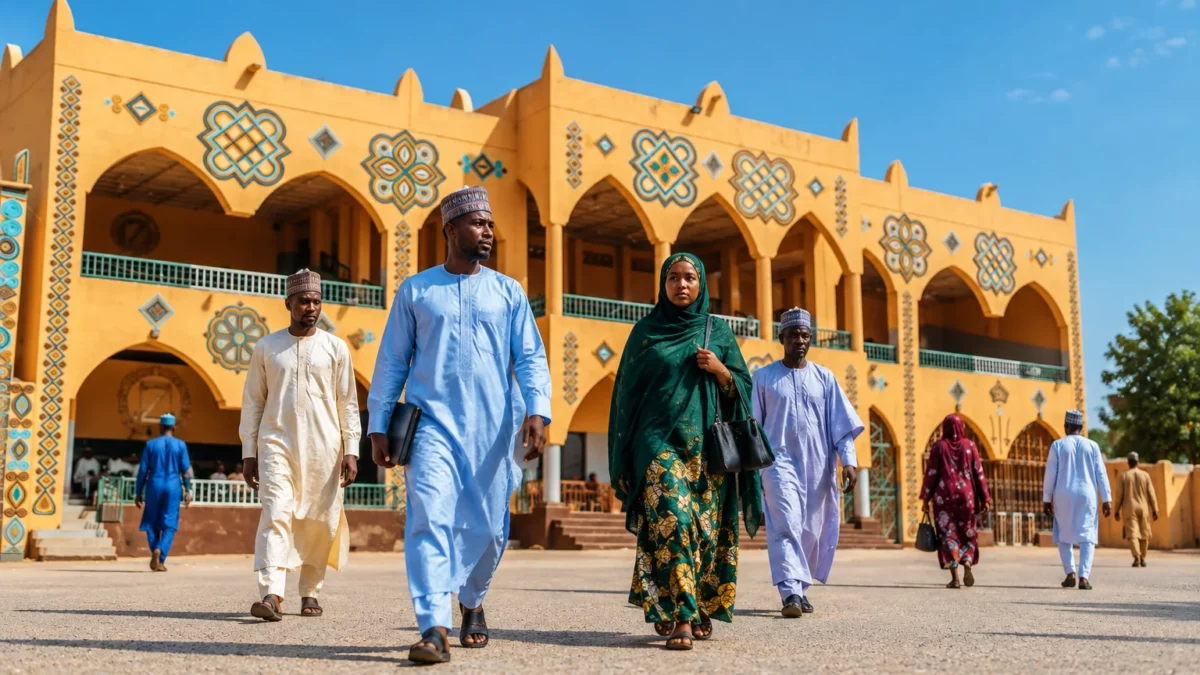
In northern Nigeria, an inquiry involving a traditional leader is testing two requirements: respecting the weight of customary institutions and ensuring that anyone can report an alleged offence without pressure. In Daura, in Katsina State, the authorities have suspended the emir’s official activities while they examine an allegation made by a foreign tourist. The facts remain to be established.
An administrative measure, not a judicial conclusion
On 24 November 2026, the Katsina government announced the suspension of Emir Umar Faruk Umar’s official engagements and travel. It also set up a committee to examine the case and advise Governor Dikko Umaru Radda on what action to take. The statement was signed by Bala Salisu Zango, Commissioner for Information and Culture.
The wording matters: reports by several Nigerian media outlets refer to the emir’s official activities and travel. At this stage, they do not mean that he has been stripped of his title. The committee has not issued any public findings in the information available. The measure is therefore provisional and does not prejudge the subject’s responsibility.
The process follows allegations by a foreign traveller, who says she was subjected to non-consensual touching during a visit to the Daura palace. A video recorded during the meeting has circulated on social media. However, footage shared online is not, on its own, enough to establish all the alleged facts. The allegation must be examined in a process that allows relevant testimony and evidence to be gathered.
A test of trust in Katsina State
Daura is in north-western Nigeria, near the border with Niger. Its emirate is an important traditional institution in Hausa country. These customary authorities do not replace constitutional institutions, but they retain social and cultural influence, particularly in relations with local communities.
This influence means the authorities’ response is under particular scrutiny. A credible inquiry must preserve the presumption of innocence while taking the complainant’s account seriously. It must also clarify who is conducting the investigation, by what method and within what timeframe. Yet the first reports of the announcement provide no details about the committee’s composition or schedule. This lack of information leaves questions unanswered.
Amnesty International Nigeria has called for an urgent and transparent investigation. Several Nigerian media outlets have also reported that the state police had not received a formal complaint at the time the organisation called for an investigation. An administrative inquiry by the Katsina government and a possible police investigation are two separate processes: the announcement of a committee does not, by itself, mean that criminal proceedings have begun.
Between customary authority and individual rights
For the people of Daura, the controversy touches an institution associated with the city’s history and representation. For state officials, the challenge is also to contain tensions and prevent online debate from disrupting daily life. The government has called on the public to remain calm and respect public order.
But calming tensions cannot take the place of establishing the facts. The authorities will have to explain how they protect those interviewed, ensure the committee’s impartiality and distinguish verified information from rumours. The circulation of images on social media can bring public attention more quickly, but it can also expose those concerned to pressure and premature judgement.
The case highlights a wider challenge in Nigeria: making modern institutions and traditional authorities coexist without creating zones of exception. The respect enjoyed by customary leaders does not exempt them from the rule of law. Conversely, an allegation widely circulated is not proof of guilt. The strength of the response will depend on the transparency of the process and the opportunity for each party to present its evidence.
A signal watched beyond Daura
Across West Africa, the case primarily concerns Nigeria’s domestic governance. Nigeria is a member of ECOWAS, the Economic Community of West African States. The case highlights the role traditional authorities continue to play in social mediation and public life, while administrative and judicial decisions fall to state institutions.
The next concrete step will be the publication of the committee’s findings and clarification of the measures taken afterwards. The public will then be able to assess not only the outcome, but also the method: hearings, evidence examined and any referral to the relevant authorities. Until then, the allegation must remain attributed, and the emir’s responsibility cannot be presented as established.
Facts relating to the suspension and the creation of the committee were reported by TheCable and the Nigerian daily Tribune Online. The call for an independent investigation was also covered by TheCable in its report on Amnesty International Nigeria’s position.