Algeria
 Egypt
 Libya
 Morocco
 Sudan
 Tunisia
 Benin
 Burkina Faso
 Cabo Verde
 Côte d'Ivoire
 Ghana
 Guinea
 Guinea-Bissau
 Liberia
 Mali
 Mauritania
 Niger
 Nigeria
 Senegal
 Sierra Leone
 The Gambia
 Togo
 Cameroon
 Central African Republic
 Chad
 DR Congo
 Equatorial Guinea
 Gabon
 Republic of the Congo
 São Tomé and Príncipe
 Burundi
 Comoros
 Djibouti
 Eritrea
 Ethiopia
 Kenya
 Madagascar
 Malawi
 Mauritius
 Mozambique
 Rwanda
 Seychelles
 Somalia
 South Sudan
 Tanzania
 Uganda
 Angola
 Botswana
 Lesotho
 Namibia
 South Africa
 Zambia
 Zimbabwe
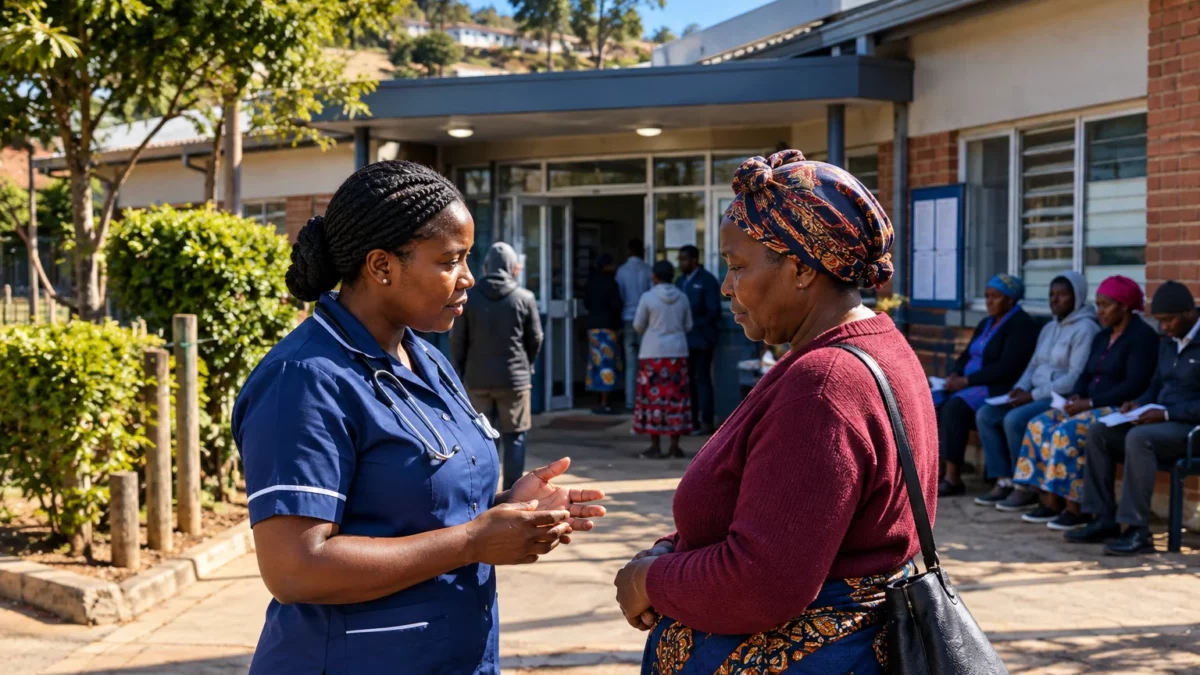
A transfer to a country with no connection to the person concerned, an agreement whose terms are not public, then a death a few months later: Kishanth Peramalya’s case raises a concrete question. Who is responsible for protection and care when one state entrusts another with looking after a refugee?
A journey from Diego Garcia to southern Africa
The case concerns Eswatini, a small landlocked kingdom in southern Africa between South Africa and Mozambique. Mbabane is its capital. The country is a member of the Southern African Development Community (SADC), a regional organisation for economic and political cooperation.
Peramalya’s journey began in 2021, according to information published on 25 November 2026 by several media outlets reporting on a BBC investigation. The British navy is reported to have rescued him in the Indian Ocean as he tried to reach Canada with other Sri Lankan asylum seekers. The group was subsequently placed on Diego Garcia, a British territory in the Chagos Archipelago.
Available information indicates that Peramalya had international protection. His prolonged detention on Diego Garcia had been challenged in court. He suffered from serious mental health conditions and had been convicted of several offences, including four sexual assaults. These points must be distinguished: his convictions do not remove the obligations to protect and provide care that apply to anyone transferred.
A transfer arranged outside usual channels
In December 2024, the British authorities are reported to have refused him entry to the UK because of his criminal record. After approaching more than 20 countries, London is reported to have transferred him to the Maldives in March 2026, then to Eswatini. According to published information, he had no ties to the kingdom.
A draft agreement between London and Mbabane, obtained by the BBC, provided for the UK to fund Peramalya’s accommodation, medical care and support for up to three years. The amount was not made public. The text was still being finalised when he died, on 13 September 2026. Media reports on the case say that he died by suicide.
The British and Eswatini governments did not respond to questions about the circumstances of the transfer, according to the same reports. London defended its policy on public safety grounds, without detailing the arrangements made in this case. In the absence of complete public documents, it remains difficult to establish who oversaw his care, what safeguards had been agreed and how they were monitored.
Safeguards go beyond funding
A care agreement may specify expenditure and duration. On its own, it is not enough to show that the person transferred has effective access to care, clear legal status and an independent means of appeal. The UN High Commissioner for Refugees stresses that transfers to a third country require an individual assessment and protection safeguards, including respect for the principle of non-refoulement, which prohibits returning someone to a place where they risk persecution or serious harm.
In this case, the reported mental health conditions make continuity of care a central issue. It is important to know whether medical follow-up was arranged before his departure, whether health professionals had access to his records and whether suicide prevention measures were in place. The available information does not provide answers. It would therefore be premature to attribute the death to a particular failure without an independent investigation and verified medical evidence.
The issue also affects Eswatini’s residents. Civil society organisations are concerned about the capacity of health services, particularly mental health services, to support people transferred from abroad. The burden is not shared equally: authorities negotiate agreements, while public services and local teams must provide day-to-day reception and care. Funding arrangements and oversight mechanisms remain crucial.
A broader policy of outsourcing migration management
The British case comes after an agreement concluded between Eswatini and the United States in 2025. Publicly released documents and information reported by several media outlets indicate US funding of $5.1 million in exchange for the possible reception of up to 160 deportees. This precedent does not prove that the two arrangements are identical. It does, however, show that several governments are approaching Mbabane to receive people they do not wish to host on their own territory.
This practice shifts part of migration management to third countries. It may reduce the visible responsibility of the state organising the departure, without removing its obligations. For Eswatini, it raises questions about public transparency, parliamentary oversight and the capacity of national institutions. For those concerned, the risk is finding themselves in a country where they have no ties or support network, with safeguards that are difficult to verify.
At regional level, the case puts refugee protection commitments and cooperation within SADC to the test. It also calls on the African Union to monitor a trend that extends beyond Eswatini: African states are becoming transfer destinations under agreements negotiated with governments from outside the continent. What happens next will depend on publication of the agreement’s terms, any investigations into the follow-up provided to Peramalya, and the Eswatini authorities’ response to calls for transparency.