Algeria
 Egypt
 Libya
 Morocco
 Sudan
 Tunisia
 Benin
 Burkina Faso
 Cabo Verde
 Côte d'Ivoire
 Ghana
 Guinea
 Guinea-Bissau
 Liberia
 Mali
 Mauritania
 Niger
 Nigeria
 Senegal
 Sierra Leone
 The Gambia
 Togo
 Cameroon
 Central African Republic
 Chad
 DR Congo
 Equatorial Guinea
 Republic of the Congo
 São Tomé and Príncipe
 Burundi
 Comoros
 Djibouti
 Eritrea
 Ethiopia
 Kenya
 Madagascar
 Malawi
 Mauritius
 Mozambique
 Rwanda
 Seychelles
 Somalia
 South Sudan
 Tanzania
 Uganda
 Angola
 Botswana
 Eswatini
 Lesotho
 Namibia
 South Africa
 Zambia
 Zimbabwe
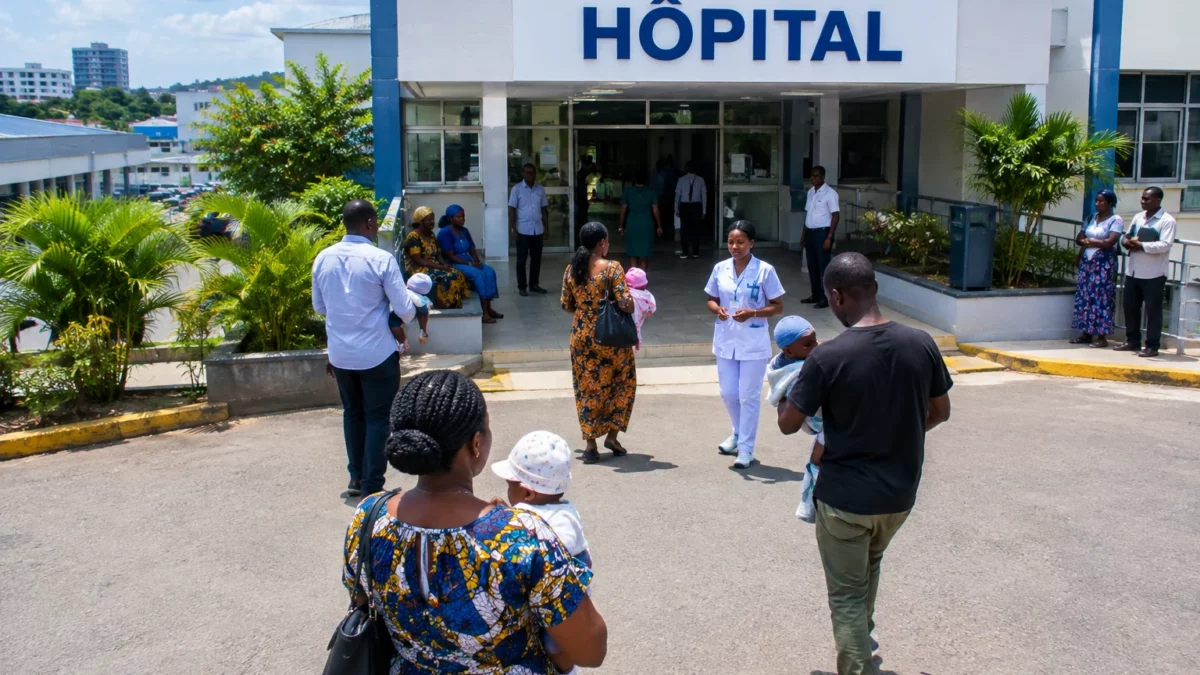
In Libreville, the rains affect more than travel and families’ daily lives. They also bring a familiar health risk back into focus: in very young children, diarrhoea can quickly lead to dehydration, especially when care is delayed.
Rising admissions to the paediatric department of Libreville University Hospital were reported at the end of October 2026. But the public data available do not make it possible to measure the scale of this increase or to confirm that it affects the whole capital. Hospital observations must therefore be distinguished from a national epidemiological assessment.
A season that puts sanitary conditions to the test
Gabon has two rainy seasons. In Libreville, the season from October to mid-December coincides with a period when runoff and local flooding can make access to safe water and sanitation more difficult. Rain alone does not cause diarrhoea. The risk rises when water or food is contaminated, or when hygiene practices are difficult to maintain.
The link between the wet season and diarrhoeal diseases has been documented in Gabon for several years. A national study published in 2008 found more cases during the rainy season. Research conducted in Franceville, in the south-east of the country, and published in 2026 also examines seasonal variations among hospitalised children. These studies shed light on the context, but do not replace up-to-date monitoring of admissions in Libreville.
At the regional level, Gabon is a member of the Economic and Monetary Community of Central Africa (CEMAC), which brings together six Central African countries. The spread of disease and challenges around access to water cross borders. However, Gabonese figures must be established using national data and not conflated with those of neighbouring countries.
Infants are vulnerable when care is delayed
In a report published on 29 October, health workers at Libreville University Hospital described numerous consultations and infants arriving dehydrated. A nurse spoke of more than forty consultations on some days. This figure comes from testimony gathered in one department; it is not a verified national statistic.
The immediate danger is the loss of water and mineral salts. In a baby, this can quickly become serious. The World Health Organization notes that diarrhoea is defined, among other things, as at least three loose or liquid stools in a day, or a frequency that is unusual for the person. It also points out that loose stools can be normal in a breastfed infant: what matters is a change from the child’s usual state.
A demographic and health survey conducted in Gabon in 2019-2021 provides a national point of comparison. It estimated that 12.7% of children under five had had diarrhoea in the two weeks before the survey. This measure covers the whole country and a specific period; it does not prove a current increase in Libreville or provide an assessment for 2026.
Prevention also takes place beyond the hospital
Families are often the first to notice symptoms, but their room for manoeuvre also depends on the services available. When healthcare facilities are far away, transport is expensive or access to drinking water is unreliable, seeking care and maintaining good hygiene become more difficult. These obstacles weigh particularly heavily on low-income households and neighbourhoods where sanitation remains inadequate.
Data from the 2019-2021 survey also show differences in the use of advice or treatment according to region and household characteristics. They cannot explain every delay in treatment, but they are a reminder that individual behaviour alone cannot explain access to care. The availability of services, information for parents and the cost of travel also matter.
Prompt medical care is essential when a child shows worrying signs or is unable to drink. Treatment advice should come from health professionals, particularly for infants. Prevention also depends on access to clean water, handwashing, safe food preparation and the availability of oral rehydration solutions in healthcare facilities.
In Gabon, the October report also noted that the rotavirus vaccine was not included in the expanded programme on immunisation. This point warrants verification with the health authorities: without an official vaccination schedule available for consultation here, it cannot be presented as a confirmed status of the programme in November 2026. Rotavirus is one of the agents that can cause severe diarrhoea in young children.
The next challenge: data tracked over time
To establish whether the situation is actually worsening, regular figures will be needed on consultations, hospitalisations, complications and affected areas. A record limited to one hospital department can provide a useful warning, but it cannot on its own show what is happening in other facilities or in the provinces.
This distinction matters when allocating resources: Libreville’s hospitals must be able to respond to emergencies, while local health centres, water services and prevention organisations can reduce delays and avoidable exposure. For Gabonese families, the next spell of heavy rain will therefore raise a practical question: will prevention and healthcare services be accessible before serious cases reach emergency departments?