Algeria
 Egypt
 Libya
 Morocco
 Sudan
 Tunisia
 Benin
 Burkina Faso
 Cabo Verde
 Côte d'Ivoire
 Ghana
 Guinea
 Guinea-Bissau
 Liberia
 Mali
 Mauritania
 Niger
 Nigeria
 Senegal
 Sierra Leone
 The Gambia
 Togo
 Cameroon
 Central African Republic
 Chad
 DR Congo
 Equatorial Guinea
 Gabon
 Republic of the Congo
 São Tomé and Príncipe
 Burundi
 Comoros
 Djibouti
 Eritrea
 Ethiopia
 Kenya
 Madagascar
 Malawi
 Mauritius
 Mozambique
 Rwanda
 Seychelles
 Somalia
 South Sudan
 Tanzania
 Angola
 Botswana
 Eswatini
 Lesotho
 Namibia
 South Africa
 Zambia
 Zimbabwe
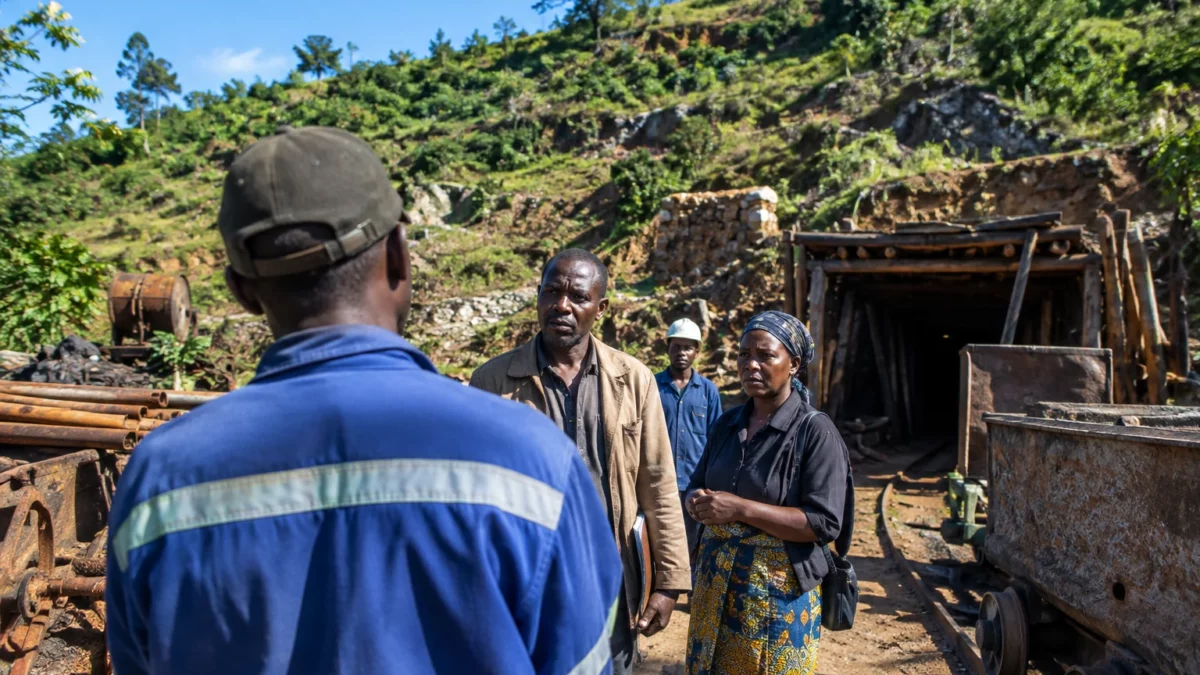
Tungsten is inconspicuous in everyday objects, but essential for making cutting tools, aerospace components and defence equipment. As global supplies tighten, Uganda is once again attracting investors’ attention. The question remains whether market interest will translate into sustainable mining activity and local benefits.
A shared subsoil across the Great Lakes
In south-western Uganda, tungsten deposits form part of the Karagwe-Ankole geological belt. This formation runs through several Great Lakes countries, including Uganda, Rwanda and the Democratic Republic of the Congo. It also contains tin and tantalum ores. This geological continuity does not, however, mean that resources are identical from one country to another, or that they are already exploitable.
Uganda’s mining sector is governed by a national framework: permits, exploration and any potential operations are regulated by the country’s authorities. The 2022 Mining Act includes requirements for local content and value addition. In East Africa, Uganda is a member of the East African Community (EAC), which brings neighbouring states together around economic cooperation. The proximity of regional deposits may encourage the exchange of expertise, but it does not guarantee a shared processing chain.
The region’s geology is documented in scientific research and studies of mineral resources. Researchers have described tungsten mineralisation in south-western Uganda and Rwanda, among other areas. A study of Great Lakes tungsten minerals places Ruhizha within a much broader geological setting.
A new permit, but no measured resource yet
On 24 November 2026, Australian company Silverback Minerals announced an agreement to acquire 90% of the Ruhizha project. The exploration permit covers about 166 square kilometres in south-western Uganda and includes five former mines. The company was already present in the country with the Bahati and Buyaga tungsten projects, in which it holds a 72% interest, according to its public documents.
Ruhizha is estimated to have produced about 158 tonnes of tungsten ore between 1942 and 1970, according to historical data cited by the company. Silverback says no drilling has been carried out there. The company plans to review records and conduct fieldwork before deciding on an initial drilling campaign. These details describe an exploration prospect, not a proven reserve or a mine ready to produce.
This distinction is crucial. Past production is not enough to establish the size, grade or profitability of a deposit by current methods. Silverback has until 30 June 2027 to decide whether to proceed with the acquisition. The announced consideration could reach $5m, excluding share-based remuneration. No mineral resource estimate has yet been published for Ruhizha. Details of the agreement are set out in Silverback’s announcement to the Australian Securities Exchange.
Price surge sharpens industrial interest
The renewed attention is also explained by supply pressures. In February 2025, China introduced export controls on certain tungsten-related products. Beijing remains a dominant player in global production. These measures do not amount to a general halt to exports, but licensing requirements and uncertainty over deliveries have fuelled buyers’ concerns.
Prices in the Western market have risen sharply. Tungsten producer Almonty Industries says the benchmark price for APT — ammonium paratungstate, an intermediate product used in the metal trade — rose from $862.50 in early January 2026 to about $2,650 on 6 November. This figure reflects a market quotation, not a guaranteed price for a future Ugandan project. A separate analysis by S&P Global confirms that China’s 2025 controls contributed to the tightening of supply. S&P Global’s analysis of the tungsten market also highlights the impact of concentrated supply.
Rising prices may make exploration more attractive to investors. They do not, however, eliminate geological risks, infrastructure costs or the time needed to obtain permits and build a mine. For Uganda, the central question will therefore be not simply whether the ore is present, but whether a discovery can be turned into a regulated, safe and economically viable operation.
Local benefits remain to be demonstrated
For investors, a project such as Ruhizha offers an option on a tight market. For Uganda’s authorities, it also raises questions about public revenue, jobs and local processing. For communities near the permit area, the effects will depend in particular on land access conditions, environmental practices and the jobs actually created. Exploration, which precedes any decision to mine, does not yet make it possible to assess these benefits.
Uganda’s Mining Act emphasises value addition and national participation. How these aims are put into practice will depend on later stages: drilling results, feasibility studies, permits and any processing infrastructure. Higher prices can strengthen the bargaining power of a resource-holding country, but only if contracts, local capacity and transparency keep pace.
The case also forms part of a wider debate about so-called critical minerals: industrial companies are seeking to diversify their suppliers, while producer countries want to capture more value than that of raw extraction. In the Great Lakes region, economic cooperation and supply-chain traceability will matter as much as geology. For Ruhizha, the next milestone will be Silverback’s decision before 30 June 2027. Until then, the project remains a promising exploration prospect, but one with no demonstrated mineral resource.