Algeria
 Egypt
 Libya
 Morocco
 Sudan
 Tunisia
 Benin
 Burkina Faso
 Cabo Verde
 Côte d'Ivoire
 Ghana
 Guinea
 Guinea-Bissau
 Liberia
 Mali
 Mauritania
 Niger
 Nigeria
 Senegal
 Sierra Leone
 The Gambia
 Togo
 Cameroon
 Central African Republic
 Chad
 Equatorial Guinea
 Gabon
 Republic of the Congo
 São Tomé and Príncipe
 Burundi
 Comoros
 Djibouti
 Eritrea
 Ethiopia
 Kenya
 Madagascar
 Malawi
 Mauritius
 Mozambique
 Rwanda
 Seychelles
 Somalia
 South Sudan
 Tanzania
 Uganda
 Angola
 Botswana
 Eswatini
 Lesotho
 Namibia
 South Africa
 Zambia
 Zimbabwe
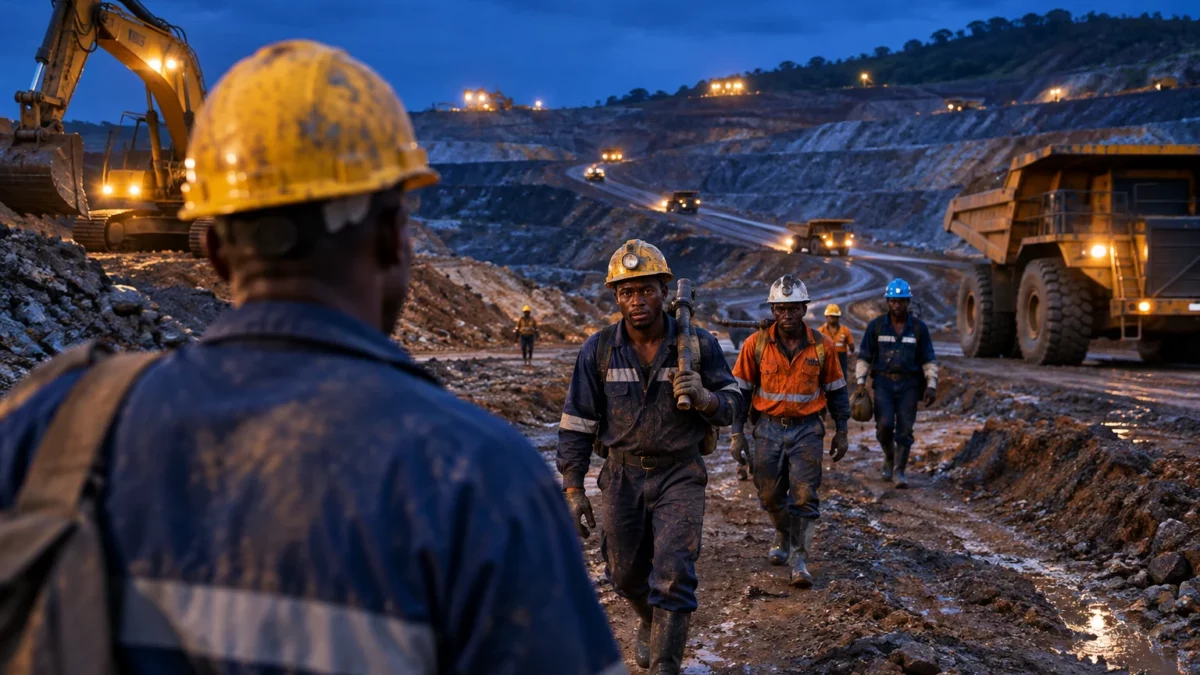
The Democratic Republic of the Congo extracts a major share of the world’s cobalt. But producing a coveted mineral guarantees neither its processing at home nor the creation of jobs and sustainable income. This gap between underground wealth and value created in the country has put the mining industry at the centre of discussions at Makutano in Kinshasa.
An economic forum focused on minerals
The Makutano forum is being held from 23 to 25 November 2026 in the Congolese capital. For the first time, this pan-African gathering, founded in 2015 by Congolese entrepreneur Nicole Sulu, is devoting its edition to the mining sector. President Félix Tshisekedi is among the officials expected to attend. The programme includes discussions between public authorities, companies, investors and industry representatives.
The question put to participants goes beyond extraction alone: what does DR Congo want to do with its minerals? Nicole Sulu argues that they should be used as a lever for economic sovereignty, notably by developing local processing and sustainable industrialisation. The challenge is to move from commitments to viable projects.
From mining clout to added value
The importance of Congolese cobalt can be measured. The US Geological Survey estimates that DR Congo produced about 75% of the cobalt mined worldwide in 2024. The Central Bank of Congo puts production at nearly 198,777 tonnes that year. Statistical methods and coverage may differ, but both institutions confirm the country’s dominant position.
This position gives Kinshasa influence in supply chains linked to batteries and certain technologies. Yet extracting the ore is only one step. Refining, manufacturing battery materials and, more broadly, industrial production capture other parts of the value. That is why processing on the continent is central to discussions about critical minerals.
Local processing, however, requires more than a political decision. It needs reliable energy, transport infrastructure, financing, technical skills and predictable rules. Projects must also meet environmental protection requirements and take account of communities living in mining areas. Without these conditions, announcements risk having no tangible impact.
Benefits are not automatically shared
For the state and businesses, industrialisation can increase public revenue, local activity and employment opportunities. For Congolese people, the benefits will depend on the ability to create accessible jobs, train workers and connect mining areas with the country’s suppliers and small businesses.
The benefits are not the same from one area to another. Kinshasa is home to institutions and negotiations, while copper and cobalt are mined mainly in the south-east of the country. People in mining areas are directly affected by employment, services and environmental impacts. Formal-sector players, meanwhile, do not have the same resources as artisanal miners or small local businesses to access markets and financing.
The forum cannot resolve these disparities on its own. Its value will instead be measured by what follows the discussions: specific decisions, funded partnerships, infrastructure projects under way and monitoring mechanisms. The distinction between announcements and achievements will be decisive.
A regional and continental issue
The debate also concerns Central Africa and neighbouring countries. DR Congo is a member of the Southern African Development Community (SADC), a regional organisation bringing together southern African states, and the Economic Community of Central African States (ECCAS). Energy and transport infrastructure, standards and cross-border trade can influence the ability of countries in the region to develop complementary value chains.
At the pan-African level, the question is how much bargaining power producer countries have in relation to global markets and companies that control different stages of the supply chain. Minerals needed for the energy and digital transitions create opportunities, but do not by themselves determine who captures the revenue or skills. For DR Congo, the signal to watch after the Kinshasa meetings will be whether discussions translate into investment, local processing and verifiable benefits for the population.