Algeria
 Egypt
 Libya
 Morocco
 Sudan
 Tunisia
 Benin
 Burkina Faso
 Cabo Verde
 Côte d'Ivoire
 Ghana
 Guinea
 Guinea-Bissau
 Liberia
 Mali
 Mauritania
 Niger
 Nigeria
 Senegal
 Sierra Leone
 The Gambia
 Togo
 Cameroon
 Central African Republic
 Chad
 DR Congo
 Equatorial Guinea
 Gabon
 Republic of the Congo
 São Tomé and Príncipe
 Burundi
 Comoros
 Djibouti
 Eritrea
 Ethiopia
 Kenya
 Madagascar
 Malawi
 Mauritius
 Mozambique
 Rwanda
 Seychelles
 Somalia
 South Sudan
 Tanzania
 Uganda
 Angola
 Botswana
 Eswatini
 Lesotho
 Namibia
 South Africa
 Zambia
 Zimbabwe
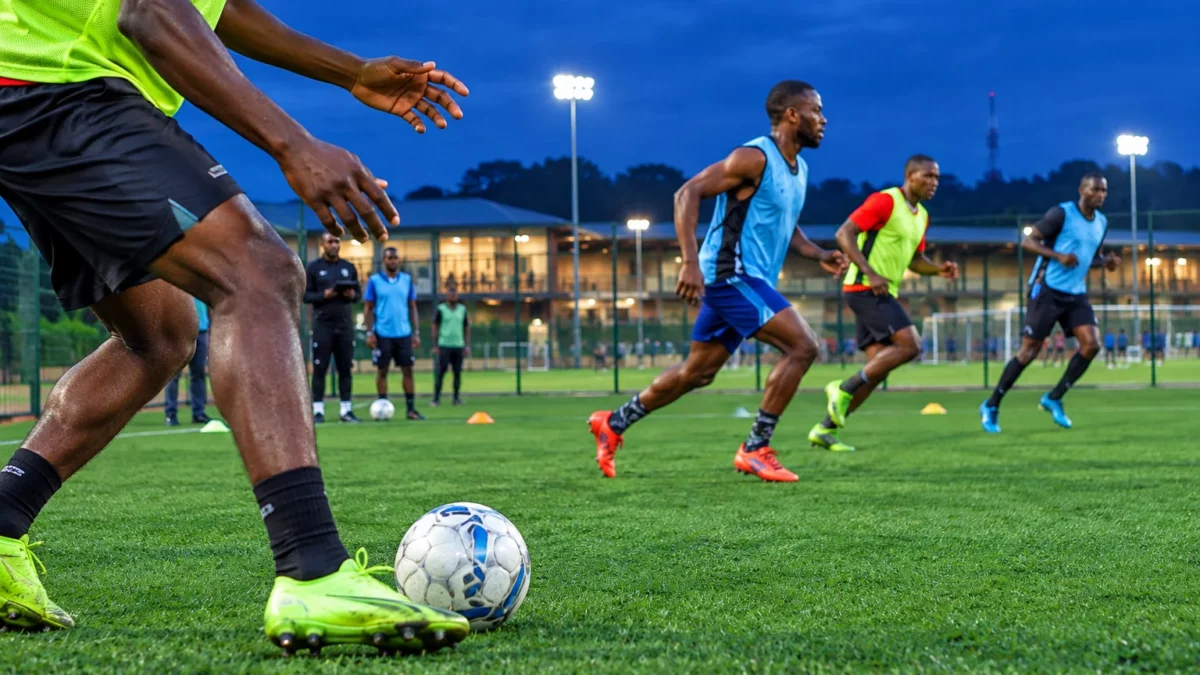
For African federations, the stakes in the next FIFA election are measured in pitches, training and funded competitions as well. In Abuja on 21 November 2026, the public show of support for incumbent president Gianni Infantino came with a major financial pledge. But a funding announcement is not yet a payment, and a standing ovation cannot guarantee what goes into a secret ballot.
A balance of power extending beyond the African vote
The Confederation of African Football (CAF) brings together 54 national federations. Each has one vote at FIFA, world football’s governing body, which has 211 member associations. The African bloc therefore accounts for more than a quarter of the electorate. It is not, however, a single voting group: the presidential ballot is individual and secret.
The election will take place on 18 March 2027 in Rabat, Morocco, at FIFA’s 77th Congress. Three candidacies have been submitted: those of Gianni Infantino, French Football Federation president Philippe Diallo and Japan’s Kohzo Tashima. The electoral committee has yet to rule on their eligibility.
The context extends beyond rivalries between candidates. World football is emerging from a heated debate over FIFA’s governance and funding. In July 2026, the organisation scrapped its FIFA Forward Enterprise proposal, which envisaged bringing some commercial activities together in a new structure and opening a stake in it to private investors. The plan was abandoned in response to the criticism it had drawn.
A funding pledge and public show of support in Abuja
At the CAF general assembly in Abuja, Nigeria’s capital, Infantino announced that allocations to federations could reach $25 million each for the 2027-2030 cycle. The figure is significantly higher than the roughly $8 million per association planned under the current FIFA Forward cycle. The precise rules on access and disbursement will determine what each federation can actually use.
CAF president Patrice Motsepe said all 54 African federations supported Infantino. He then invited delegates to stand and applaud him. Philippe Diallo, who was in Abuja, also joined the standing ovation. The scene made the continental leadership’s political backing visible, but it does not reveal the individual intentions of voters.
The pledge builds on an established financial relationship. FIFA says its Forward programme funds development projects proposed by its member associations. In Nigeria, it is helping to build a technical centre in Abuja, with accommodation for national teams and new pitches. Such investments can meet practical needs: preparing national teams, training players and reducing some organisational costs.
CAF also has resources of its own. In its financial statements presented in Abuja, it reported $284 million in revenue and a net profit of $31.2 million for the financial year ending in June 2026. It increased its annual support to each of its federations to $700,000, up from $200,000 in 2021. Its target remains $1 million per association.
Turning funding into verifiable projects
For federations, increased funding could provide greater room for manoeuvre. Needs differ from one country to another: some need to renovate infrastructure, while others need to strengthen women’s football, local competitions or coach training. Projects outside capital cities and amateur clubs’ access to facilities will also matter when assessing the impact.
But an announced allocation is not an unconditional cheque. Eligibility criteria, disbursement schedules and oversight mechanisms will determine whether funds are predictable and accessible. They will also need to make it possible to track how the money is used and what results it delivers. Federations with small administrative teams could face greater difficulties preparing applications or meeting monitoring requirements.
The new formula presented by FIFA differs from the abandoned proposal. Instead of turning to private investors through FIFA Forward Enterprise, the organisation is emphasising increased redistribution, funded in part by its reserves and revenue. FIFA has publicly confirmed a target of $25 million per association for 2027-2030. The debate now also concerns how this redistribution is governed: who decides, on what criteria and with what guarantees of transparency?
CAF’s financial position provides another element of context. Its rising revenue and increased support to federations indicate that funding for African football does not depend on a single actor. However, CAF’s allocations remain separate from FIFA’s. Adding them together without accounting for their schedules, criteria and funded expenditure would give a misleading picture of the resources actually available.
Political backing will have to translate into votes
The support expressed in Abuja strengthens Infantino’s position in the campaign. It does not end the contest. Diallo says he is seeking support beyond Europe, while Tashima completes a race involving all 211 member associations. Leaders’ public positions offer an indication, but do not replace the secret ballot on 18 March 2027.
For African federations, the choice is not just about the amount pledged. It also concerns how FIFA sets its priorities, accounts for its spending and involves the confederations in its decisions. The FIFA Forward Enterprise episode showed that questions of oversight and transparency can provoke opposition, even when the stated case is to increase development funding.
The next significant milestone will therefore be the publication of the terms for the 2027-2030 cycle, followed by their review by FIFA’s bodies. In Rabat, the vote will measure the extent of political support for Infantino. Until then, federations will need to distinguish election pledges from resources actually allocated, and assess whether those resources meet football’s priorities in each of their countries.