Algeria
 Egypt
 Libya
 Morocco
 Sudan
 Tunisia
 Benin
 Burkina Faso
 Cabo Verde
 Côte d'Ivoire
 Ghana
 Guinea
 Guinea-Bissau
 Liberia
 Mali
 Mauritania
 Niger
 Nigeria
 Senegal
 Sierra Leone
 The Gambia
 Togo
 Cameroon
 Central African Republic
 Chad
 DR Congo
 Equatorial Guinea
 Gabon
 Republic of the Congo
 São Tomé and Príncipe
 Burundi
 Comoros
 Djibouti
 Eritrea
 Ethiopia
 Kenya
 Madagascar
 Malawi
 Mauritius
 Mozambique
 Rwanda
 Seychelles
 Somalia
 South Sudan
 Tanzania
 Uganda
 Angola
 Botswana
 Eswatini
 Lesotho
 Namibia
 Zambia
 Zimbabwe
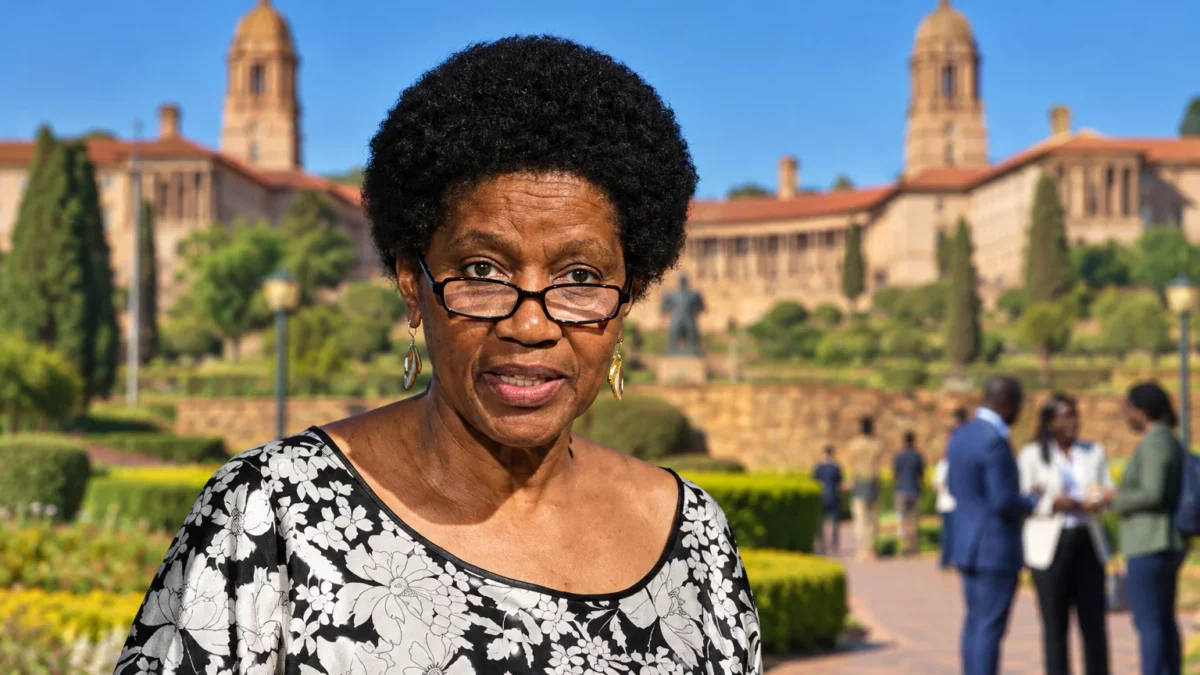
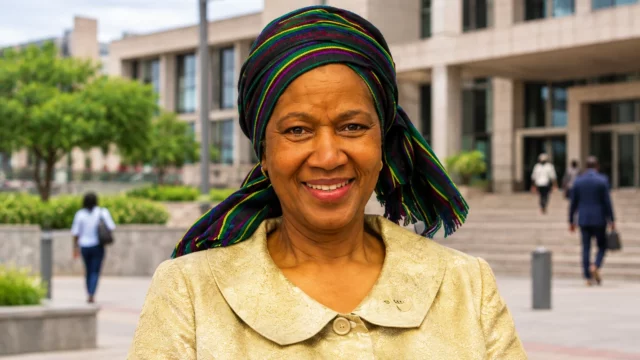
In South Africa, women’s access to the highest offices has long faced political and social barriers. Phumzile Mlambo-Ngcuka crossed one of them in 2005, becoming the country’s first woman vice-president. Her death, aged 71, has brought renewed attention to a career devoted to South African public life and continental debates on equality.
A career rooted in democratic transformation
Phumzile Mlambo-Ngcuka died on Friday 20 November 2026, aged 71. The South African presidency said she had succumbed to complications related to a recent medical procedure. Her family confirmed the circumstances of her death. The authorities gave no further medical details.
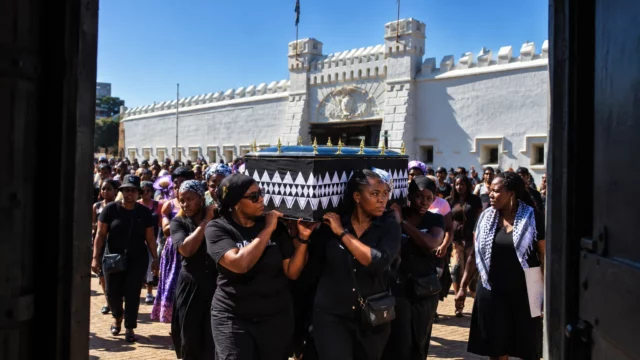
On Sunday 22 November, her family welcomed people who came to pray at her home in Morningside, Johannesburg. A memorial service is scheduled for Tuesday 24 November in Rivonia. Her state funeral, category 2, will take place on Saturday 28 November in Middledrift, in the Eastern Cape province, according to the South African government.
Her career unfolded during the transition that began with the end of apartheid and South Africa’s first democratic elections in 1994. An activist opposing the segregationist regime, teacher and then African National Congress (ANC) MP, she joined the government in 1996. She subsequently held several ministerial posts, including in trade and industry, and later mineral resources and energy.
In June 2005, President Thabo Mbeki appointed her vice-president after Jacob Zuma left the post. She held the position until 2008. The appointment marked a step forward in women’s political representation, but did not mean that the barriers to their participation had disappeared.
From the South African government to the UN
After serving as vice-president, Mlambo-Ngcuka continued her work on the international stage. From 2013 to 2021, she led UN Women, the United Nations agency tasked with promoting gender equality and women’s empowerment. There, she championed issues including political participation, access to education and the fight against gender-based violence.
Her career thus linked several centres of decision-making: South African institutions, pan-African political networks and international bodies. This trajectory gave a global profile to a leader who had emerged from the anti-apartheid struggle. It also serves as a reminder that institutional progress is built through individual careers, collective mobilisation and political decisions.
Tributes highlighted this aspect of her legacy. UN Secretary-General António Guterres described her as a long-standing champion of the rights and empowerment of women and girls. The African Union also recalled her role as a mediator in the process that contributed to the November 2022 Pretoria Agreement between the Ethiopian government and the Tigray People’s Liberation Front.
A symbolic first, and challenges that remain
The title of South Africa’s first woman vice-president holds a place in the country’s political history. But it does not sum up her legacy. In Pretoria, as in provincial capitals and rural areas, women’s presence in institutions does not in itself guarantee their influence over decisions or improve their living conditions.
Public office also exposed Mlambo-Ngcuka to the tensions of her time. She took up her post as the ANC was experiencing internal rivalries and a contested succession. Her appointment, following Zuma’s dismissal amid allegations relating to an arms contract, provoked controversy. These debates are part of the country’s political history and should neither obscure her work nor remove the need to examine the power dynamics around her.
For women active in political parties, public administrations or civil society, her career provides a concrete precedent: access to a position previously reserved for men can broaden what is possible. However, lasting change also depends on representation rules, the resources devoted to public policies and institutions’ capacity to address everyday inequalities.
A legacy beyond national borders
Mlambo-Ngcuka’s memory resonates across southern Africa, where the Southern African Development Community (SADC) brings together states that co-operate on regional integration and gender issues, among other areas. Her experience leading UN Women and her participation in an African Union mediation also illustrate how African women leaders move between national governance and continental diplomacy.
The next tributes will take place in Johannesburg and then Middledrift. Beyond the ceremonies, the challenge will be to assess what institutions do with the doors opened by previous generations: who takes part in decision-making, what resources are devoted to equality and what role women play in resolving regional crises. Phumzile Mlambo-Ngcuka’s career will remain associated with these questions, in South Africa and across the continent.