Algeria
 Egypt
 Libya
 Morocco
 Sudan
 Tunisia
 Benin
 Burkina Faso
 Cabo Verde
 Côte d'Ivoire
 Ghana
 Guinea
 Guinea-Bissau
 Liberia
 Mauritania
 Niger
 Nigeria
 Senegal
 Sierra Leone
 The Gambia
 Togo
 Cameroon
 Central African Republic
 Chad
 DR Congo
 Equatorial Guinea
 Gabon
 Republic of the Congo
 São Tomé and Príncipe
 Burundi
 Comoros
 Djibouti
 Eritrea
 Ethiopia
 Kenya
 Madagascar
 Malawi
 Mauritius
 Mozambique
 Rwanda
 Seychelles
 Somalia
 South Sudan
 Tanzania
 Uganda
 Angola
 Botswana
 Eswatini
 Lesotho
 Namibia
 South Africa
 Zambia
 Zimbabwe
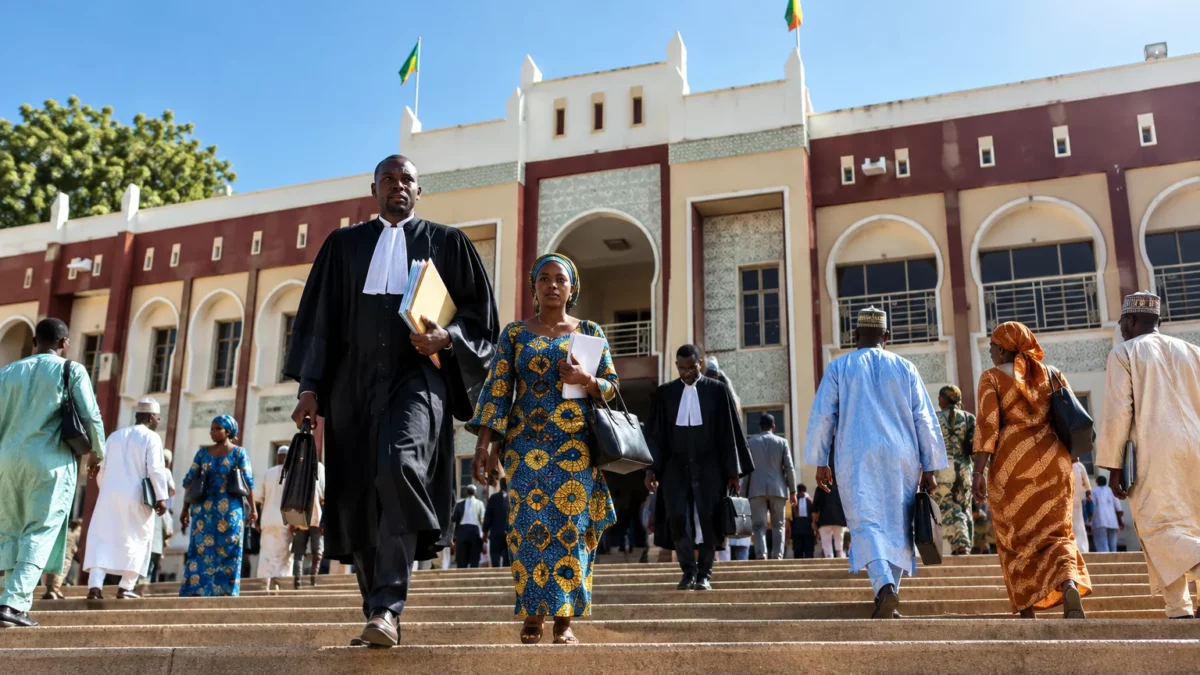
In Mali, talking about the price of millet, rice or oil can go beyond debate in the market. For Rokiatou Doumbia, known on social media as “Rose, la vie chère” (“Rose, the high cost of living”), speaking out led to a heavy sentence. An international campaign announced for December has now brought her case back to the centre of discussions about freedom of expression in Bamako.
A ten-year sentence, seven years without parole
On 17 August 2026, the criminal chamber of the Bamako Court of Appeal sentenced Rokiatou Doumbia to ten years in prison, three of them suspended. The commentator Mohamed Youssouf Bathily, known as Ras Bath, received the same sentence in the case. Both were found guilty of “criminal conspiracy” and “undermining the credit of the state”, charges linked, according to accounts of the trial, to statements disseminated using information and communication technologies.
The verdict was reported by Malian and regional media, as well as by Amnesty International. Reports specify that seven years are to be served in detention. The two people were arrested in March 2023. Doumbia became known for denouncing rising prices of essential goods and took part in programmes hosted by Ras Bath on economic hardship.
Amnesty says it will include Rokiatou Doumbia in its annual “Write for Rights” campaign from 10 December, International Human Rights Day. The organisation plans to send letters, emails and cards, and to launch petitions, calling for her release and expressing support for her. It describes her detention as arbitrary and says the sentence punishes her for exercising her freedom of expression. This is the NGO’s assessment; the Malian authorities were not cited in the campaign announcement as having responded to these criticisms.
Amnesty International sets out its calls for the release of Rokiatou Doumbia and Ras Bath. The verdict and the seven-year prison term were also reported by the pan-African news agency APA and Deutsche Welle.
The cost of living: an economic issue and a matter of public speech
Rising prices directly affect households, but they also shape political debate. When a trader or content creator describes everyday difficulties, they link household economics to the choices made by public officials. Social media allows these voices to reach audiences quickly, including people who do not always express themselves in traditional media.
This role gives the case particular significance. Doumbia is known not only as an influencer: she has spoken about the cost of living, an issue affecting market traders, employees, families and informal economy workers. The legal proceedings may therefore be watched by others who comment online on prices or public decisions. However, it would be unwise to infer, without further evidence, a uniform effect on the way people speak out across the country.
The case comes amid an already constricted civic space. After restrictions were imposed on political activities in 2024, the authorities suspended political parties and associations in May 2025, before dissolving them. The National Human Rights Commission of Mali deplored the dissolution in its report. Reporters Without Borders, meanwhile, ranks the country 121st out of 180 in its 2026 World Press Freedom Index and reports restrictions affecting the media.
These developments do not make the situations of political parties, journalists and content creators identical. They do, however, show that debate over the sentence is taking place in a context where opportunities for public expression and political organisation are limited. In Bamako, hearings and public statements may be more visible; in the regions, access to media and digital platforms varies, without changing the tangible impact of food prices on household budgets.
International mobilisation amid a reshaped regional context
Mali left the Economic Community of West African States (ECOWAS), the regional organisation for economic and political integration, on 29 January 2025, alongside Burkina Faso and Niger. The three countries have since strengthened their cooperation within the Alliance of Sahel States. This reshaping does not remove the case’s regional dimension: it changes the diplomatic and institutional frameworks in which questions of rights and governance are discussed.
Amnesty’s campaign opens another channel: transnational mobilisation. It may increase attention to the case and convey messages of solidarity to the detainee. It is not, by itself, a court ruling or a guarantee of release. The immediate issue therefore remains the fate of Doumbia and Ras Bath, as well as the next steps in the legal proceedings following their conviction.
Across West Africa, the case raises a practical question: what space remains for public criticism when speaking about prices or the conduct of public affairs leads to criminal prosecution? The answer will depend on decisions by the Malian authorities and courts, but also on the ability of the media, associations and citizens to follow the case without conflating allegations, court rulings and assessments by rights organisations.
Reporters Without Borders’ data on press freedom in Mali, the report by the National Human Rights Commission of Mali and the ECOWAS communiqué on Mali’s withdrawal shed light on this institutional and regional context.