Algeria
 Egypt
 Libya
 Morocco
 Sudan
 Tunisia
 Benin
 Burkina Faso
 Cabo Verde
 Côte d'Ivoire
 Ghana
 Guinea
 Guinea-Bissau
 Liberia
 Mali
 Mauritania
 Niger
 Nigeria
 Sierra Leone
 The Gambia
 Togo
 Cameroon
 Central African Republic
 Chad
 DR Congo
 Equatorial Guinea
 Gabon
 Republic of the Congo
 São Tomé and Príncipe
 Burundi
 Comoros
 Djibouti
 Eritrea
 Ethiopia
 Kenya
 Madagascar
 Malawi
 Mauritius
 Mozambique
 Rwanda
 Seychelles
 Somalia
 South Sudan
 Tanzania
 Uganda
 Angola
 Botswana
 Eswatini
 Lesotho
 Namibia
 South Africa
 Zambia
 Zimbabwe
For families in Senegal’s coastal villages, the journey to the Canary Islands is not a regional statistic. It is a loved one setting off, sometimes in an overloaded pirogue, whose fate may remain unknown. In Dakar, a conference bringing together West African officials put a practical question back at the centre of the debate: how to protect people on the move and pursue the networks exploiting them without treating all migration as a crime?
A shipwreck underscores the cost of crossings
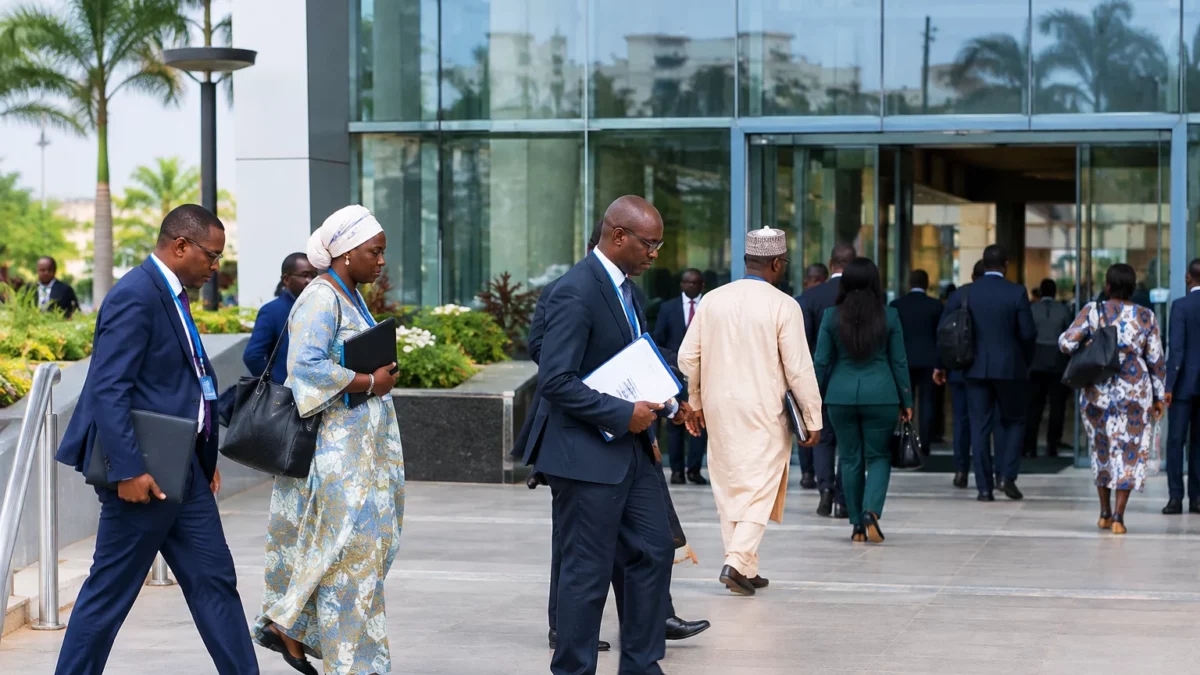
On 20 November 2026, representatives of 15 West African countries met in Dakar with the International Organization for Migration (IOM), the United Nations agency responsible for migration. The two-day meeting aims to set common priorities and advance a regional declaration and a roadmap. Their adoption was still expected at the conclusion of the talks.
The conference comes after a boat sank off Lompoul, in the Louga region. The death toll changed as search operations continued: according to information provided by the Senegalese authorities on 9 November, the African Commission on Human and Peoples’ Rights reported at least 39 deaths. Accounts published later put the toll at at least 43. These figures reflect assessments made at different times; they should not be confused with a final count.
In Dakar, Senegalese Justice Minister Moussa Sarr argued for judicial cooperation between states to punish smuggling networks. He also referred to the appeal of the idea of a better future abroad and the need to create opportunities for young people in Senegal. IOM Director General Amy Pope stressed information-sharing, trust between governments and coordination along the entire migration route.
Regional mobility is not limited to journeys to Europe
Debate is taking place in a region where people also move between neighbouring countries for work, study, family ties or safety. The Economic Community of West African States (ECOWAS) recently reaffirmed its cooperation with the IOM on free movement, labour mobility, returns and migration governance. The challenge, then, is to combat abuses without indiscriminately obstructing regional movement recognised in community commitments.
Terminology matters. Migrant smuggling includes arranging irregular entry in return for payment. Human trafficking involves exploiting people through coercion, deception or other means defined by law. The two phenomena can overlap, but they are not synonymous. A regional response will need to distinguish between offences, identify victims and protect their rights, including when their administrative status is irregular.
The Lompoul shipwreck makes this distinction urgent. The African Commission has called for stronger protection for migrants and measures to prevent deaths at sea. In Senegal, human rights organisations have also called for more prevention, highlighting the limitations of a response focused solely on departures and checks. These positions do not settle the debate over which policies to prioritise, but they point to a shared concern: security operations are no substitute for rescue or the protection of people.
Turning commitments into action on the ground
For states, criminal justice cooperation can help investigations when recruiters, organisers, boats and financial transfers cross multiple borders. This requires reliable exchanges, compatible judicial procedures and the capacity to track networks beyond the intermediaries most easily seen. The conference alone does not establish that these mechanisms are already in place. The forthcoming roadmap will need to set out responsibilities, resources and deadlines against which progress can be measured.
For local communities, the issue plays out both in coastal municipalities and in the regions from which prospective migrants leave. Young people seeking an income are not the only ones affected: families sometimes finance the journey, while communities may lose loved ones at sea. Maritime checks and judicial action may reduce some risks, but on their own they do not meet the demand for jobs and training raised by Senegalese officials.
This economic dimension should not be used to present emigration as simply the result of a lack of ambition or information. Decisions to leave are often linked to several factors, which vary between individuals and regions. Likewise, promising jobs without specifying the policies and resources involved is not yet a verifiable response. The challenge will be to link prevention to local opportunities without making migrants responsible for the networks that deceive or exploit them.
Credibility will be tested after the conference
The process launched in Dakar is part of a broader regional sequence. In early November, ECOWAS and the IOM agreed to deepen their cooperation on several migration priorities, including labour mobility and reintegration. The ministerial conference can give these priorities a West African political framework, provided states ensure joint follow-up rather than stopping at a declaration.
The next steps to watch are clear: publication of the Dakar declaration, approval of the roadmap and measures adopted by the 15 participating countries. Their impact will depend on administrations’ ability to share information without exposing vulnerable people, pursue networks and organise rescue operations at sea. For Senegal, a country of departure and transit on Atlantic routes, the response will be measured as much by the protection of lives and access to justice as by announced arrests.