Algeria
 Egypt
 Libya
 Morocco
 Sudan
 Tunisia
 Benin
 Burkina Faso
 Cabo Verde
 Côte d'Ivoire
 Ghana
 Guinea
 Guinea-Bissau
 Liberia
 Mali
 Mauritania
 Niger
 Nigeria
 Senegal
 Sierra Leone
 The Gambia
 Togo
 Cameroon
 Central African Republic
 Chad
 DR Congo
 Equatorial Guinea
 Gabon
 Republic of the Congo
 São Tomé and Príncipe
 Burundi
 Comoros
 Djibouti
 Eritrea
 Ethiopia
 Kenya
 Madagascar
 Malawi
 Mauritius
 Mozambique
 Rwanda
 Seychelles
 Somalia
 South Sudan
 Tanzania
 Uganda
 Angola
 Eswatini
 Lesotho
 Namibia
 South Africa
 Zambia
 Zimbabwe
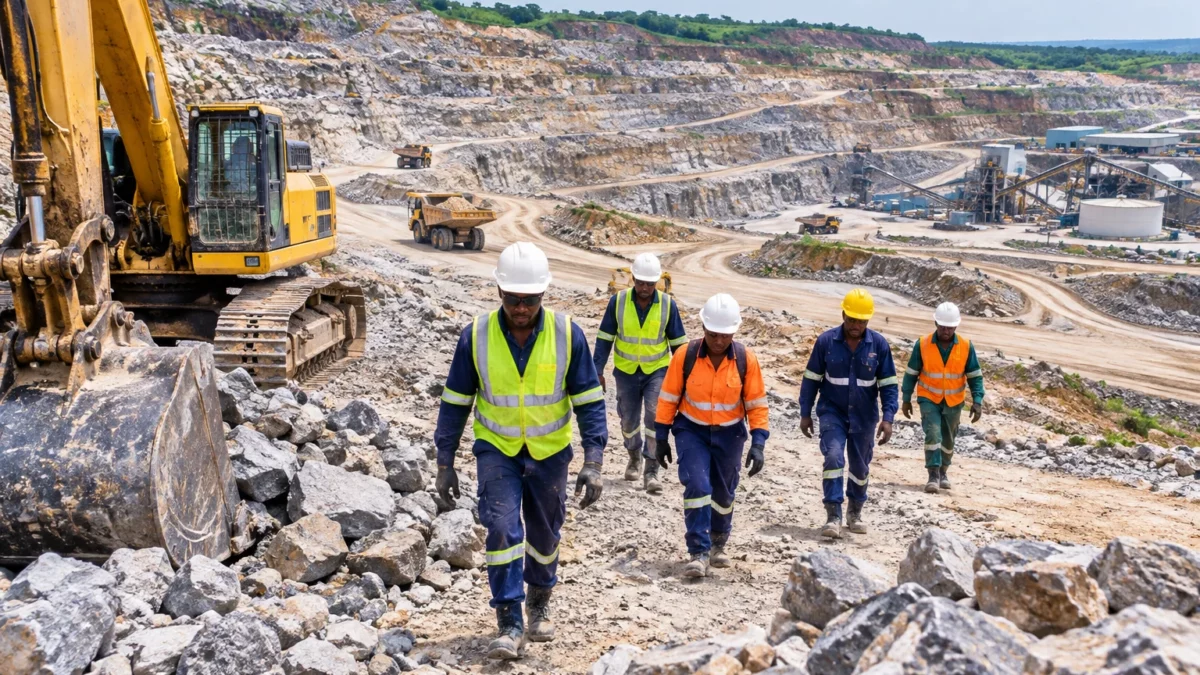
A mining agreement does not, by itself, create jobs or factories. For Côte d’Ivoire and Botswana, the challenge of the rapprochement launched in 2026 is therefore tangible: to turn extractive expertise into local capacity, and natural resources into sustainable economic activity.
Two mining trajectories, one shared challenge of transformation
Botswana, a southern African country and member of the Southern African Development Community (SADC), has built a major industry around diamonds. Côte d’Ivoire, in West Africa, is developing gold exploration and other extractive industries. Their experiences differ, but they share a question: how can more value be retained on the continent, rather than exporting mainly raw materials?
The cooperation thus links two distant African regions without relying solely on external partners. It also forms part of the African Continental Free Trade Area (AfCFTA), which aims to facilitate trade between African countries. For businesses, however, the promise will depend on the rules, infrastructure and markets that are genuinely accessible.
In Côte d’Ivoire, mining adds to an economy in which agriculture and hydrocarbons also play an important role. In Yamoussoukro, the country’s political capital, national policy is translated into projects across the different regions. The benefits, however, are often felt far from decision-making centres: around mining sites, in employment hubs and among local suppliers.
From diplomatic agreements to industrial cooperation prospects
The rapprochement took its first step on 30 July 2026 in Gaborone, Botswana’s capital. The two governments then signed a cooperation agreement on mining and energy. According to the Ivorian government portal, the agreement covers geological research, exploration, diamonds, gold, critical minerals, training and sector governance.
Botswanan President Duma Gideon Boko’s state visit to Côte d’Ivoire, from 15 to 18 November, broadened this framework. On 16 November, he met President Alassane Ouattara in Abidjan. Ivorian authorities announced the signing or initialling of several instruments in different fields. The presidency notably cited the political, economic and trade sectors, as well as animal and fisheries resources, mining and oil.
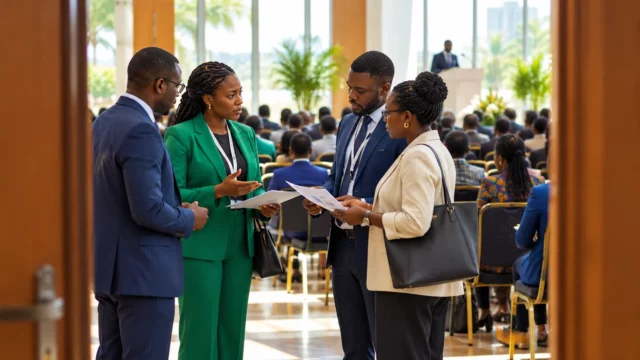
The International Extractive and Energy Resources Exhibition (SIREXE), held in Abidjan from 18 to 22 November, then provided a public showcase for this cooperation. Botswana is taking part as the guest country of honour. The Ivorian News Agency reports that its Minister of Mines and Energy, Bogolo Kenewendo, spoke about investment, local processing and regional value chains. She also highlighted Botswana’s goal of diversifying an economy historically linked to diamonds.
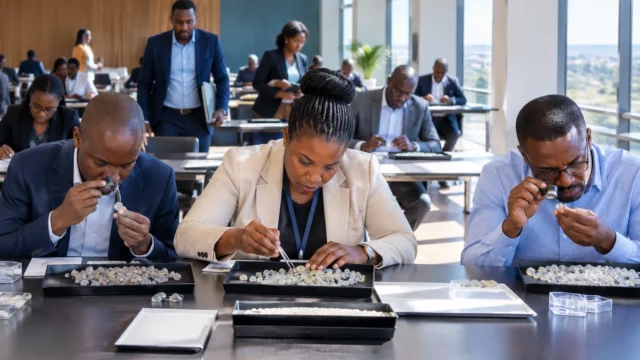
The discussions also concern skills and state-owned companies. During his visit, Duma Boko went to the Ivorian Mining Development Company (SODEMI). Ivorian authorities had earlier said that a Botswanan technical mission had taken an interest in the diamond projects at Séguéla and Tortiya. These visits open up avenues for work; they do not yet prove that an investment or technology transfer has been agreed.
Added value will be measured on the ground
For officials in both countries, the stated goal is to make better use of their complementary strengths. Botswana can share its experience in the diamond industry and mining management. Côte d’Ivoire, for its part, has expertise in gold exploration and industrial players in hydrocarbons and refining. The companies PETROCI, Botswana Oil Limited and the Ivorian Refining Company are presented as potential partners for energy cooperation.
But turning agreements into results requires specific decisions: which companies will lead the projects, who will finance them, where will the work take place, and what share of procurement will go to local suppliers? Technical training, geological research and access to energy also matter. Without these levers, cooperation may remain at the level of official visits and protocols.
The benefits will not be evenly distributed. Government bodies and mining companies may gain new expertise. Local workers and subcontractors will benefit from jobs and contracts if projects actually provide for training and local-content criteria. People living near the sites are directly affected by land use, water and environmental impacts. Value creation therefore cannot be reduced to the volume extracted or exported.
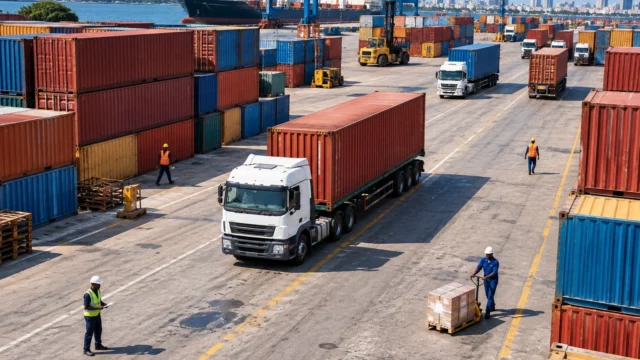
SIREXE 2026 puts infrastructure at the centre of its discussions: roads, energy, processing equipment and logistics capacity all determine whether industrial transformation can take place. The Ivorian government has also presented SIREXE Invest, a platform intended to bring project sponsors and investors together. Its launch is a matchmaking tool, not a guarantee that announced capital will translate into construction projects or jobs.
A partnership to watch beyond the exhibition
The regional significance lies in the possibility of connecting southern African expertise with West African markets and industrial capacity. If the projects move forward, this cooperation could show how African states build direct partnerships in mineral resources and energy. It will not replace regional policies, but can complement them through exchanges of expertise and investment between companies on the continent.
The next test will be implementation: operational agreements, identified funding, timelines, training and measurable results for local economies. At this stage, official announcements describe a framework and intentions, but the sources consulted do not yet detail a full portfolio of joint projects. Implementation — and the share of value that actually remains in Côte d’Ivoire and Botswana — will therefore determine the rapprochement’s real impact.