Algeria
 Egypt
 Libya
 Morocco
 Sudan
 Tunisia
 Benin
 Burkina Faso
 Cabo Verde
 Ghana
 Guinea
 Guinea-Bissau
 Liberia
 Mali
 Mauritania
 Niger
 Nigeria
 Senegal
 Sierra Leone
 The Gambia
 Togo
 Cameroon
 Central African Republic
 Chad
 DR Congo
 Equatorial Guinea
 Gabon
 Republic of the Congo
 São Tomé and Príncipe
 Burundi
 Comoros
 Djibouti
 Eritrea
 Ethiopia
 Kenya
 Madagascar
 Malawi
 Mauritius
 Mozambique
 Rwanda
 Seychelles
 Somalia
 South Sudan
 Tanzania
 Uganda
 Angola
 Botswana
 Eswatini
 Lesotho
 Namibia
 South Africa
 Zambia
 Zimbabwe
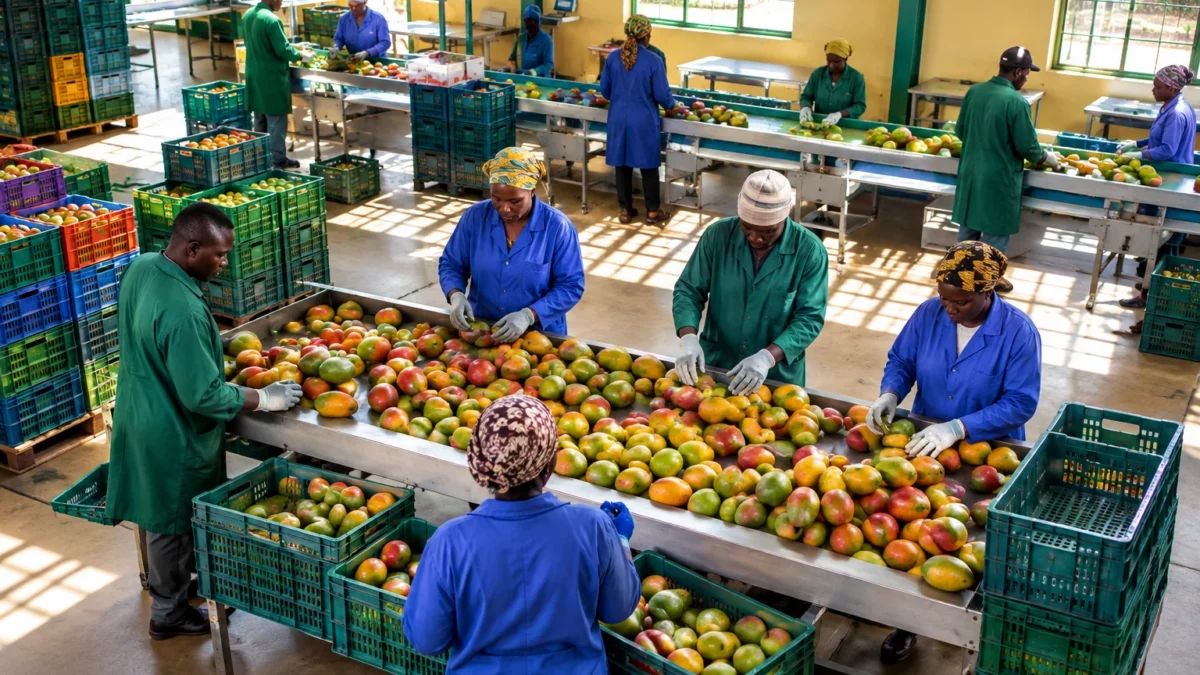
For Mali’s mango exporters, the challenge is no longer just finding a buyer. They must also secure treatments, inspections and trade routes. Morocco, already an important customer, can offer a nearby market. But growth in sales will depend as much on phytosanitary quality as on agreements between industry professionals.
Consolidating a regional market
Mali’s industry is part of a West African trade in which mangoes move between producing countries and consumer markets. Senegal, Côte d’Ivoire and Burkina Faso also supply Morocco. This regional competition gives importers several options, particularly when harvest calendars differ.
Agricultural trade between Bamako and Rabat is underpinned by relative geographical proximity and commercial ties that extend beyond mangoes. However, selling to Morocco does not automatically mean replacing European markets. Volumes, prices, buyers’ requirements and transport costs determine the profitability of each season.
Trade data must also be treated with caution. International statistics often group mangoes, guavas and mangosteens under a single customs code. They therefore do not always make it possible to isolate mangoes or directly compare figures published using different methods.
Industry talks, but few public details
On 19 November 2026, the Interprofession of Mali’s Mango Industry (IFM-Mali) met the Moroccan Association of Fruit and Vegetable Importers. The Moroccan Confederation of Agriculture and Rural Development (COMADER), which represents agricultural professional organisations, hosted the meeting. Participants did not disclose detailed information about the discussions.
The meeting builds on talks held earlier in the year. On 3 June, COMADER had received a Malian delegation led by Moctar Fofana, president of IFM-Mali. According to the Moroccan confederation, discussions covered production, adding value, packaging and opportunities for partnership between the two industries.
These are practical areas. Packaging and control of the supply chain can reduce losses for a perishable fruit. Technical cooperation can also help growers and exporters meet buyers’ requirements. But no public announcement so far indicates that contracts have been signed or that an increase in orders is guaranteed.
Phytosanitary requirements reshape trade choices
The European context is weighing on the strategy of Malian exporters. In June 2025, the European Commission reported a particularly high number of fruit-fly detections in mangoes originating from Mali. It then temporarily ruled out the previous so-called “systems approach”, which combines several preventive and control measures.
Since 1 December 2025, Malian mangoes have been allowed to enter the European Union under specific conditions, including effective post-harvest treatment against the pests concerned. EU regulations also provide that a new systems approach can be accepted only after an audit has demonstrated its effectiveness. This is not an unconditional total ban, but a tougher phytosanitary framework.
For Malian operators, this requirement has direct consequences. Treatments, traceability and inspections require investment and reliable organisation. Growers, packing stations and exporters do not necessarily have the same resources to meet these costs. At the same time, diversifying customers can reduce dependence on a single market, without removing the need to comply with the phytosanitary standards of each destination.
Morocco: an existing market, with real competition
Available figures show that Morocco is already an important buyer of Malian products in the “mangoes, guavas and mangosteens” category. The World Bank’s WITS database, based on international trade data, records about 4,089 tonnes exported from Mali to Morocco in 2024. This total differs from the figure of 3,839 tonnes cited in some publications. The discrepancy may reflect differences in sources or reporting methods; it is a reason not to present a single volume as indisputable.
Figures reported for 2025 indicate a decline in Malian shipments to Morocco, to about 2,833 tonnes, while Moroccan purchases in the combined category are said to have reached nearly 21,900 tonnes in total. These broad estimates point both to a growing market and to a Malian position that may vary from one season to the next. Harvest delays, the availability of competing fruit and prices can quickly redistribute market shares.
In February 2026, Niama Djefaga, operations manager at SCS International, said Malian exporters were counting on Morocco and the United Kingdom to sell their fruit, as access to the European market remained subject to the new conditions. This statement describes the intentions of one operator, not an outcome already measured across the industry. The volumes actually sold and the prices obtained remain the decisive indicators.
Measuring results beyond announcements
Closer ties between Malian and Moroccan industry professionals could facilitate the exchange of information, the search for buyers and improvements to post-harvest practices. For exporters, this could help them plan shipments more effectively. For growers, the impact will depend on how value is distributed: an additional market does not in itself guarantee a better price at the farm gate.
The regional significance is also tangible. The Moroccan market pits several West African suppliers against one another, while offering an opportunity for South-South trade. It can complement sales to Europe and the United Kingdom, but is no automatic solution to phytosanitary, logistical or financial constraints.
The next benchmarks will be the results of Mali’s season, changes in volumes delivered to Morocco and the industry’s ability to meet European inspections. For IFM-Mali and its partners, the success of closer ties will be measured less by the number of meetings than by lasting contracts, regular shipments and better returns for Malian mangoes.