Algeria
 Egypt
 Libya
 Morocco
 Sudan
 Tunisia
 Benin
 Burkina Faso
 Cabo Verde
 Côte d'Ivoire
 Ghana
 Guinea
 Guinea-Bissau
 Liberia
 Mali
 Mauritania
 Niger
 Nigeria
 Senegal
 Sierra Leone
 The Gambia
 Togo
 Cameroon
 Central African Republic
 Chad
 DR Congo
 Equatorial Guinea
 Gabon
 Republic of the Congo
 São Tomé and Príncipe
 Burundi
 Comoros
 Djibouti
 Eritrea
 Ethiopia
 Kenya
 Madagascar
 Malawi
 Mauritius
 Mozambique
 Rwanda
 Seychelles
 Somalia
 South Sudan
 Tanzania
 Uganda
 Angola
 Botswana
 Eswatini
 Lesotho
 Namibia
 South Africa
 Zambia
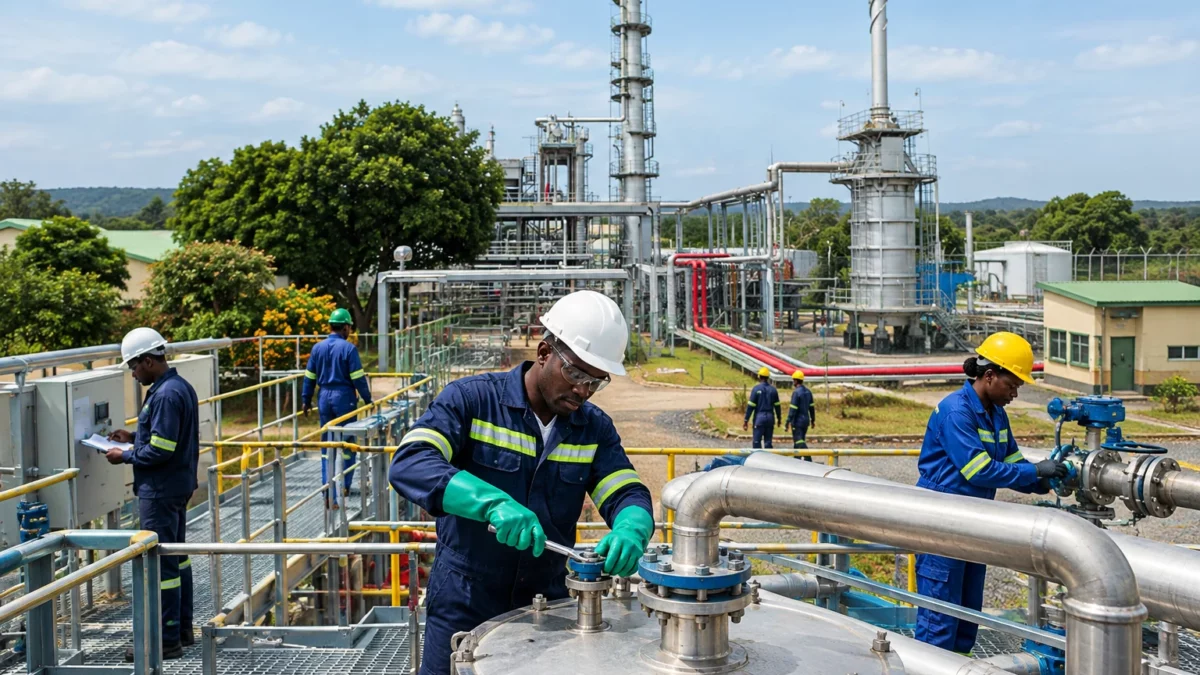
For Zimbabwe, the stakes over lithium are no longer measured solely by the number of tonnes extracted. They also depend on the country’s ability to process the ore locally, generate public revenue from it and avoid a regulatory deadline blocking part of production.
Harare wants to tax the ore’s potential value
On 19 November, while presenting the 2027 national budget, Finance Minister Mthuli Ncube set out how the tax on lithium concentrate exports would be calculated. For the benchmark concentrate containing 6% lithium, five tonnes will be treated as equivalent to one tonne of lithium sulphate. The tax will be calculated on the gross market value of that equivalent sulphate, rather than solely on the declared price of the concentrate.
The 10% rate applied to unprocessed ore and concentrate remains unchanged. However, the taxable base could increase if the estimated value of the sulphate exceeds the declared sale price of the concentrate. The budget provides for this method to be used in assessing mining royalties and companies’ social responsibility contributions as well. Lithium sulphate, an intermediate product obtained through local processing, retains a 0% export tax.
The rule is intended to narrow the gap between the value declared when the material leaves the country and the value it could reach after processing. It does not mean that concentrate automatically has the same value as sulphate: the two products have different characteristics and uses. The choice of benchmark price, valuation method and checks will therefore be crucial both to state revenue and to companies’ tax predictability.
A looming deadline, and capacity to test
The tax change forms part of a path set several years ago. Zimbabwe banned exports of raw lithium ore in December 2022. On 25 February 2026, the authorities suspended exports of raw minerals and concentrates. A complete ban on concentrate exports is due to take effect in January 2027, according to a ministerial response published by Parliament.
The government is counting on local processing to retain more value, develop skills and broaden public revenue. A first step is already visible: China’s Zhejiang Huayou Group began exporting sulphate this year from its Arcadia site, near Harare. Other processing projects have been announced. But having one plant in operation is not enough to guarantee that all volumes can be processed in time.
Projections cited by Reuters put concentrate production at 2.3 million tonnes in 2027, compared with 2.2 million this year, and sulphate production at 208,000 tonnes. These figures are not directly comparable: they relate to different products and do not, by themselves, show how much concentrate the facilities will be able to process. Producers have asked for the ban to be postponed until July 2027. As of 19 November, the finance minister had not announced any change to the deadline.
The risk is tangible for operators without sufficient access to a local plant: unsold stock can tie up their production and revenue. Conversely, producers linked to processing facilities could benefit from a more secure domestic outlet. For employees, subcontractors and communities near the sites, the impact will depend on plants ramping up activity, local jobs being created and benefits actually being shared. Pressure on water, energy and infrastructure will also affect the pace of this industrialisation.
Lithium’s growing weight in the economy
Harare’s decision comes as lithium takes on a major role in the country’s mineral sales. According to figures from the Minerals Marketing Corporation of Zimbabwe cited by specialist outlet Zimbabwe Mines, lithium sales reached about $2.16 billion in the first nine months of 2026. They accounted for 45.6% of mineral sales tracked by the organisation, excluding gold and silver. The figure underscores the sector’s economic weight, but also its exposure to rapid fluctuations in international prices.
The regional context also matters. Zimbabwe is a member of the Southern African Development Community, or SADC, which brings together countries committed to regional economic cooperation. Its mining policy is part of a wider debate on processing African resources before export. Several states are seeking to attract industrial investment rather than remain mere suppliers of raw materials. However, a ban alone does not create competitive plants: reliable electricity, infrastructure, financing and markets are also needed.
Foreign investment, particularly from China, is helping to establish processing capacity in Zimbabwe. It also raises questions about how the value is distributed: what share of the added value will remain in the country in the form of revenue, local procurement, skilled jobs and skills transfer? Harare’s stated aim is to strengthen domestic processing, but the impact will depend on contracts, enforcement of the rules and the ability of Zimbabwean companies to join the supply chain.
Parliament and enforcement are the next tests
The budget must still pass through Parliament before it is adopted. Implementing regulations will specify how the sulphate benchmark value is to be determined, how exports will be monitored and how the obligations will interact with the ban due in January. Producers, investors and the agencies responsible for mining and revenue will be watching the timetable closely.
For other African countries rich in critical minerals, Zimbabwe’s experience offers a lesson to observe, not an automatic formula. Taxation linked to potential processing can strengthen a state’s bargaining position. But it guarantees neither the necessary industrial capacity nor a fair distribution of gains. The 2027 test will therefore be twofold: to enforce the goal of local processing without disrupting production, and then to establish whether the additional value also benefits Zimbabwe’s economy beyond exporters and the state.
Documentary sources: Zimbabwe’s 2027 national budget, parliamentary document on export controls and the ban, Reuters report on taxation and production projections and mineral sales data reported by Zimbabwe Mines.