Algeria
 Egypt
 Libya
 Morocco
 Sudan
 Tunisia
 Benin
 Burkina Faso
 Cabo Verde
 Côte d'Ivoire
 Ghana
 Guinea
 Guinea-Bissau
 Liberia
 Mali
 Mauritania
 Niger
 Nigeria
 Senegal
 Sierra Leone
 The Gambia
 Togo
 Cameroon
 Central African Republic
 Chad
 DR Congo
 Equatorial Guinea
 Gabon
 Republic of the Congo
 São Tomé and Príncipe
 Burundi
 Comoros
 Djibouti
 Eritrea
 Ethiopia
 Kenya
 Madagascar
 Malawi
 Mauritius
 Mozambique
 Rwanda
 Seychelles
 Somalia
 South Sudan
 Tanzania
 Uganda
 Angola
 Botswana
 Eswatini
 Lesotho
 Namibia
 South Africa
 Zambia
 Zimbabwe
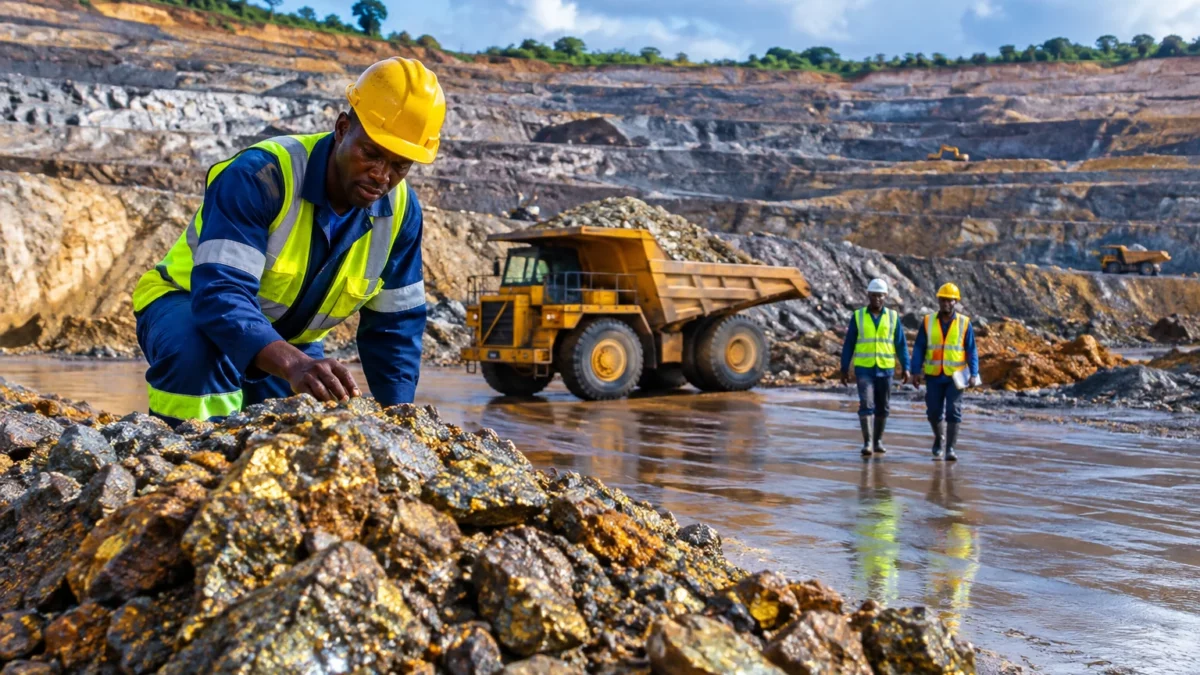
For countries that derive a significant share of their revenue from gold, a few hundred dollars less per ounce can change budget forecasts. But the metal’s fall below $3,800 does not, on its own, mean an equivalent decline in mining revenues: output, costs, contracts and exchange rates also matter.
A marked pullback, but prices remain high
On 18 November 2026, the spot price of gold fell below $3,800 per troy ounce, a unit of measurement of about 31.1 grams. Market data put the price at around $3,790 to $3,796 during the session. The move extends a decline that has taken the metal to its lowest level in more than a year, after a peak in January 2026. Anadolu Agency reported the fall below the threshold, while market data published the same day showed comparable prices. GoldSpotPrice
The decline should, however, be put in perspective. The metal remains very expensive compared with its levels a few years ago. This is not a collapse, but a correction after a sharp rise. For producers, the immediate concern is less a sudden drop in profitability than a possible gap between revenues forecast at record prices and the income actually received.
The fall comes amid a shifting international financial backdrop. New expectations for US interest rates and a stronger dollar have weighed on gold, an asset that pays no interest. These factors can change quickly: a daily fluctuation is not enough to establish a lasting trend or forecast the annual budget of a producer country.
Essential revenues, but different levels of exposure
In Ghana, Mali and Burkina Faso, gold is among the main sources of exports and foreign exchange. It also contributes to mining revenues in South Africa, Guinea and Tanzania, although their economic structures and dependence on the metal differ. Sudan also produces gold, amid a national conflict that makes production and marketing data more difficult to verify.
In Ghana, official figures illustrate the sector’s weight. The Ghana Gold Board, a public body tasked in particular with structuring the purchase and export of artisanal gold, announced $20bn in gold export earnings in 2025, more than double the 2024 level. Ghanaian statistics confirm that gold was already the country’s leading export commodity in 2024, ahead of oil and cocoa. These figures show the metal’s importance, but do not mean that the entire value of exports goes to the state: public revenues depend in particular on taxes, royalties, stakes and foreign-exchange repatriation rules. Data published by the Ghana Gold Board and the Ghana Statistical Service’s trade report help put this dependence in context.
A fall in the international price does not affect all players in the same way. States may see tax revenues or foreign-exchange inflows decline if prices remain low and output does not make up the difference. Large mining companies, meanwhile, may remain profitable if they keep costs under control. Small-scale operations and informal workers are more vulnerable to changes in local purchase prices, transport costs and access to legal channels.
The effects on currencies are not automatic either. A smaller inflow of dollars can complicate the financing of imports or the management of reserves, but exchange rates also depend on monetary policies, debt, other exports and diaspora remittances. Mining areas, capitals where public spending decisions are made, and households that rely on mining jobs therefore do not feel the shock at the same time or to the same extent.
Refining locally: more value, but no protection from price swings
Several governments are seeking to capture more value by processing gold in their own countries rather than exporting only semi-processed metal. Burkina Faso inaugurated its first refinery in Ouagadougou in late September 2026. The authorities say it has an initial capacity of 164 tonnes a year. This figure describes announced capacity, not output already achieved. The opening of the Burkinabè facility was reported by the Associated Press.
In Guinea, the country’s first gold refinery, Nimba Gold Refinery, was officially inaugurated on 1 November 2026, according to an economic note on the country from the French Treasury. The note on its commissioning places the initiative within a policy of local processing. Mali, for its part, has announced a refinery project. These plans are part of a broader regional trend: states want greater control over marketing, production data and a share of the value chain.
Refining can support skilled jobs, facilitate certification and increase revenue from local services. It does not, however, remove dependence on the global price. A refinery needs a regular supply, energy, quality-control standards and commercial outlets. If operating costs are high or purchasing channels remain opaque, the expected added value may be limited.
The next indicator: how long the decline lasts
For members of ECOWAS, the West African regional organisation, such as Ghana, Mali, Burkina Faso and Guinea, the issue is also one of co-ordinating mining rules and cross-border trade. These states have neither the same political frameworks nor the same currencies: Ghana uses the cedi, while Mali, Burkina Faso and Guinea belong to distinct monetary areas. A fall in dollar revenues can therefore affect budgets, reserves and domestic prices in different ways.
Across the continent, the debate goes beyond the day’s price. Local processing strategies, the tax terms offered to mining companies and the formalisation of artisanal gold will determine who actually benefits from the wealth extracted. Refinery announcements mark a step forward, but their impact will depend on how they operate and what share of revenues goes back to local economies.
The coming months will help distinguish a temporary correction from a prolonged decline. For public treasuries and companies alike, the decisive indicators will be the average price over time, export volumes, production costs and revenues actually received. At close to $3,800 an ounce, gold remains expensive; what has changed is the safety margin provided by its recent peak.