
 Algeria
 Egypt
 Libya
 Morocco
 Sudan
 Tunisia
 Benin
 Burkina Faso
 Cabo Verde
 Côte d'Ivoire
 Ghana
 Guinea
 Guinea-Bissau
 Liberia
 Mali
 Mauritania
 Niger
 Nigeria
 Sierra Leone
 The Gambia
 Togo
 Cameroon
 Central African Republic
 Chad
 DR Congo
 Equatorial Guinea
 Gabon
 Republic of the Congo
 São Tomé and Príncipe
 Burundi
 Comoros
 Djibouti
 Eritrea
 Ethiopia
 Kenya
 Madagascar
 Malawi
 Mauritius
 Mozambique
 Rwanda
 Seychelles
 Somalia
 South Sudan
 Tanzania
 Uganda
 Angola
 Botswana
 Eswatini
 Lesotho
 Namibia
 South Africa
 Zambia
 Zimbabwe
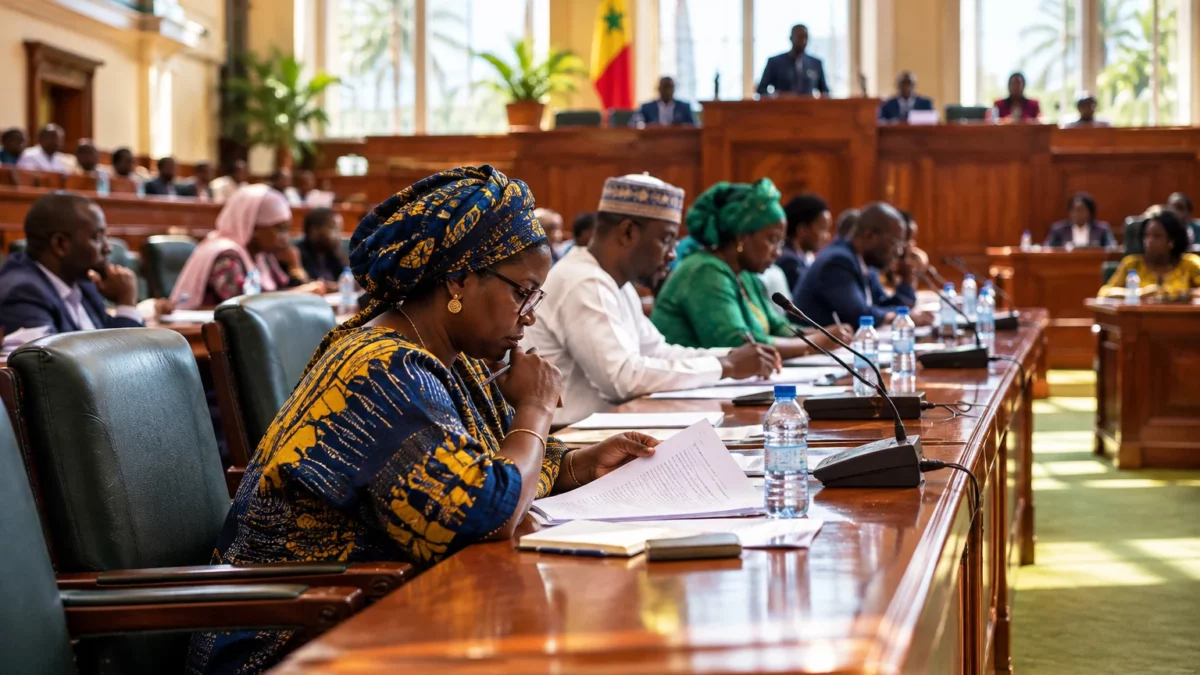
In Senegal, a break between a president and the party that brought him to power does not, in itself, change the institutions. But it can reshape alliances around the executive and complicate relations between the presidential palace, the government and the parliamentary majority. The decision announced in Dakar on 17 November is part of this reshuffling.
A political separation now formalised
PASTEF-Les Patriotes’ National Council recorded the loss of party membership by 32 people, including President Bassirou Diomaye Faye. The statement cites Article 6 of the party’s statutes and says those concerned have been removed from the membership list. This wording describes an internal party decision: it does not end Bassirou Diomaye Faye’s presidential term.
Several other officials are also on the list, including Moussa Balla Fofana, Yankhoba Diémé and Ibrahima Sy. Senegalese media reported the same number of people affected and the same main names. The measure has therefore been corroborated by several local publications, although they rely on the party statement rather than separate documents for each case.
This distinction matters. A political party can determine who belongs to its ranks under its statutes. The status of the head of state, meanwhile, is governed by Senegal’s Constitution and institutions. The expulsion therefore does not strip Bassirou Diomaye Faye of his office or presidential powers.
From the 2024 alliance to two political camps
In March 2024, Bassirou Diomaye Faye won the presidential election after being selected as PASTEF’s candidate. Ousmane Sonko, a central figure in the movement who was then barred from standing, backed him. Their alliance brought together two complementary roles: Faye as head of state, and Sonko as political leader and head of government.
The relationship gradually became strained. In 2026, Sonko left the prime minister’s office after the government was dismissed, while the disagreement between the two former allies became public. In July, Faye launched his own party, Kiiraay – Les Patriotes républicains. The National Council’s decision now gives formal expression to the partisan split.
The conflict is therefore no longer limited to personal differences or public statements. It concerns each camp’s ability to organise its supporters, attract elected representatives and local officials, and put forward its interpretation of the mandate arising from 2024. Press reports on Kiiraay’s launch had already described PASTEF officials leaving for the president’s camp.
A question of the majority and governance
The central question now is that of the political majority. The president retains his constitutional powers, but the implementation of reforms also depends on the balance in parliament, government cohesion and the support of elected representatives. A divided majority can slow the consideration of legislation or make compromises more difficult, without automatically paralysing the institutions.
The effects will not be the same for everyone. In Dakar, where national institutions and the main political debates are concentrated, the split is visible in public statements and decisions by those in power. In the regions, the issue may be felt more through the reshaping of activist networks and local representatives. For economic actors, the predictability of public decisions is particularly important at a time when the authorities must respond to budget constraints and social expectations.
However, PASTEF’s measure offers no immediate answer to these issues. It changes the party membership of those concerned, but settles neither the distribution of executive power nor the composition of the National Assembly or public policy priorities. These questions will depend on subsequent institutional and political decisions.
A test for West African pluralism
Senegal is a member of ECOWAS, the Economic Community of West African States, which brings countries in the region together around goals of integration and cooperation. The current crisis is primarily a domestic one: nothing in a party’s decision provides grounds to infer a direct consequence for the regional organisation. It will nevertheless be watched in a West Africa where political transitions, changes in majorities and the strength of institutions remain important issues.
The Senegalese precedent is also a reminder that an electoral victory secured by a coalition does not guarantee lasting agreement between its leading figures. The way Faye and Sonko manage their rivalry — in accordance with constitutional rules and pluralism — will affect citizens’ trust in the institutions. For regional partners, the issue will be less whether any particular official belongs to a party than whether the constitutional order remains intact.
The next points to watch will be statements from the two camps, any movements among elected representatives and decisions by parliament. The split has now been formalised within PASTEF’s structures. Its political significance, however, will depend on each camp’s ability to turn its support into a lasting majority, without confusing party competition with the functioning of the state.



