Algeria
 Libya
 Morocco
 Sudan
 Tunisia
 Benin
 Burkina Faso
 Cabo Verde
 Côte d'Ivoire
 Ghana
 Guinea
 Guinea-Bissau
 Liberia
 Mali
 Mauritania
 Niger
 Nigeria
 Senegal
 Sierra Leone
 The Gambia
 Togo
 Cameroon
 Central African Republic
 Chad
 DR Congo
 Equatorial Guinea
 Gabon
 Republic of the Congo
 São Tomé and Príncipe
 Burundi
 Comoros
 Djibouti
 Eritrea
 Ethiopia
 Kenya
 Madagascar
 Malawi
 Mauritius
 Mozambique
 Rwanda
 Seychelles
 Somalia
 South Sudan
 Tanzania
 Uganda
 Angola
 Botswana
 Eswatini
 Lesotho
 Namibia
 South Africa
 Zambia
 Zimbabwe
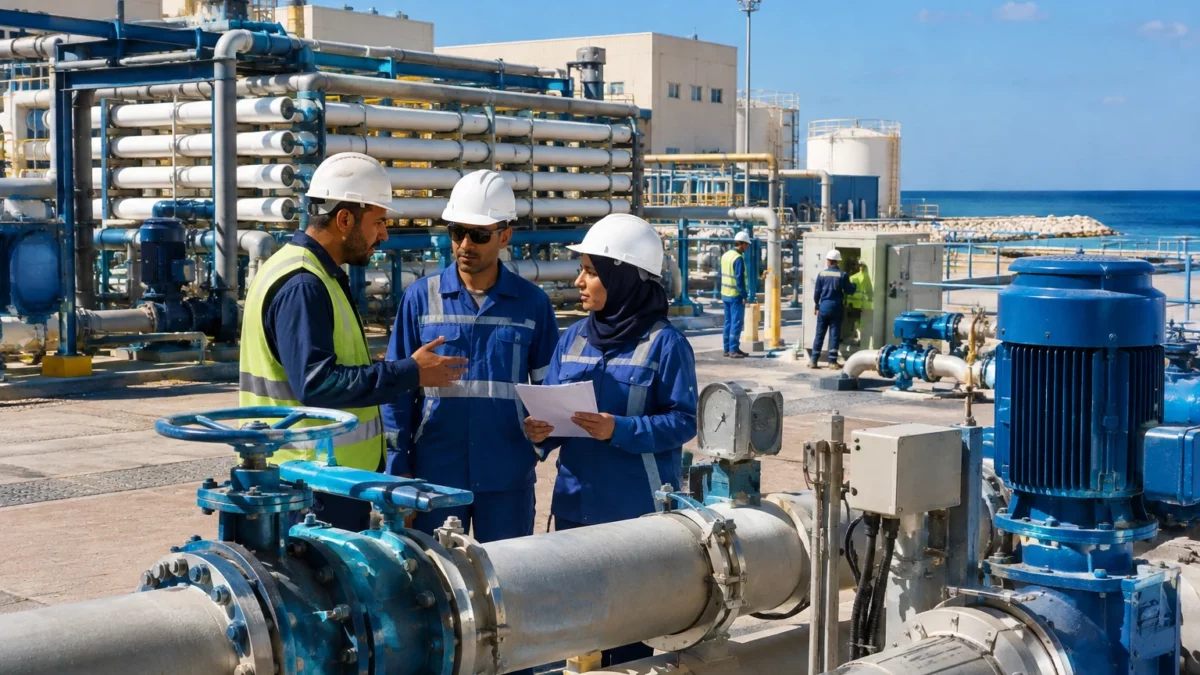
Along Egypt’s coasts, hotels and industrial zones need water but cannot always rely on networks supplied by the Nile. A new private investment is set to accelerate local production, but it also raises a practical question: who will finance and oversee these essential services ?
The Nile remains central as coastal areas seek other resources
Egypt relies heavily on the Nile for its fresh water. The Egyptian authorities estimate annual availability at around 500 cubic metres per person, below the water-scarcity threshold set by the United Nations. This pressure is compounded by population growth, urbanisation and the needs of agriculture and industry.
Desalination turns seawater into usable water. It can serve coastal cities and facilities far from municipal networks, but cannot, on its own, replace policies to conserve water, reuse wastewater and manage the Nile.
The Egyptian government plans to expand desalination capacity along the Mediterranean and Red Sea coasts. Announced targets vary according to the plans and dates: a recent strategy envisages around 9 million cubic metres per day by 2050, while other official projections come close to 10 million. These figures describe ambitions, not capacity already installed.
Equity investment to support RWD projects
On 17 November 2026, the European Bank for Reconstruction and Development (EBRD) announced an investment of up to $31 million in RWD Investments BV. In return, it is to acquire 30 % of the platform, which is owned by Hassan Allam Utilities.
The deal is part of a $92 million equity injection. Hassan Allam Utilities plans to contribute $61 million. The funds are intended to support RWD’s expansion projects and prepare major desalination or wastewater treatment projects, including in the form of public-private partnerships. A PPP brings together a public authority and private companies to finance or operate a facility or service.
RWD says it operates 79 desalination plants in Egyptian coastal cities. Their combined design capacity stood at about 96 340 cubic metres per day at the end of December 2025. The company plans to add up to 15 000 cubic metres of daily capacity each year until 2030 and to refurbish some equipment to reduce energy consumption.
The EBRD says its investment is also intended to develop its partnership with Hassan Allam Utilities. According to figures published by the bank and reported by Egyptian daily Ahram Online, the institution has invested nearly €17 billion in Egypt since 2012, across 245 projects.
Expected gains, questions over public services
For tourism and industrial businesses located outside municipal networks, new plants could secure supplies. Residents of coastal centres could also benefit from more robust infrastructure, depending on their connections and the authorities’ choices. However, the announcement does not specify future tariffs, volumes reserved for households or how operators will be overseen.
The model of delegating services to the private sector can mobilise capital and technical expertise. It also requires transparent contracts, verifiable service targets and public oversight of prices and water quality. Access to water is measured not only in production capacity: it also depends on the cost of the network, distribution and maintenance.
Desalination consumes energy and produces concentrated brine, which must be managed to limit its effects on marine environments. The EBRD has announced that facilities will be upgraded to improve their energy efficiency, but the announcement does not specify the expected performance details or environmental monitoring measures.
An Egyptian issue with regional implications
The coastal strategy addresses local needs, but does not resolve the challenges of the Nile basin. The river’s water concerns several riparian states, including Egypt, Sudan and Ethiopia. Developing unconventional water resources can diversify Egypt’s supplies, without replacing regional cooperation on sharing and managing the river.
For African countries facing water stress, the deal also illustrates the growing role of private finance in public infrastructure. The key issue to watch will be less the announcement of new investment than whether it translates into services that are accessible, energy-efficient and subject to long-term oversight.
The EBRD approved the project in July 2026 and made it public in September, before announcing the investment in November. The next steps will depend on the implementation of the financing, progress on the projects and the safeguards provided for users and coastal ecosystems.