
 Algeria
 Egypt
 Libya
 Morocco
 Sudan
 Tunisia
 Benin
 Burkina Faso
 Cabo Verde
 Côte d'Ivoire
 Ghana
 Guinea
 Guinea-Bissau
 Liberia
 Mali
 Mauritania
 Niger
 Nigeria
 Senegal
 Sierra Leone
 The Gambia
 Togo
 Cameroon
 Central African Republic
 Chad
 DR Congo
 Equatorial Guinea
 Gabon
 Republic of the Congo
 São Tomé and Príncipe
 Burundi
 Comoros
 Djibouti
 Eritrea
 Ethiopia
 Kenya
 Madagascar
 Malawi
 Mauritius
 Mozambique
 Rwanda
 Seychelles
 Somalia
 South Sudan
 Tanzania
 Uganda
 Angola
 Botswana
 Eswatini
 Lesotho
 Namibia
 Zambia
 Zimbabwe
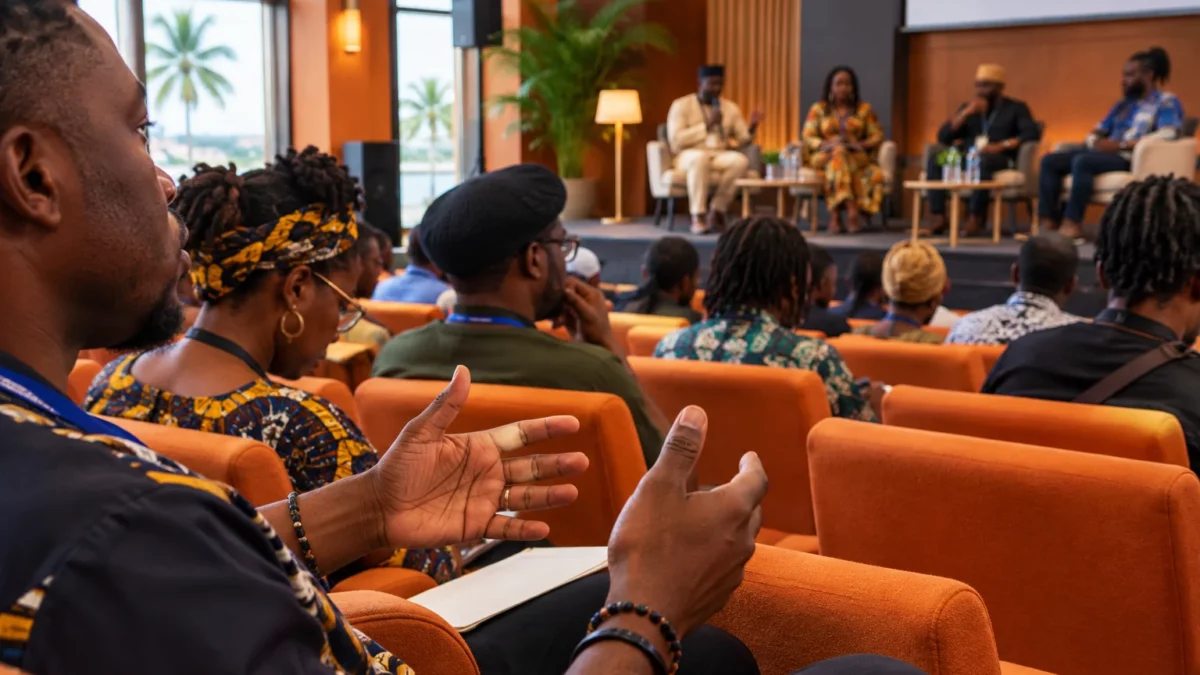
A song can cross borders in a matter of days. But the revenue it generates does not always follow the same path. In Cotonou, discussions at the Salon des Industries Musicales d’Afrique francophone (SIMA) brought a crucial question back to the fore: how can the value created by artists also benefit professionals and businesses across the continent?
Connecting Francophone markets
The third edition of SIMA was held on 12 and 13 November 2026 in Cotonou, Benin’s economic capital. Producers, artists, promoters, record labels and investors discussed financing, touring and digital remuneration. The event took place against a backdrop in which artists such as Nigeria’s Burna Boy, South Africa’s Tyla and fellow Nigerian Rema are expanding the audience for African music.
This growing profile does not mean that all markets have the same resources. Francophone countries are spread across different economic areas, currencies, legal systems and professional networks. This fragmentation makes it harder for artists and productions to circulate. It can also limit local players’ ability to negotiate with platforms, venues and international partners.
The answer, therefore, is not to copy a foreign model. It is to build networks suited to the region’s realities: partnerships between countries, production infrastructure, reliable audience data and financing mechanisms accessible to cultural businesses.
From visibility to economic activity
Music also contributes to a country’s image and can support its appeal to tourists. At SIMA, Linda Sangaré, a specialist in place branding, cited a South African strategy that had reportedly put musicians and cultural diversity at the heart of the country’s promotion. She reported a 24% increase in tourist arrivals in one year. The figure, presented during the discussions, could not be confirmed using accessible independent data and must therefore remain attributed to the speaker.
The example illustrates potential, not an automatic formula. To turn cultural interest into local benefits, artists, organisers and service providers from the country must be involved in campaigns and events. Without these local links, greater visibility guarantees neither lasting contracts nor a fairer distribution of revenue.
Financing is another link in the chain. Pierre-Aimé Assoun, a representative of the International Finance Corporation (IFC), referred to the institution’s announced investment in Helios Sports and Entertainment Group. In 2025, the IFC confirmed an investment of up to $30 million in the group, which focuses on sport, media and entertainment in Africa. The deal points to investor interest in cultural industries, but it does not in itself amount to direct financing for all Francophone music industry players.
Live performances: sharing the risks
Concerts remain an important source of revenue, but a one-off show can be expensive. At SIMA, Angelo Gopee, chief executive of Live Nation France, cited a venue hire cost of close to €1 million for a concert at the Stade de France, before production expenses. This figure relates to a major French venue and cannot simply be applied to African venues. It nonetheless highlights the weight of fixed costs for large-scale shows.
For promoters, artists’ fees, transport, accommodation, communications and venue hire all weigh on profitability. A tour built around several cities or countries can spread some of these costs. Industry professionals proposed better coordination among Francophone African promoters, and even collective negotiations on certain purchases and tours.
Such coordination would not remove every obstacle. Schedules, venue capacities, administrative rules and travel costs vary from country to country. But it could strengthen local producers’ negotiating power and give tours greater continuity, rather than concentrating efforts on a handful of exceptional concerts.
Rema’s international career was also cited as an example of a strategy built over time. According to Solomon Sonaiya of Livespot360, the artist’s team is said to have relied on local partners and a gradual presence in India after the success of “Calm Down”. The account presented at the event underlined the importance of establishing a foothold and promoting the artist on the ground. However, the commercial details shared at the meeting were not independently confirmed.
From streams to rights actually paid
Digital platforms open up new audiences, but widespread popularity does not guarantee a proportional income. At SIMA, Franco-Congolese artist Tiakola discussed the monetisation difficulties facing some creators in Francophone Africa. Revenue depends in particular on the identification of rights holders, contracts, each platform’s rules and the territories where streams are generated.
These mechanisms make traceability essential. If a work’s credits are incomplete, or rights and contracts are poorly documented, it becomes harder to distribute revenue correctly. Discussions involving representatives of Sony Music Afrique francophone, Warner Music Afrique francophone and Syllart Records highlighted the need to identify rights holders more effectively and track catalogue revenue.
In Côte d’Ivoire, an initiative involving public authorities and industry professionals has reportedly opened discussions with digital platforms. Marc-André Niang, chief executive of Warner Music Afrique francophone, said these efforts had accompanied the launch of Instagram Music and a monetisation test targeting nearly 600 Ivorian creators. These details were reported at the event, but the number of participants and the programme’s results could not be independently verified. They therefore do not yet make it possible to assess the scale of the revenue generated.
A regional challenge, results to be measured
The discussions in Cotonou show that building the sector depends on several interconnected links: financing, rights management, artists’ mobility and access to platforms. Progress in one area will remain limited if the others do not follow. Better-organised tours can increase live performance revenue, while better documentation of works can improve the distribution of digital income.
For artists and businesses, the challenge is to retain a greater share of the value created. For audiences, it is also about the diversity of works available and the possibility of seeing lasting careers emerge beyond viral hits. The next step will be to establish whether the ideas discussed at SIMA lead to concrete agreements, appropriate financing and more transparent remuneration rules across markets.



