Algeria
 Egypt
 Libya
 Morocco
 Sudan
 Tunisia
 Benin
 Burkina Faso
 Cabo Verde
 Côte d'Ivoire
 Ghana
 Guinea
 Guinea-Bissau
 Liberia
 Mali
 Mauritania
 Niger
 Nigeria
 Senegal
 Sierra Leone
 The Gambia
 Togo
 Cameroon
 Central African Republic
 Chad
 DR Congo
 Equatorial Guinea
 Gabon
 Republic of the Congo
 São Tomé and Príncipe
 Burundi
 Comoros
 Djibouti
 Eritrea
 Ethiopia
 Kenya
 Malawi
 Mauritius
 Mozambique
 Rwanda
 Seychelles
 Somalia
 South Sudan
 Tanzania
 Uganda
 Angola
 Botswana
 Eswatini
 Lesotho
 Namibia
 South Africa
 Zambia
 Zimbabwe
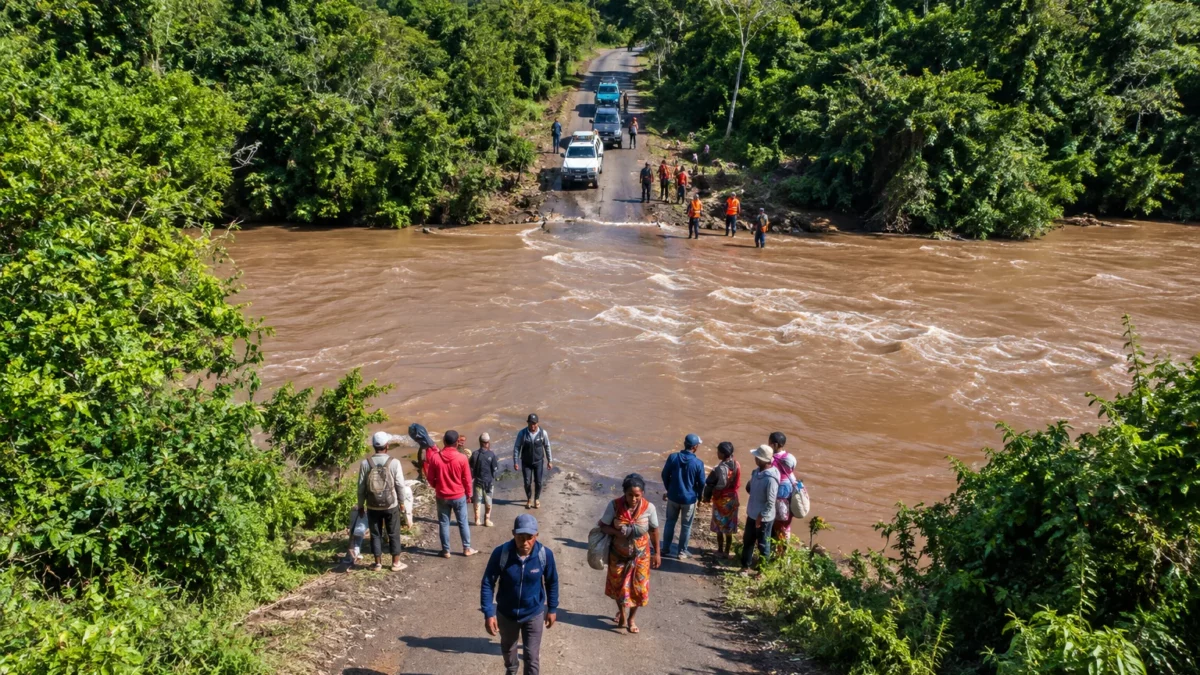
On National Road 13 in southern Madagascar, a river crossing turned a journey to Antananarivo into a rescue operation. The disaster, which occurred on the night of 16 to 17 November 2026, raises a practical question: how can travellers be protected when a road requires them to cross a watercourse prone to flooding?
A crossing of the Sakave turns to tragedy
A minibus was swept away by the waters of the Sakave River near Ianabinda, in Betroka district in the Anosy region. The vehicle was travelling on the RN13, a route linking several towns in the south of the island with Antananarivo. Malagasy media place the accident between one and two o’clock in the morning, at a ford.
The toll reported in the following hours was 26 bodies recovered and five people missing. The exact number of survivors varies in the first reports: some mention nine, while others give a different figure. These details therefore remain to be confirmed as searches continue and passengers are identified.
According to the constituency’s MP, the driver is said to have attempted the crossing, believing the water level made it possible. This account alone does not establish the precise circumstances of the accident. An investigation will need to determine, in particular, the condition of the crossing, the river’s flow and the traffic conditions that night.
President Michaël Randrianirina sent four ministers to the scene, responsible for Public Works, Mines, National Defence and Population. Their journey, several hundred kilometres from the capital, is supporting rescue operations and assistance for the families. It does not replace an independent determination of responsibility.
Beyond the driver’s actions
An accident at a river crossing cannot be reduced to an individual decision. Safety also depends on the design of the crossing, signage, access to information about floods and the ability to suspend traffic when a crossing becomes dangerous. The investigation will need to establish what safety measures were in place at Ianabinda and whether they could be used that night.
The RN13 is important for travel and economic exchanges in southern Madagascar. When a route is closed or dangerous, the consequences affect more than travellers: they can also disrupt the transport of goods and access to services. Taxi-brousse, shared transport vehicles commonly used to link towns and less well-served areas, meet a need for mobility. But passengers have few ways to assess the safety of a route or vehicle for themselves.
The figure often cited by Malagasy authorities and media — about 21 road deaths a day in 2018 — gives an indication of the scale of the problem, but should be treated with caution. The World Health Organization’s Madagascar profile is based on estimates and indicators that do not necessarily correspond to national administrative counts. To establish a trend, data of the same type and covering comparable periods must be compared.
In 2024, the Malagasy government announced a strategy to halve road deaths by 2030. This deadline forms part of the United Nations Decade of Action for Road Safety. Progress towards the goal will not be measured solely by the number of checks or awareness campaigns: it will also depend on implementation, funding, road maintenance and the availability of reliable public data.
A response that also involves local communities
The measures needed are not the same everywhere. In Antananarivo, urban traffic and the density of journeys present particular challenges. In rural areas, long journeys, less developed roads and some river crossings can complicate emergency response. An effective policy must therefore combine prevention, maintenance and solutions suited to local realities, rather than rely on a uniform response.
The Betroka disaster is also a reminder that road infrastructure is more than its surface. Crossings, drainage structures and warning systems matter too. Where a ford remains necessary, information on rising water levels and clear closure rules can help prevent drivers or passengers from having to assess the risk on their own.
For families, the urgent priorities remain searching for the missing, confirming identities and providing consistent information. For the authorities, the immediate challenge is to document the facts without drawing premature conclusions. In the longer term, the task is to turn the national strategy into verifiable action, particularly on routes where travel depends on crossings vulnerable to flooding.
A Malagasy issue within a regional framework
Madagascar is a member of the Southern African Development Community (SADC), a regional organisation bringing together states in southern Africa and the Indian Ocean. The disaster is first and foremost a matter for a national investigation and national decisions. It nevertheless highlights a shared regional challenge: connecting communities while ensuring safe transport, including on secondary roads and crossings exposed to bad weather.
The next developments to watch are any change in the toll, the findings of the investigation and the measures announced to secure the Sakave crossing and other similar sites. They will also show whether Madagascar’s strategy for 2030 is translating into concrete action beyond its stated goals.