
 Algeria
 Egypt
 Libya
 Morocco
 Sudan
 Tunisia
 Benin
 Burkina Faso
 Cabo Verde
 Côte d'Ivoire
 Ghana
 Guinea
 Guinea-Bissau
 Liberia
 Mali
 Mauritania
 Niger
 Nigeria
 Sierra Leone
 The Gambia
 Togo
 Cameroon
 Central African Republic
 Chad
 DR Congo
 Equatorial Guinea
 Gabon
 Republic of the Congo
 São Tomé and Príncipe
 Burundi
 Comoros
 Djibouti
 Eritrea
 Ethiopia
 Kenya
 Madagascar
 Malawi
 Mauritius
 Mozambique
 Rwanda
 Seychelles
 Somalia
 South Sudan
 Tanzania
 Uganda
 Angola
 Botswana
 Eswatini
 Lesotho
 Namibia
 South Africa
 Zambia
 Zimbabwe
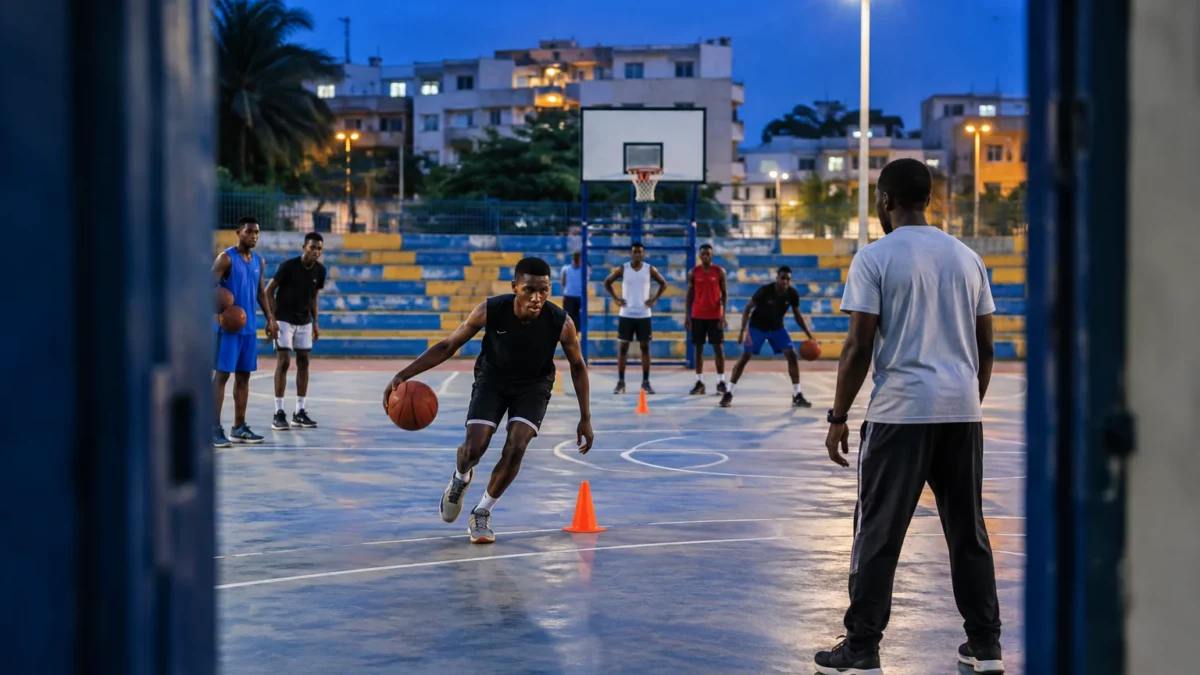
In Dakar, spectators watched young Senegalese athletes reach Olympic podiums for the first time. Over two weeks, the host nation’s delegation moved up a level: beyond the medals, it showed what broader preparation can achieve — and what still needs to be consolidated after the Games.
A larger delegation, a historic first result
From 31 October to 13 November 2026, the Youth Olympic Games (YOG), for young athletes, were held in Dakar, Diamniadio and Saly. Nearly 2,700 athletes aged 14 to 17 took part in the first Olympic event organised on the African continent. The International Olympic Committee’s official calendar set the dates of the Games as 31 October to 13 November.
Senegal entered 136 athletes in 23 disciplines. Before this home edition, the country had never won a medal at the YOG and its delegations had been considerably smaller. At the close of the Games, the reported tally stood at 12 medals: five gold and seven bronze. Senegal finished sixth, according to the end-of-competition tally published by Senegalese media outlet EnQuête+. On 11 November, the Senegalese Press Agency (APS) had counted ten medals, meaning the final two came at the end of the programme.
The result followed a broader preparation effort. In August, 80 athletes from 13 disciplines and 15 coaches attended a training camp in China, the APS and Senegalese Radio and Television Broadcasting (RTS) reported. The Senegalese National Olympic and Sports Committee (CNOSS), for its part, had announced the selection of 136 athletes in 23 disciplines. These sources confirm the scale of the programme, without establishing that the training camp alone explains the performances.
Combat sports at the heart of the podium finishes
Beach wrestling, taekwondo and judo accounted for eight of the 12 medals, according to the tally released at the end of the Games. This concentration highlights the weight of combat sports in Senegal’s result. It does not mean that other disciplines did not matter: 3×3 basketball and beach handball also contributed to the total.
Beach wrestling brought the host nation three titles and a bronze. Élisabeth Diatta, Maguette Diop and Ndèye Khady Anna Diatta won gold; Abdoulaye Diouf took bronze, according to the tally provided. The discipline made its debut at an Olympic event in Dakar. Élisabeth Diatta’s gold, won on 7 November, was also Senegal’s first Olympic title, the US news agency Associated Press (AP) reported. This new Olympic sport struck a chord with a familiar practice in Senegal, where wrestling occupies an important place in public life.
Taekwondo added three podium finishes: Marie Sarr won gold in the under-55kg category, while Aïda Touré and Ameth Diop took bronze. The APS had confirmed Ameth Diop’s bronze in the under-73kg category on 11 November. In judo, Matar Diop won bronze in the under-66kg category on 1 November. The APS described him as Senegal’s first YOG medallist.
Two team sports, two gold medals
3×3 basketball gave Senegal another notable victory. On 9 November, the men’s team beat Lithuania 14-13 in the final. The women’s team took bronze. The APS reported the final score and the support of the crowd in Dakar. Both teams had taken part in a preparatory camp held in the capital, but the results alone do not make it possible to measure the impact of that training.
Beach handball brought the final two medals on 13 November, according to the final tally: bronze for both the men and women. The RTS confirmed the two Senegalese podium finishes that day. Their place among the five medal-winning disciplines is a reminder that the host nation’s performance was not limited to combat sports or basketball.
Beyond the rankings, the challenge of what comes next
The medal table offers a visible measure of the competition. On its own, it does not show whether young athletes will then have regular coaching, accessible facilities and competitions in which to progress. The benefits of a major event can also be distributed unevenly: the venues in Dakar, Diamniadio and Saly concentrated the event, while young people in more remote regions depend more heavily on local organisations for access to sport and high-performance pathways.
The selection of 136 athletes marks a break with the past in terms of scale, but sustained work will count as much as the result achieved at home. Overseas training camps and specialist camps are preparation tools; their impact will depend on the ability to pass these methods on to clubs and federations after the Games. This is a challenge for athletes, but also for the coaches who provide day-to-day support.
At regional level, Dakar 2026 gave West Africa a major global sporting showcase. It was the first Olympic event to be held on the continent. The AP reported that organisers saw it as a demonstration of Africa’s ability to host international competitions. For Senegal, the legacy will now be measured in infrastructure, sporting pathways and young people’s access to sport, beyond the ceremonies and podiums. The 12 medals mark a historic milestone; the next step will be to turn that momentum into lasting participation, in Senegal and through sporting partnerships across the region.



