Algeria
 Egypt
 Libya
 Morocco
 Sudan
 Tunisia
 Benin
 Burkina Faso
 Cabo Verde
 Côte d'Ivoire
 Ghana
 Guinea
 Guinea-Bissau
 Liberia
 Mali
 Mauritania
 Niger
 Nigeria
 Sierra Leone
 The Gambia
 Togo
 Cameroon
 Central African Republic
 Chad
 DR Congo
 Equatorial Guinea
 Gabon
 Republic of the Congo
 São Tomé and Príncipe
 Burundi
 Comoros
 Djibouti
 Eritrea
 Ethiopia
 Kenya
 Madagascar
 Malawi
 Mauritius
 Mozambique
 Rwanda
 Seychelles
 Somalia
 South Sudan
 Tanzania
 Uganda
 Angola
 Botswana
 Eswatini
 Lesotho
 Namibia
 South Africa
 Zambia
 Zimbabwe
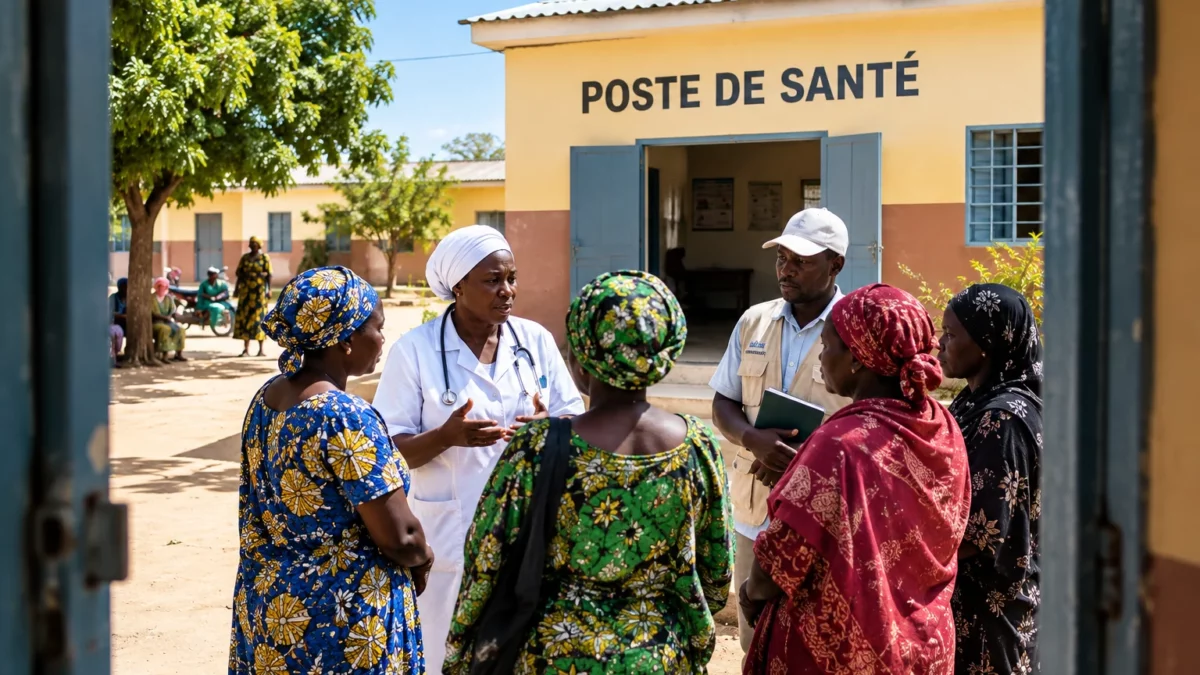
In a village in eastern Senegal, the death of a newborn has brought a stark and consequential disconnect back into focus: female genital mutilation (FGM) has been banned for more than 25 years, but the law alone is not enough to eradicate the practice. For families, health workers and local organisations, the question is now how to prevent clandestine procedures as well as establish responsibility.
An investigation is under way in Sadatou
The baby girl, born on 11 November, died two days later after a suspected FGM procedure in Sadatou. The village is in the Goudiry department, in the Tambacounda region. Senegalese media report that the procedure was allegedly followed by haemorrhaging. These circumstances have yet to be confirmed by the judicial investigation.
Two women, including the child’s grandmother, have been detained. Press reports say they were placed in police custody or brought before the courts. As of 18 November, these steps should be distinguished from a conviction: their responsibility has not been established by a court judgment.
The National Federation of Organisations for the Promotion of the Abandonment of Female Genital Mutilation (FENOPAME) has called for the law to be enforced and for the facts to be fully established. The Senegalese Council of Women (COSEF) has also raised the alarm over the persistence of FGM. These positions echo associations’ calls for prevention, without prejudging the outcome of the proceedings.
A criminal ban, a prevention challenge
Since Law No. 99-05 of 29 January 1999, Article 299 bis of Senegal’s Criminal Code has penalised attacks on female genital organs, including excision and infibulation. The law provides for prison sentences of between six months and five years. It also provides for a harsher sentence when mutilation results in death. The precise legal classification and penalties applicable in the Sadatou case are, however, matters for the courts.
Senegal has also adopted a national strategy for the abandonment of FGM covering the period 2022-2030. The existence of this policy is a reminder that the response is not limited to prosecutions: it also requires information, support for families and access to healthcare. In villages, community workers and religious leaders can contribute to prevention, provided dialogue protects girls and does not trivialise the medical risks.
National data also show why averages should be treated with caution. According to the 2023 Continuous Demographic and Health Survey by the National Agency for Statistics and Demography (ANSD), about one in five women aged 15 to 49 in Senegal say they have undergone FGM. Rates vary significantly from one region to another. The survey estimates, in particular, that nearly 20% of girls aged 0 to 14 in Tambacounda have undergone FGM. These statistics describe groups and periods of observation; they cannot be used to infer the situation in every village or the circumstances of an individual case.
Responses must reflect local realities
Sadatou is far from Dakar, where many national institutions are concentrated. This distance does not mean public services are absent, but it highlights the importance of making support available in municipalities and health posts. Effective prevention must be able to reach families before a birth and then offer trusted contacts without forcing people to travel long distances.
Campaigns cannot rely solely on denunciation or the threat of prison. Clandestine procedures are harder to detect and can delay access to healthcare. In a case involving suspected haemorrhaging, prompt treatment is crucial. Health workers, women’s associations, local authorities and families must therefore be brought together, while maintaining a clear line: no cultural or religious justification makes a serious violation of a girl’s physical integrity acceptable.
This approach also means not portraying communities in the east of the country as a homogeneous bloc. Practices and attitudes vary across localities and generations. Community-led abandonment initiatives already exist in Senegal; they show that change can come through collective decisions, not only through measures imposed from the capital.
A Senegalese and West African issue
The case puts two complementary tools to the test: enforcement of the law and local prevention. For the authorities, the next stages of the legal process will show whether criminal responsibility can be established. For organisations working against FGM, the challenge is to turn the emotion prompted by the death into lasting vigilance, without exposing the child or her family to unverified accusations.
At regional level, the issue also concerns cooperation between West African countries. ECOWAS, an economic community bringing together states in the region, provides a forum for dialogue on rights and health, even though laws and their enforcement remain national matters. The differences in prevalence observed in Senegal above all serve as a reminder that a uniform strategy will not address the same realities in Dakar, Tambacounda or other regions.
The next developments to follow are the progress of the proceedings in Goudiry and the practical implementation of the 2022-2030 national strategy. The death in Sadatou cannot, on its own, measure the scale of the practice. It is nonetheless a reminder that a long-standing ban can fully protect girls only when accompanied by prevention, accessible healthcare and a justice system attentive to established facts.