Algeria
 Egypt
 Libya
 Morocco
 Sudan
 Tunisia
 Burkina Faso
 Cabo Verde
 Côte d'Ivoire
 Ghana
 Guinea
 Guinea-Bissau
 Liberia
 Mali
 Mauritania
 Niger
 Nigeria
 Senegal
 Sierra Leone
 The Gambia
 Togo
 Cameroon
 Central African Republic
 Chad
 DR Congo
 Equatorial Guinea
 Gabon
 Republic of the Congo
 São Tomé and Príncipe
 Burundi
 Comoros
 Djibouti
 Eritrea
 Ethiopia
 Kenya
 Madagascar
 Malawi
 Mauritius
 Mozambique
 Rwanda
 Seychelles
 Somalia
 South Sudan
 Tanzania
 Uganda
 Angola
 Botswana
 Eswatini
 Lesotho
 Namibia
 South Africa
 Zambia
 Zimbabwe
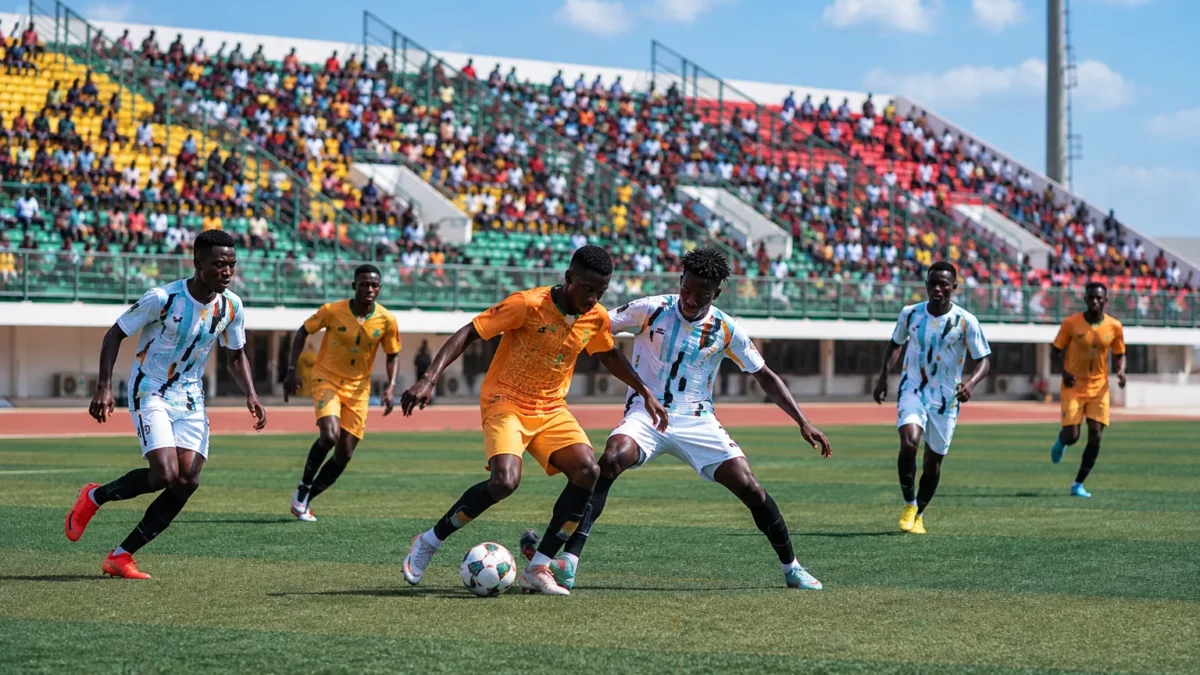
With two rounds remaining, several favourites have already secured their place, while leaders must still wait. The fourth round of AFCON 2027 qualifiers also reshaped the groups, where a single slip-up can shift the pressure onto the final matches.
Nine places already assigned, 15 still up for grabs
Morocco, Senegal, Mali, Burkina Faso, Benin, Cameroon and South Africa secured qualification on sporting merit after the fourth round, played from 16 to 17 November 2026. They join Kenya, Tanzania and Uganda, who qualified automatically as host countries.
One clarification is warranted: unlike some early reports, which counted only six teams qualifying on the pitch, South Africa also secured its place. The Senegalese Press Agency (APS) confirms its victory in Kenya and qualification from Group D. The Confederation of African Football (CAF) says 15 places remain to be assigned in March 2027.
The format favours the top two teams in each group, except in groups containing a host nation: the host has already qualified, and the best-placed other team takes the place. AFCON PAMOJA 2027 will be held from 19 June to 17 July in Kenya, Tanzania and Uganda.
Qualification secured thanks to neighbouring teams’ results
Senegal first beat Sudan 4-2 on Monday, 16 November. But their place in Group J also depended on the match between Ethiopia and Mozambique. Mozambique’s 1-0 win the following day put the Teranga Lions beyond the reach of their rivals. The scenario is a reminder that in the group stage, qualification can depend as much on a team’s own performance as on matches involving its direct competitors.
In Group A, Morocco continued their perfect run with a 1-0 win over Niger. Abdellah Ouazzane scored the only goal in the 22nd minute, according to CAF. Morocco have 12 points. Gabon, beaten 2-1 in Lesotho, remain on six points, level with Niger and Lesotho. Gabon’s defeat means Morocco did not qualify solely on the strength of their own result: their rivals’ setbacks also settled the equation.
Group F produced a joint outcome. Benin had beaten the Central African Republic 1-0 the previous day. Burkina Faso then won 3-1 in Mauritania, in Nouakchott. With 10 points each and a six-point lead over Mauritania, the two neighbours are assured of finishing in the top two. Burkina Faso’s goals were scored by Aboubaccar Camara, Lassina Traoré and Elohim Kaboré; Mohamed Ali Diadié pulled one back for Mauritania.
Mali secured qualification with a 2-0 win in Rwanda in Group K. Modibo Sagnan opened the scoring and Gaoussou Diarra sealed the victory late in the match. In Group G, Cameroon benefited from a result that did not directly involve them: Comoros beat Congo 1-0 in Brazzaville. The Indomitable Lions, who had already beaten Namibia 3-0 on 16 November, are now out of reach.
South Africa completes the list. They beat host nation Kenya 2-1 in Group D. As the three organisers qualify automatically, teams in their groups are competing for just one additional place. South Africa’s win therefore turned a strong position into confirmed qualification.
Favourites under pressure, groups still open
Several teams at the top have yet to secure their place. Côte d’Ivoire drew 2-2 in Gambia and remain top of Group C, with 10 points according to the APS. One point from their final two matches would be enough to guarantee qualification. The Democratic Republic of the Congo, not to be confused with Congo-Brazzaville, also missed the chance to wrap things up: their 1-1 draw in Sierra Leone leaves them top of Group E, but without immediate confirmation.
In Group I, Algeria suffered a 3-0 defeat in Togo. They remain in first place, but Togo and Zambia are close behind. In Group B, leaders Angola beat South Sudan 1-0, while Egypt were held to a 0-0 draw by Malawi. The defeat eliminates South Sudan, who have yet to earn a point, but the contest for first place remains open.
Nigeria shared the points with Tanzania in a 0-0 draw in Zanzibar. In Group L, the Super Eagles remain second behind Guinea-Bissau, who beat Madagascar 2-0. Madagascar, meanwhile, can no longer reach the qualifying places. Comoros, despite their win in Congo, have not yet qualified: their result chiefly had decisive consequences for Cameroon.
The qualifiers thus reveal two realities. For teams already qualified, the March fixtures can be used to prepare for the finals and manage their squads. For teams still in contention, the final matches will affect preparations, finances and the mobilisation of supporters. Travel, player availability and the pressure of head-to-head fixtures will matter as much as the provisional standings.
March 2027, the next decisive date
The fifth and sixth rounds are scheduled for the March 2027 international window. Fifteen places remain to be assigned. Côte d’Ivoire, the DRC and Guinea-Bissau will be particularly closely watched: according to the APS, each needs just one point to qualify. Other teams, including Algeria, Egypt, Angola and Comoros, remain well placed but have yet to seal their places.
The first group of qualifiers already points to a competition spanning several regions: West, Central, Southern and North Africa. The coming matches will show whether the provisional leaders can hold on to their advantage, and which teams will join the host nations from the best-placed sides in their groups. For teams eliminated or close to elimination, the March fixtures will also determine the sporting verdict on a short campaign in which opponents’ results sometimes mattered as much as their own.
Verification sources: Senegalese Press Agency, qualification overview ; CAF, results and qualified teams ; CAF, qualifying schedule and format.