Algeria
 Egypt
 Libya
 Morocco
 Sudan
 Tunisia
 Benin
 Burkina Faso
 Cabo Verde
 Côte d'Ivoire
 Ghana
 Guinea
 Guinea-Bissau
 Liberia
 Mali
 Mauritania
 Niger
 Senegal
 Sierra Leone
 The Gambia
 Togo
 Cameroon
 Central African Republic
 Chad
 DR Congo
 Equatorial Guinea
 Gabon
 Republic of the Congo
 São Tomé and Príncipe
 Burundi
 Comoros
 Djibouti
 Eritrea
 Ethiopia
 Kenya
 Madagascar
 Malawi
 Mauritius
 Mozambique
 Rwanda
 Seychelles
 Somalia
 South Sudan
 Tanzania
 Uganda
 Angola
 Botswana
 Eswatini
 Lesotho
 Namibia
 South Africa
 Zambia
 Zimbabwe
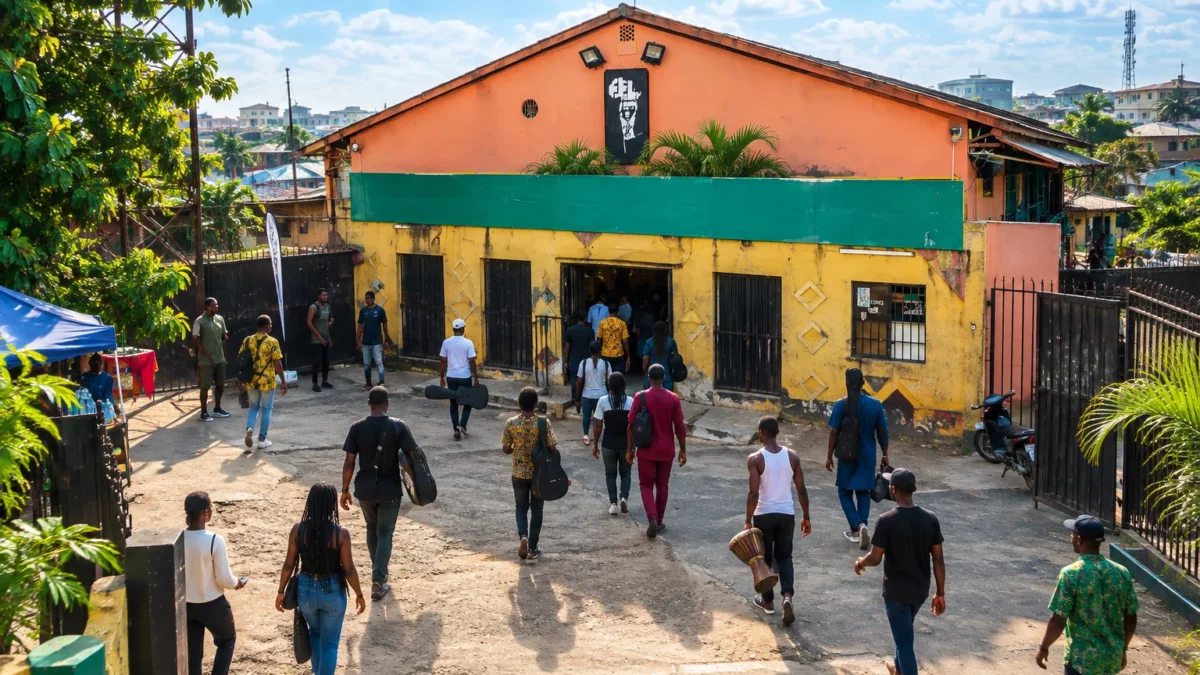
In Lagos, Fela Kuti’s brass remains bound up with a political question as much as with musical history: who decides the place of African sounds in the global story of popular culture? On 14 November, an American institution added his name to its archives, nearly 30 years after his death.
A posthumous recognition, represented by his family
Fela Kuti has joined the 2026 class of the Rock & Roll Hall of Fame in the “Early Influence” category, which recognises artists whose work has had a profound impact on music. The ceremony was held at the Peacock Theater in Los Angeles. His children Yeni, Femi, Seun and Shalewa, as well as his grandson Made, represented the musician, who was honoured in a video. The Rock Hall describes him as a pioneer of Afrobeat and a voice that combined musical creativity with criticism of injustice. Fela Kuti’s official entry in the Rock & Roll Hall of Fame confirms his induction in the 2026 class. Pulse Nigeria reports the presence of his relatives; the Associated Press confirms the date, venue and honour. The Associated Press report on the ceremony also specifies that he is the first Africa-born solo artist to enter the Rock Hall.
This distinction matters: the recognition is for a solo artist born on the continent, not the first artist of African origin in the broader sense. It also serves as a reminder that the Hall, founded around rock, welcomes musicians whose influence extends beyond the genre’s narrow boundaries.
From Afrobeat to today’s stages
Born in 1938 in Abeokuta, in what was then colonial Nigeria, Fela built a sound from jazz, funk and West African rhythms, particularly Yoruba ones. His long compositions, driven by brass and percussion, gave shape to Afrobeat. It should not be confused with afrobeats, a term used today for a range of contemporary popular music from the continent.
His career spanned several countries, but Lagos was a key centre. There, Fela made the stage a space for creativity and political confrontation. He criticised Nigeria’s military governments, corruption and power relations inherited from the colonial era. This dimension does not erase the complexity of his career; it explains why his work remains both musical and political. The Rock Hall’s entry highlights this fusion, while the Associated Press recalls Fela’s role in Nigerian public life. The Associated Press review of his musical and political legacy also reports the views of Nigerian music professionals.
His influence is part of a history that connects generations. Contemporary Nigerian artists cite his legacy, while his sons Femi and Seun have pursued distinct musical careers. In Lagos, the New Afrika Shrine and the annual Felabration festival help keep his memory alive. Afrobeat is therefore not merely a heritage repertoire: it continues to fuel creative work, debate and transmission on the continent and in its diaspora.
From the Grammys to the Rock Hall: who writes the global music story?
The induction comes a few months after another posthumous honour. In February 2026, the Recording Academy awarded Fela a Grammy for lifetime achievement. The organisation describes him as a Nigerian musician whose influence spans generations. The official announcement of the 2026 Grammy Awards highlights, in particular, the link between his work and today’s afrobeats. The Associated Press reported that Nigerian music figures welcomed the award as recognition of his lasting influence, while also pointing to the contrast between his criticism of Western cultural hegemony and the institutions honouring him.
This tension is worth preserving. An international honour neither sums up Fela nor represents Nigerian musical traditions; rather, it signals that institutions long focused on their own canons are reassessing the importance of African artists. But external recognition does not create their value. The continent’s stages, audiences, musicians and families have sustained this work long before his induction into the Rock Hall.
For Nigeria, a federal country of more than 200 million people whose capital is Abuja, the event also offers a cultural showcase distinct from narratives centred on politics or the economy. Across West Africa, where artistic exchanges flow between countries and diasporas, Afrobeat is a reminder that African musical innovations have long influenced global sounds. What happens next will depend as much on international institutions as on the ability of Nigerian and African actors to preserve, document and circulate their own archives.