Algeria
 Egypt
 Libya
 Morocco
 Sudan
 Tunisia
 Benin
 Burkina Faso
 Cabo Verde
 Côte d'Ivoire
 Ghana
 Guinea
 Guinea-Bissau
 Liberia
 Mauritania
 Niger
 Nigeria
 Senegal
 Sierra Leone
 The Gambia
 Togo
 Cameroon
 Central African Republic
 Chad
 DR Congo
 Equatorial Guinea
 Gabon
 Republic of the Congo
 São Tomé and Príncipe
 Burundi
 Comoros
 Djibouti
 Eritrea
 Ethiopia
 Kenya
 Madagascar
 Malawi
 Mauritius
 Mozambique
 Rwanda
 Seychelles
 Somalia
 South Sudan
 Tanzania
 Uganda
 Angola
 Botswana
 Eswatini
 Lesotho
 Namibia
 South Africa
 Zambia
 Zimbabwe
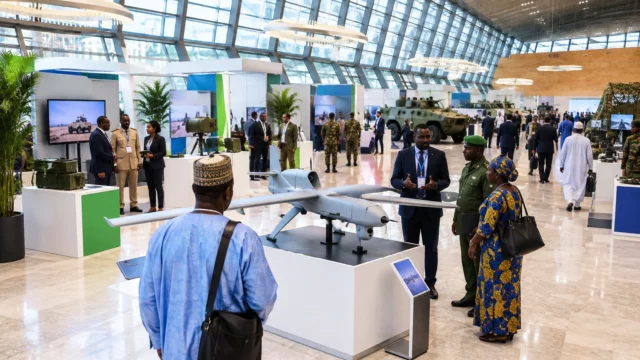
In Bamako, the success of an investment forum is not measured by the number of delegations in a room. It is determined above all by what happens after the meetings: which projects secure funding, on what terms, and with what impact for Malian businesses and workers? Forum Mali Kura is expected to take place on 11 and 12 December 2026 at the Bamako International Conference Centre (CICB), with this question in the background.
An economic gathering in a region undergoing change
Mali is seeking to attract capital in a regional context that has changed. The country, along with Burkina Faso and Niger, withdrew from the Economic Community of West African States (ECOWAS), the West African integration organisation, on 29 January 2025. ECOWAS has nevertheless said that trade and visa-free movement would continue to be facilitated until new arrangements are defined. Mali also remains a member of the West African Economic and Monetary Union (UEMOA), which brings together eight countries that share, among other things, a monetary union. These frameworks matter to investors, transport operators and traders working across borders. ECOWAS has set out the transitional arrangements linked to the withdrawal, while UEMOA lists Mali among its member states.
Against this backdrop, the Malian authorities are highlighting the Confederation of the Alliance of Sahel States (AES), which brings together Mali, Burkina Faso and Niger. In a document on Mali, the African Development Bank notes that the three countries have announced an investment bank and a stabilisation fund. Turning these plans into accessible financing and practical rules remains an issue to watch.
Projects announced, results yet to be demonstrated
The Forum is organised by the Ministry of Industry and Trade through the Agency for the Promotion of Investments in Mali (API-Mali). Its announced programme includes plenary sessions, panels and meetings between businesses and institutions. The official website refers to more than 200 projects across six priority sectors and expects about 1,000 participants, including 400 foreign delegates. These are the organisers’ targets and forecasts, not investments already made. The official presentation of Forum Mali Kura sets out these ambitions.
API-Mali says the meetings are intended to bring project developers, investors and public authorities together. The Mali Chamber of Commerce and Industry (CCIM) is among the partners. The announced programme includes business-to-business (B2B) and business-to-government (B2G) meetings. Such introductions can help clarify procedures and identify partners, but they guarantee neither the conclusion of contracts nor the financing of projects.
The presence of Malian businesses, financial institutions and foreign delegations will bring sometimes divergent interests face to face. For investors, clarity on rules, administrative deadlines and dispute-resolution mechanisms weighs on decisions. For local entrepreneurs, the challenge is not to be confined to the role of suppliers or subcontractors, but to gain access to finance, markets and skills transfers.
Investment must reach the real economy
Recent figures show that investment already plays a significant role in national economic activity. According to Mali’s National Institute of Statistics (INSTAT), gross fixed capital formation — a measure of spending on equipment and infrastructure, among other things — rose by 26.5% in the second quarter of 2026 compared with the same quarter a year earlier. The institute links this increase to major public and private works. This figure describes a past period; it does not indicate future trends or the share accounted for by private-sector projects. INSTAT’s quarterly report sets out these indicators.
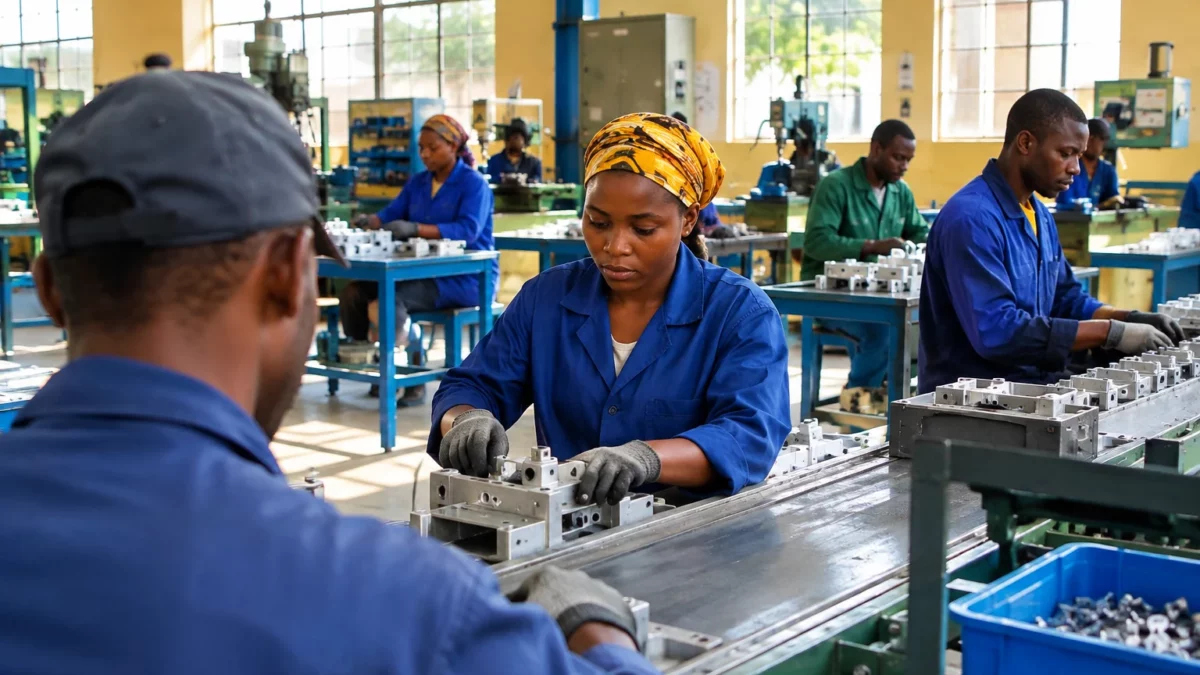
The Forum’s impact will therefore depend on the quality of the projects presented and their ability to generate sustainable economic activity. Infrastructure, agriculture, industry and services do not create the same needs. In the regions, access to energy, roads and markets can determine whether a business can grow. In Bamako, formal-sector companies often have more direct access to public authorities and financial networks. Small businesses and informal-economy operators, by contrast, risk being left out if participation and credit mechanisms are not suited to them.
Public and private financing also raises the question of how benefits are shared. Contracts, jobs created, training, participation by Malian suppliers and tax revenues will be more meaningful indicators than the number of meetings held. Transparency about announced commitments and their progress will help distinguish intentions from achievements.
Partnerships beyond the announcements
Morocco is cited among the potential partners in the economic exchanges referred to by the organisers. The official programme also lists several countries as guests of honour, including Morocco, Burkina Faso, China, India and Niger. Participation by a range of delegations may open up avenues for co-operation, but each partnership will ultimately depend on the sectors involved, financing terms and agreements reached. For a landlocked country such as Mali, continuity along trade corridors and co-operation with its neighbours also factor into business decisions.
The December gathering is part of the national vision “Mali Kura ɲɛtaasira ka bɛn san 2063 ma”, which sets out long-term development ambitions. Its significance will therefore extend beyond promoting the country to foreign investors: it will test institutions’ ability to turn projects into activities that benefit the Malian economy. The next milestones will be the publication of the Forum’s results, the agreements actually signed and their implementation, in a West African space where co-operation frameworks continue to evolve.