
 Algeria
 Egypt
 Libya
 Morocco
 Sudan
 Tunisia
 Benin
 Burkina Faso
 Cabo Verde
 Côte d'Ivoire
 Ghana
 Guinea
 Guinea-Bissau
 Liberia
 Mali
 Mauritania
 Niger
 Nigeria
 Sierra Leone
 The Gambia
 Togo
 Cameroon
 Central African Republic
 Chad
 DR Congo
 Equatorial Guinea
 Gabon
 Republic of the Congo
 São Tomé and Príncipe
 Burundi
 Comoros
 Djibouti
 Eritrea
 Ethiopia
 Kenya
 Madagascar
 Malawi
 Mauritius
 Mozambique
 Rwanda
 Seychelles
 Somalia
 South Sudan
 Tanzania
 Uganda
 Angola
 Botswana
 Eswatini
 Lesotho
 Namibia
 South Africa
 Zambia
 Zimbabwe
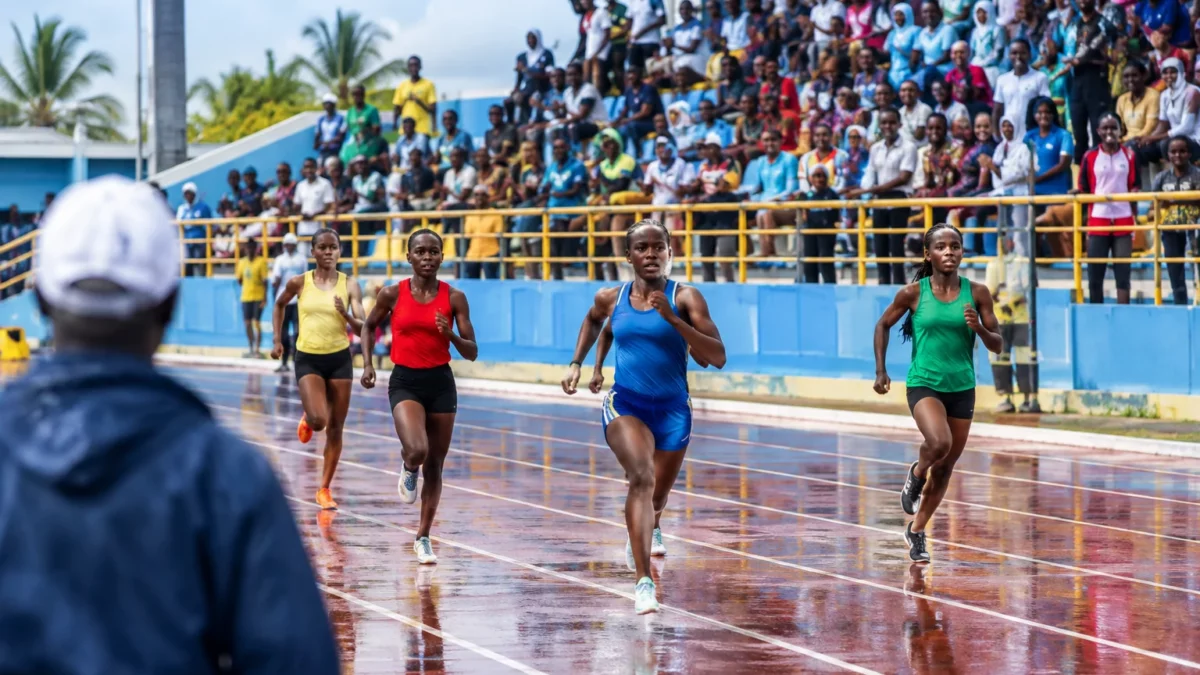
In Dakar, the Youth Olympic Games left a strong impression: five African countries among the top ten in the final standings. The result matters. But the legacy of the first Olympic event held on the continent will also depend on what remains after the flame is extinguished.
A Senegalese event with regional reach
From 31 October to 13 November 2026, nearly 2,700 young athletes aged 14 to 17 competed in 153 medal events across 25 sports. Events took place in Dakar, Diamniadio and Saly. It was the first time an Olympic event had been held in Africa.
Senegal hosted the Games at a time when major sporting events have become showcases for diplomacy and economic activity. In West Africa, this ability to organise events is also of interest to neighbouring countries, which are linked to Senegal through trade, mobility and shared competitions. ECOWAS, the Economic Community of West African States, brings together fifteen states around the goal of regional integration.
Nationwide, the Games involved several venues, infrastructure projects and local service providers. However, the benefits are not automatically shared among all residents. During preparations, relocated businesses reported lost income, while the authorities highlighted upgraded facilities and opportunities for Senegalese companies. These contrasting effects are part of the assessment, alongside the medals.
Five African nations in the top 10
China finished top with 18 gold medals, ahead of Japan, which won 11, and Russia, with eight. Egypt came fourth, Ethiopia fifth and Senegal sixth. Kenya and South Africa also made the top ten. The final standings confirm that five African delegations were in the top 10.
These results form part of broader African participation. On the eve of the final day, Senegalese news agency APS reported that 19 African countries had won medals. The sports also revealed different strengths: Ethiopia stood out in athletics, Kenya in sevens rugby, while Egypt won titles in several sports.
For the host country, beach wrestling made a strong impression. Elisabeth Diatta, 16, won a gold medal, Senegal’s first in an Olympic competition. More Senegalese titles followed, and the delegation finished sixth with five gold and seven bronze medals, according to the final tally reported by Associated Press. This result puts Senegal ahead of several larger delegations, but does not in itself sum up the progress of the country’s sport.
The standings and interim medal counts changed as events took place. On 11 November, APS reported that Senegal had ten medals, including five gold and five bronze. The final tally was twelve medals, as some events were still to be completed. Distinguishing between these figures avoids confusing a progress report with the final result.
Beyond the podiums, the question of legacy
The results raise the profile of sports federations and disciplines that receive little attention. They can also boost young people’s interest in taking part in sport and give coaches experience of international competition. However, a medal guarantees neither lasting access to facilities nor regular support for talented athletes.
The issue varies from one area to another. Dakar concentrates some of the facilities and activities. Diamniadio and Saly also hosted events, but young people in more remote regions will benefit from the Games only if resources, training and infrastructure extend beyond the venues. Clubs and federations also have unequal resources for turning a one-off success into a lasting sporting career.
The economic assessment also requires precision. The organisation created opportunities for some companies and highlighted infrastructure. However, public spending, the future maintenance of facilities and the effects on displaced businesses warrant transparent monitoring. The point is not to pit sport against everyday needs, but to establish who benefited from the investment and who will bear its long-term costs.
International Olympic Committee President Kirsty Coventry said expectations had been exceeded and that the Games had shown the continent’s ability to host major events. This is the assessment of the Olympic leader. It does not replace an evaluation by Senegalese organisers, local authorities, workers and affected residents.
A signal for African sport
The continental significance of the Games lies as much in their organisation as in the delegations’ performances. Five African countries in the top 10 provide a concrete counterpoint to a reading of global sport in which African nations often appear as mere participants. The range of medal winners also shows that success is not limited to a single sporting powerhouse or discipline.
For Senegal, the next test will be continuity: young people’s access to facilities, funding for federations, coach training and the regional distribution of resources. For other African countries, the experience could inform plans to host events and foster sporting cooperation, without assuming that the Dakar model can be reproduced everywhere in the same way.
The Games ended on 13 November. Their legacy will be measured in the years ahead: in how the infrastructure is used, the opportunities available to young people and institutions’ ability to make the benefits visible beyond the event.
Sources consulted: Senegalese news agency report on African countries winning medals, APS interim report on Senegal’s standing and Associated Press final report on the Games.



