Algeria
 Egypt
 Libya
 Morocco
 Sudan
 Tunisia
 Benin
 Burkina Faso
 Cabo Verde
 Côte d'Ivoire
 Ghana
 Guinea
 Guinea-Bissau
 Liberia
 Mali
 Mauritania
 Niger
 Nigeria
 Senegal
 Sierra Leone
 The Gambia
 Togo
 Cameroon
 Central African Republic
 Chad
 DR Congo
 Equatorial Guinea
 Gabon
 Republic of the Congo
 São Tomé and Príncipe
 Burundi
 Comoros
 Djibouti
 Eritrea
 Ethiopia
 Kenya
 Madagascar
 Malawi
 Mauritius
 Mozambique
 Rwanda
 Seychelles
 Somalia
 South Sudan
 Tanzania
 Uganda
 Angola
 Botswana
 Eswatini
 Lesotho
 Namibia
 South Africa
 Zimbabwe
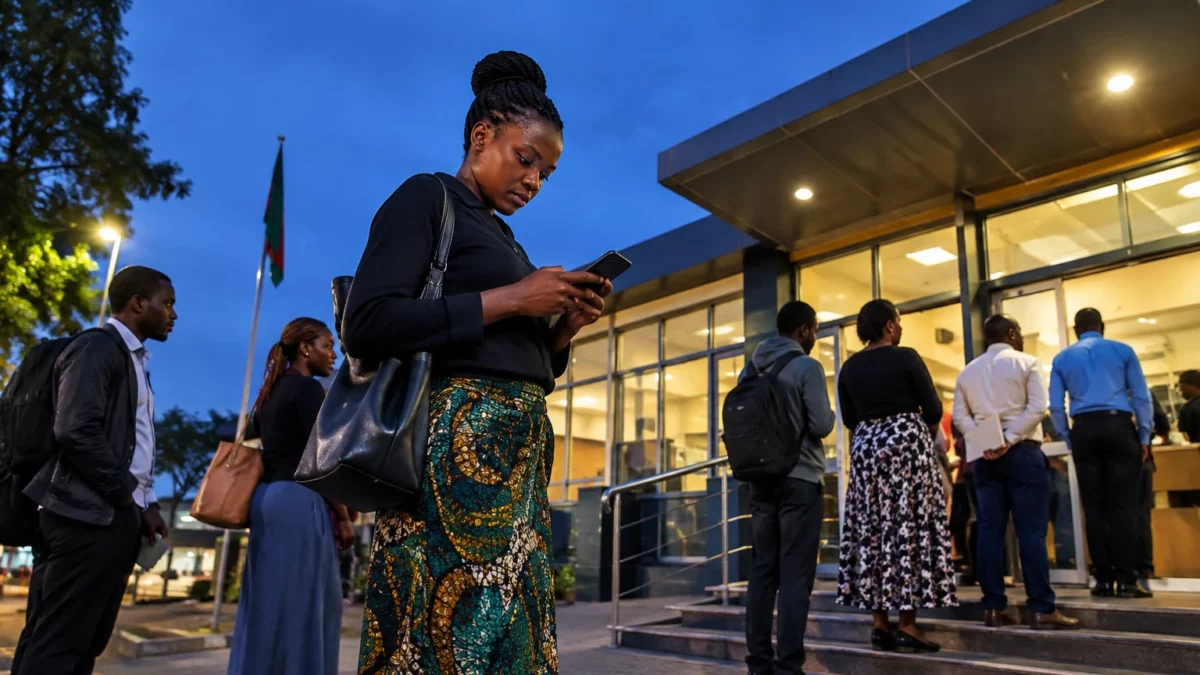
Paying for a public service by phone is nothing new in Zambia. The challenge is instead to link administrative procedures to payment methods people already use, without creating extra fees or obstacles for citizens.
A project built on existing tools
Zambia already has a public portal that allows users to pay for some services with MTN Mobile Money. The government platform ZamPortal describes this option, as well as online payment through ZICB SmartPay. The issue, then, is not the first connection between MTN MoMo and the government, but the possible expansion or improvement of these uses.
This distinction matters. Discussions between the state and an operator do not amount to a final agreement or prove that a new system is ready. They are also taking place in a landscape where digital public payments can follow several routes, beyond a partnership with a single company.
Zambia is a member of the Southern African Development Community (SADC), a regional grouping that supports, among other things, economic cooperation and the integration of systems. For Lusaka, the question of digital payments is therefore linked to broader issues: interoperability, trust in online services and access to infrastructure in less well-served areas.
What has been announced — and what remains unclear
The Smart Zambia Institute, the public body responsible for co-ordinating the digital transformation of government, said it had begun discussions with MTN MoMo. The announcement, reported as having been made on Friday 13 November, concerns the possibility of further integrating mobile payments into the state’s digital services.
According to the Smart Zambia Institute, the aim would be to draw on MTN MoMo’s financial services and technological capabilities to complement public digital infrastructure. The stated ambition is to facilitate electronic payments and make some procedures more accessible and straightforward.
No deployment timetable or final agreement has been announced in the information available. The services involved, fee arrangements, payment processing procedures and safeguards for users therefore remain to be established. The precise scope of the discussions has not been confirmed by a second independent source; details of the announcement should be understood as attributed to the institute.
Simplicity also depends on how the system works
For citizens, mobile payment can avoid a journey or a wait at a counter. But the benefit depends on practical details: the level of fees, how quickly payments are confirmed, whether a receipt is available and the refund process in the event of an error. A digital interface does not simplify a procedure if it adds steps or costs that are difficult to anticipate.
Access is also uneven. Residents of Lusaka and other urban centres do not necessarily face the same constraints as people in regions where network coverage, electricity or the availability of payment agents is more limited. People without a suitable phone or who are less comfortable with online procedures must retain access to an alternative, including physical service points.
For the government, electronic payments can make it easier to track revenue and reconcile transactions. In return, the state must ensure data security, service continuity and compatibility between operators and banks. A system that depends too heavily on a single provider could limit users’ choice or make it harder to switch providers.
Zambian regulations already govern electronic money providers and mobile transactions. The challenge will therefore also be to clarify who processes payments, who handles complaints and how funds are reconciled with public accounts. These factors, as much as the technology itself, determine a service’s reliability.
African examples, but no ready-made formula
Kenya offers a point of comparison. The GSMA reports that more than 90% of payments made on the public eCitizen platform are processed through mobile money. That figure relates to this platform and its particular context; it does not guarantee that an identical model would produce the same results in Zambia.
The GSMA also emphasises the importance of co-ordinated integration between government agencies and providers. Experiences abroad can inform Zambia’s choices, but results depend on the services offered, fees, regulations and local payment habits.
Zambia has also already used mobile payments for some public programmes, notably social transfers. This shows that digital channels can serve several government functions. However, paying assistance to a beneficiary and enabling the payment of a tax or administrative fee raise different questions of design and user protection.
The next test will be inclusion
What happens next will depend on turning discussions into verifiable measures: which services will be covered, which operators will be able to connect and how costs will be displayed. The decision to open the system to several payment methods will also affect its accessibility and resilience.
For SADC, the issue goes beyond one operator or one national portal. Public systems that can communicate with one another can facilitate payments and improve traceability, provided they comply with national rules and protect data. In Zambia, the decisive test will be more immediate: whether procedures genuinely become simpler for citizens, in cities and rural areas alike, without excluding those who remain far from the digital world.