Algeria
 Egypt
 Libya
 Morocco
 Sudan
 Tunisia
 Benin
 Burkina Faso
 Cabo Verde
 Côte d'Ivoire
 Ghana
 Guinea
 Guinea-Bissau
 Liberia
 Mali
 Mauritania
 Niger
 Nigeria
 Senegal
 Sierra Leone
 The Gambia
 Togo
 Cameroon
 Central African Republic
 Chad
 DR Congo
 Equatorial Guinea
 Gabon
 Republic of the Congo
 São Tomé and Príncipe
 Burundi
 Comoros
 Djibouti
 Eritrea
 Kenya
 Madagascar
 Malawi
 Mauritius
 Mozambique
 Rwanda
 Seychelles
 Somalia
 South Sudan
 Tanzania
 Uganda
 Angola
 Botswana
 Eswatini
 Lesotho
 Namibia
 South Africa
 Zambia
 Zimbabwe
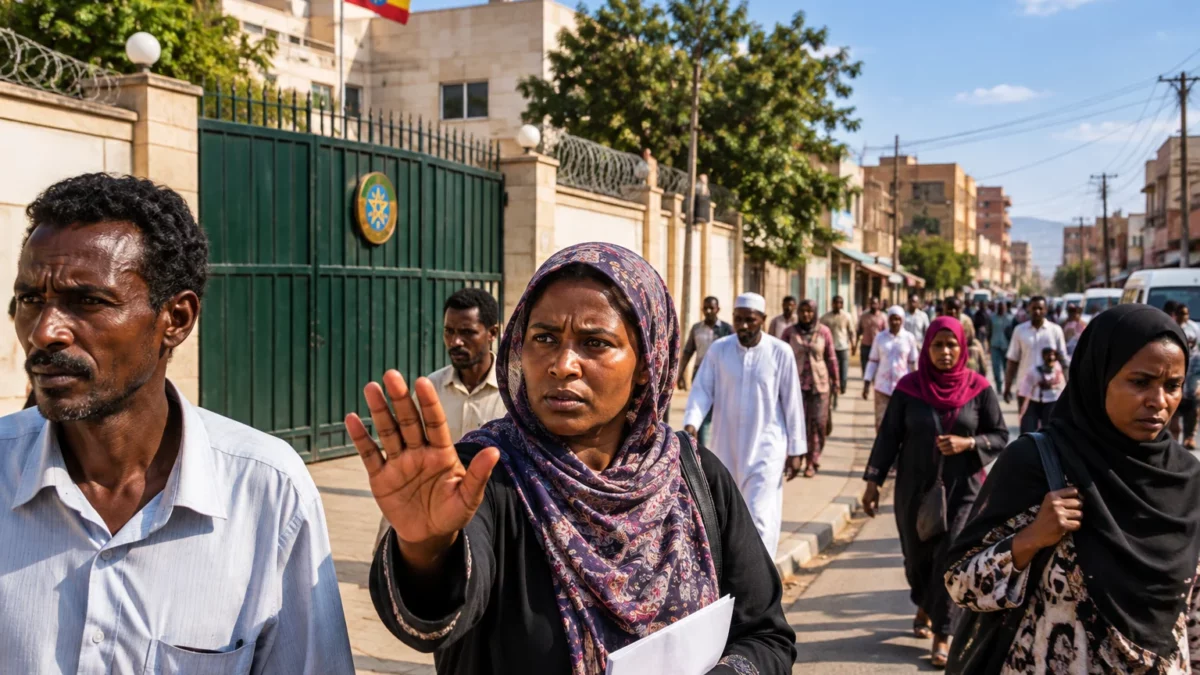
A disputed border becomes harder to monitor when two neighbouring countries are already grappling with internal conflicts. Between Sudan and Ethiopia, accusations of support for armed groups and the closure of consulates are raising the risk of regional spillover. But the most serious allegations remain contested, and have not all been independently verified.
Two internal wars, one border under pressure
Since April 2023, the Sudanese army has been fighting the Rapid Support Forces (RSF), a paramilitary group. The war broke out after a confrontation over integrating the RSF into the army. It has since affected several regions of the country, while Khartoum remains the capital, even though the conflict has profoundly disrupted the functioning of the state.
In Ethiopia, fighting resumed in September in Tigray, in the north of the country. The region had been the scene of a war between federal forces and the Tigray People’s Liberation Front (TPLF), before the cessation of hostilities agreement signed in November 2022. The renewed clashes have revived fears of a fresh escalation.
The two countries share a long and sensitive border. The fertile Al-Fashaga area, claimed by both neighbours, remains a flashpoint. Further east, the Grand Ethiopian Renaissance Dam, built by Ethiopia on the Blue Nile, is also at the heart of a regional dispute over the management and sharing of water. These issues do not prove a direct link to the current accusations, but they complicate dialogue between Addis Ababa and Khartoum.
Sudan and Ethiopia are members of the Intergovernmental Authority on Development (IGAD), a regional organisation in the Horn of Africa. IGAD and the African Union therefore have frameworks for promoting mediation, as the two internal crises overlap.
Reciprocal accusations, without full verification
In early November, Sudanese authorities appealed to the United Nations Security Council and the African Union’s Peace and Security Council. They accuse Ethiopia of allowing the RSF to use its territory to set up camps and launch attacks, particularly by drone, on Sudanese infrastructure. Several media outlets have reported the allegations, but they have not been substantiated by an independent investigation available to the public.
Ethiopia rejects the accusations. In turn, it accuses the Sudanese army of helping Tigrayan rebels. Sudan denies supporting these groups. Other accusations have also concerned fighters from the Fano movement, an armed force originating in Ethiopia’s Amhara region. Here too, the two governments’ accounts do not in themselves constitute independent evidence.
The escalation took a concrete diplomatic form at the beginning of the month. Ethiopia closed the Sudanese consulate in Assosa and ordered six members of its staff to leave. Sudan then closed the Ethiopian consulate in Gedaref, in the east of the country, and expelled its diplomats, according to officials cited by Reuters. The closure of both missions was also reported by Sudan Tribune.
These measures reduce channels of contact at a time when officials are trading accusations of armed support. They could complicate consular affairs and cross-border exchanges. Their precise effects on residents and local movement have not, however, been quantified by the sources consulted.
The risk of a proxy conflict
The immediate danger lies less in a declaration of war than in the entanglement of two conflicts. If armed groups can cross the border, find resources there or prepare operations there, authorities may be tempted to broaden their military responses. Such a dynamic could open a new front for the Sudanese army and add pressure on Ethiopian forces already deployed in several areas.
Domestic power dynamics also matter. In Sudan, the army and the RSF are vying for control of territory and institutions. In Ethiopia, the fighting in Tigray is taking place amid a broader context of insurgencies and tensions between the federal government and regional forces. Accusing a neighbour of arming one’s adversaries may reinforce a narrative of an external threat, but it does not resolve the political disagreements fuelling the conflicts.
Civilians in border regions risk bearing the consequences before the capitals do: movement restrictions, the closure of consular services, insecurity and possible displacement if fighting draws closer. Traders and families travelling between the two countries also depend on a border that remains open. At this stage, this risk must be distinguished from consequences already documented: available sources do not allow us to say that a new exodus caused by this diplomatic crisis has begun.
A test for African mechanisms
The crisis resonates beyond bilateral relations. It concerns a region where conflicts, rivalries over resources and border disputes intersect. IGAD’s 2026-2030 strategic plan specifically identifies instability in Sudan and Ethiopia, as well as the effects of contested borders, as regional issues. The organisation stresses the importance of regular consultations and multilateral cooperation.
The diplomatic priority is now to preserve channels of communication and clarify the accusations with verifiable evidence, rather than allow the expulsion of diplomats to replace dialogue. Appeals to the UN and the African Union provide an institutional framework for the crisis, but their effectiveness will depend on the two governments’ willingness to accept mediation and avoid any cross-border military action.
In the coming days, the signals to watch are any resumption of consular missions, official responses to Sudanese complaints and developments in the fighting in Tigray and in Sudanese areas near Ethiopia. As long as the accusations remain contested, their attribution must remain explicit. This is also essential to prevent diplomatic mistrust from turning into a wider regional confrontation.