Algeria
 Egypt
 Libya
 Morocco
 Sudan
 Tunisia
 Benin
 Burkina Faso
 Côte d'Ivoire
 Ghana
 Guinea
 Guinea-Bissau
 Liberia
 Mali
 Mauritania
 Niger
 Nigeria
 Senegal
 Sierra Leone
 The Gambia
 Togo
 Cameroon
 Central African Republic
 Chad
 DR Congo
 Equatorial Guinea
 Gabon
 Republic of the Congo
 São Tomé and Príncipe
 Burundi
 Comoros
 Djibouti
 Eritrea
 Ethiopia
 Kenya
 Madagascar
 Malawi
 Mauritius
 Mozambique
 Rwanda
 Seychelles
 Somalia
 South Sudan
 Tanzania
 Uganda
 Angola
 Botswana
 Eswatini
 Lesotho
 Namibia
 South Africa
 Zambia
 Zimbabwe
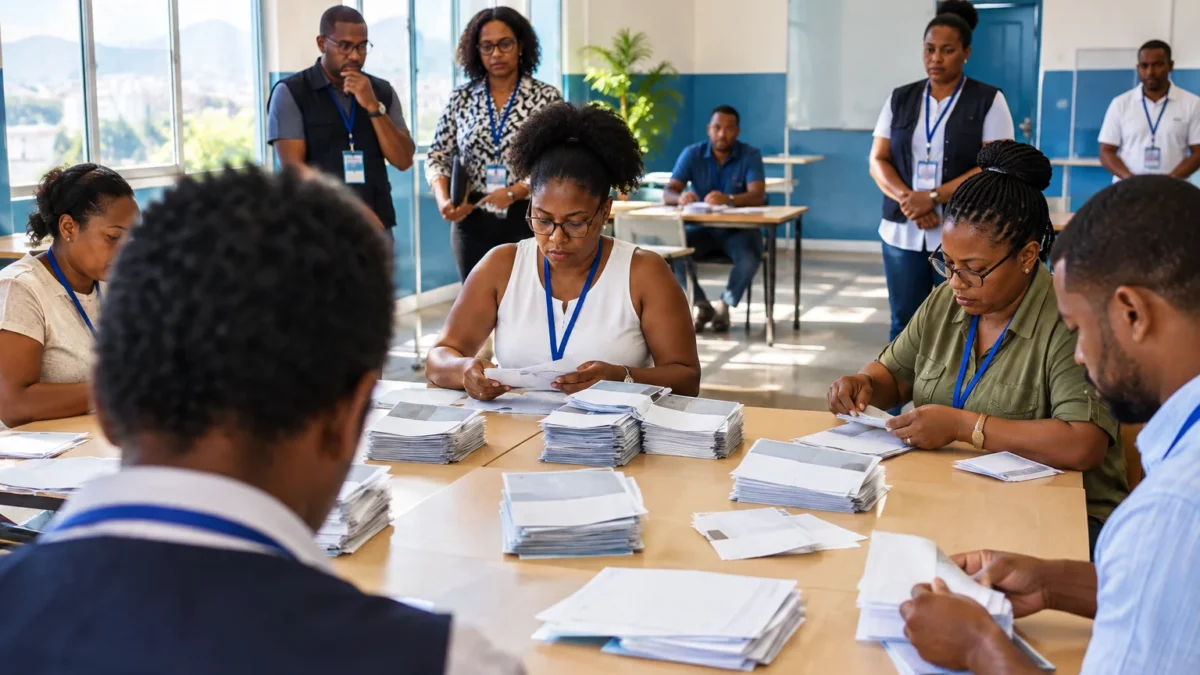
For voters in Cabo Verde, the stakes in this presidential election go beyond the name of the next head of state: they concern young people’s prospects, the cost of living and ties with a large diaspora. Voting ended on Sunday 15 November 2026. Counting has begun, but no official result has yet been established.
An election followed across the islands and abroad
The National Electoral Commission (CNE) has recorded 419,448 registered voters. This figure includes voters living outside the archipelago. The Associated Press reports that nearly 77,000 Cape Verdeans living abroad were registered, almost a fifth of the electorate. The vote therefore brings together citizens across the islands and several diaspora communities.
Polling stations closed late on Sunday. That morning, the CNE had said that polling stations had opened satisfactorily. Correspondents in the country described a calm day, with turnout that appeared moderate to them. This assessment does not, however, replace official turnout figures, which are still awaited.
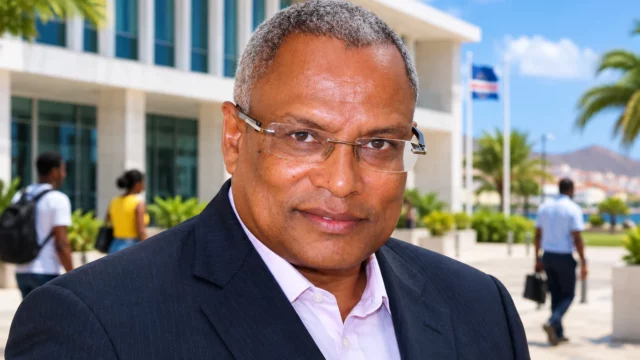
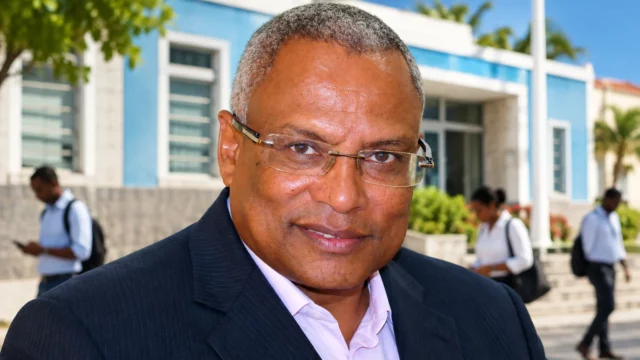
Six candidates were in the running, according to the list published by the CNE and reproduced in the Official Gazette of Cabo Verde. Incumbent President José Maria Neves is seeking a second term. His main rival is Joana Gomes Rosa Amado, a former justice minister and the first woman to stand for the country’s presidency.
Neves is backed by the African Party for the Independence of Cabo Verde (PAICV). Rosa is supported by the Movement for Democracy (MpD), the main opposition party. Voters must choose between the two candidates after May’s parliamentary elections brought the PAICV to government, with Francisco Carvalho as prime minister.
The presidency and political balances
The president is elected by direct universal suffrage for a five-year term, renewable once. But Cabo Verde has a parliamentary system: the prime minister leads government policy and holds most executive power. The head of state represents the country, upholds the Constitution and can, among other things, veto a law.
This division gives the election particular significance, without making the presidency the centre of all day-to-day decisions. The result could nevertheless alter the balance between institutions. If Neves wins, the presidency and government will remain in the same political camp. A victory for Rosa would put the head of state and the government in opposing camps, a configuration that could strengthen checks and balances but also make compromise more necessary.
The campaign set political records against one another as much as policy proposals. Neves, a former prime minister, was elected president in 2021 with about 52% of the vote, according to the Associated Press. Rosa has highlighted the fight against corruption and the idea of a presidency able to counterbalance the PAICV’s power. Her candidacy also raises a question of representation: a victory would make her the first woman to lead the state since independence in 1975.
Jobs, emigration and the cost of living top voters’ concerns
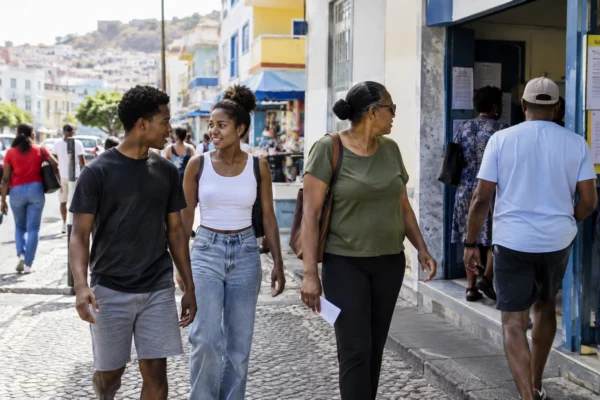
Institutional stability does not make economic and social difficulties disappear. Youth unemployment, the rising cost of living and access to jobs remain concerns. Emigration is also central to the debate: many young people leave the archipelago in search of career prospects, particularly in Portugal and the United States.
This mobility sustains family and economic ties with the outside world, but also reduces the availability of workers in some sectors. Reuters notes that tourism, a pillar of Cabo Verde’s economy, is among the activities affected by labour departures. The consequences are not uniform: businesses are trying to recruit, families are juggling costs and opportunities, while young people weigh their future at home against prospects abroad.
The two main candidates have made young people a campaign theme. Neves has promised, if re-elected, to bring young people together at a summit. Rosa has argued for creating conditions that would allow people to build a future in the country and slow departures. These pledges will need to be followed up beyond the speeches: employment policies and budget decisions fall primarily to the government and Parliament.
The diaspora is another practical issue. Its registration on the electoral rolls confirms its importance in national life, but the number of registered voters does not show how many actually voted. Turnout among these voters, and the breakdown of results across the islands, Praia and polling stations abroad, will help clarify the priorities they expressed.
A democratic test in West Africa
In a West Africa marked by varied political trajectories and institutional crises in several countries, Cabo Verde retains a tradition of competitive elections and peaceful transfers of power. This distinction should not obscure social demands, nor turn the archipelago into a model without tensions: any abstention, particularly among young people, would also be a political signal to take seriously.
The African Union has deployed a mission of 37 observers from 22 member states. It has announced that it will publish a preliminary statement on 17 November, followed by a full report after the final results are proclaimed. Its observation will help assess the conduct of the vote and count, while the CNE remains the authority responsible for announcing the results.
The first milestone is therefore the publication of provisional results, followed by their official validation. If no candidate secures the required majority, the top two will face each other in a second round, scheduled for 29 November according to information provided by Reuters and the Associated Press. For Cape Verdeans, the election will not by itself resolve questions of employment, mobility between the islands or purchasing power. It will, however, choose the voice called upon to embody the state for five years and arbitrate the political tensions that will accompany these choices.